AGUACONSULT
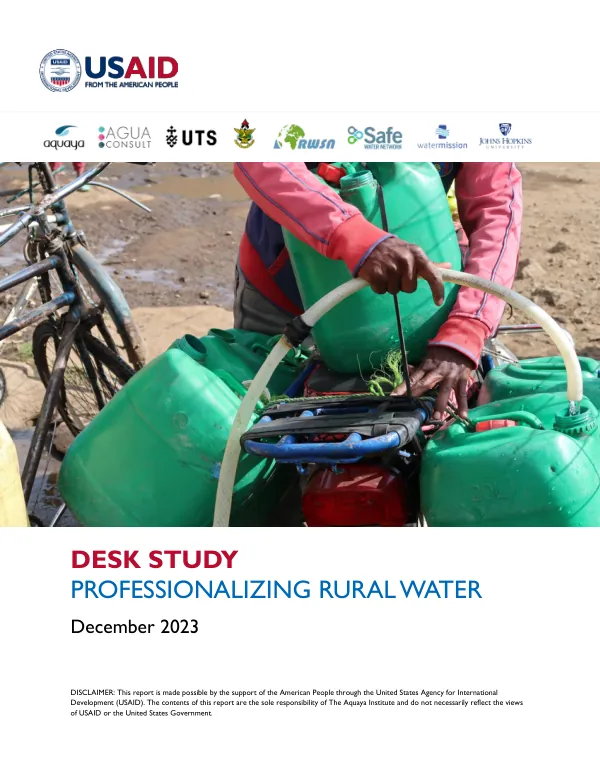
Desk Study: Professionalizing Rural Water
Rural water supply is a critical component of global development, with the majority of the world's population projected to live in urban areas by 2050.
2023 · 97 pages
Sign in to readA free account is required to download.
Abstract
The rural water sector has undergone significant changes in recent years, driven by shifting demographics and trends. The population in rural areas is growing and urbanizing, with the majority of people living in rural areas expected to be urbanized by 2050. This demographic shift has significant implications for rural water service delivery, with increased demand for water and sanitation services. The rural water sector has evolved over time, with a journey from first-time access to systems-based approaches. The sector has transitioned from a focus on providing access to water for the first time to a more comprehensive approach that includes management of water services. This shift has been driven by the recognition that access to water is not just about providing a physical infrastructure, but also about ensuring that the water is safe, reliable, and sustainable. Financing rural water services is a significant challenge, with a growing gap between the funding required to meet the needs of rural communities and the available funding. The sector has seen the emergence of alternative financing models, including blended finance, which combines development finance with commercial investments to mobilize additional finance for sustainable development. The Azure Initiative in El Salvador is an example of a blended finance model that has leveraged commercial investments in rural water supply. Managing rural water services is a complex task, requiring a range of skills and expertise. Community-based management (CBM) has been a popular approach in the past, but it has faced challenges in terms of sustainability and effectiveness. Alternative management arrangements, such as regional concessions and private operators, are being explored as a way to improve the management of rural water services. The Uptime Consortium is using technology to improve the management of rural water services, including monitoring and maintenance of water infrastructure. Measuring the performance of rural water management is critical to ensuring that services are delivered effectively and efficiently. The International Benchmarking Network has developed a set of core indicator categories to monitor the performance of rural water services. The proposed indicator matrix aims to harmonize monitoring of service provision and performance of rural water services. The Rural Evidence and Learning for Water (REAL-Water) project is working to develop and evaluate strategies for expanding access to safe, equitable, and sustainable rural water services. The REAL-Water project has identified several priority findings from the desk study, including the need for a more comprehensive approach to managing rural water services, the importance of financing and funding for rural water services, and the need for more effective monitoring and evaluation of rural water services. The project has also identified several gaps in the current knowledge and practice of rural water management, including the need for more research on alternative management arrangements and the need for more effective regulation and policy frameworks for rural water services. The REAL-Water project has implications for policymakers, development partners, and service providers working in the rural water sector. The project aims to provide evidence and learning to support the development of effective and sustainable rural water services, and to inform policy and practice in the sector. The project's findings and recommendations have the potential to improve the lives of millions of people living in rural areas, by providing access to safe, reliable, and sustainable water services.