USAID DEC
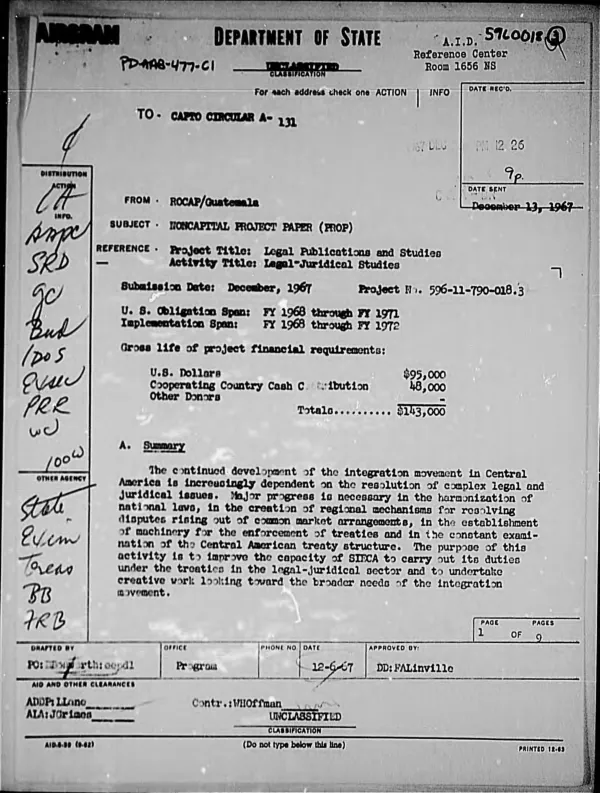
Development of a Legal and Administrative Framework for Regional Integration in Central America
Sign inUSAID
Development of a Legal and Administrative Framework for Regional Integration in Central America
The Central American Integration System (SIECA) is responsible for promoting economic integration in the region.
2010 · 9 pages
Sign in to readA free account is required to download.
Abstract
The organization has been working to create a legal and administrative framework conducive to regional integration. However, the process has been hindered by various legal and judicial constraints. One major problem area is the lack of adequate mechanisms for treaty administration and dispute resolution. The apparatus and capacity of Central American regional organizations to interpret and administer treaties are inadequate. The policies articulated in the General Treaty are general and lack specific implementation. The lack of access to regional integration organizations by the general citizenry is also a concern. The executive council of the regional organization is only accessible through the government of the individual's country. The revised OJW-CJ Charter provides for a Central American Court, but its jurisdiction is unclear. The lack of a regulatory body or independent judicial body to hear disputes arising out of regional treaties is a concern. The expansion of the Central American Market, which has relied on the elimination of tariff barriers, is being hindered by the presence of non-tariff obstacles. Conflicting national legislation and administrative regulations impede trade among Central American countries. The legal profession in the region is also hampered by a lack of legal education and a narrow conception of higher education. The Centro Americano de Integración (CAI) has been working to address these issues. The organization has been working to develop a legal framework for integration, but it lacks the resources to devote to the resolution of these problems. The OAS has also been involved in the process, providing financial and technical assistance to the region. The development of a legal and administrative framework for integration is a complex task. It requires the development of a regulatory body, the establishment of a judicial body, and the development of a legal education system. The process also requires the development of a culture of integration, which involves the development of a shared identity and a sense of shared purpose. The Central American region has a long history of integration efforts. The Central American Integration System (SIECA) was established in 1961, and the Central American Free Trade Agreement (CAFTA) was signed in 2004. However, the process of integration has been slow and has been hindered by a number of challenges. The development of a legal and administrative framework for integration is a key component of the integration process. The development of a regulatory body, the establishment of a judicial body, and the development of a legal education system are all critical components of this process. The development of a culture of integration is also essential for the success of the integration process. The OAS has been involved in the process of promoting economic integration in the region. The organization has provided financial and technical assistance to the region, and has provided technical assistance to the development of a legal and administrative framework for integration. The development of a legal and administrative framework for integration is a long-term process. It requires the development of a long-term strategy, and the commitment of resources to support the process. The process also requires the development of a culture of integration, which involves the development of a shared identity and a sense of shared purpose.
Related documents
![[Peru] evaluations activity final progress report, contract number: AID-527-C-13-00002, April 1, 2013 - March 31, 2018](https://covers.devme.ai/gen/94444.webp)