USAID. MISSION TO DOMINICAN REPUBLIC
Development training project
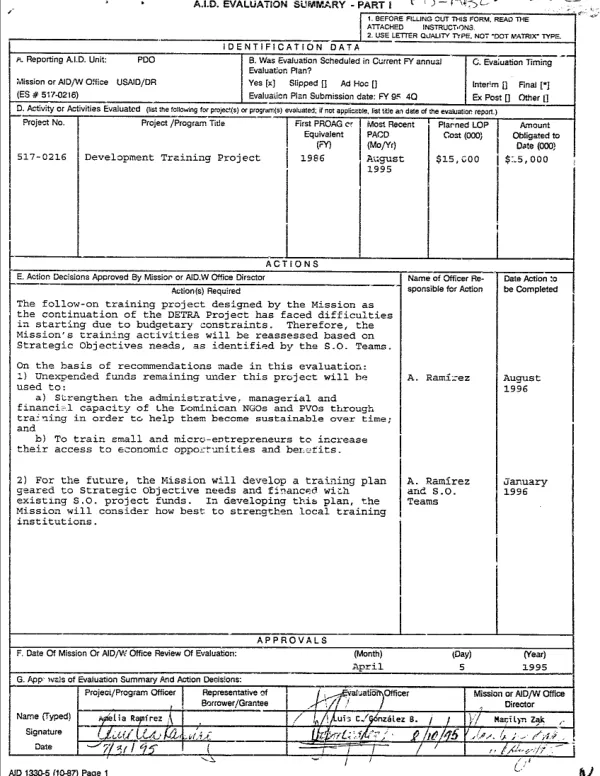
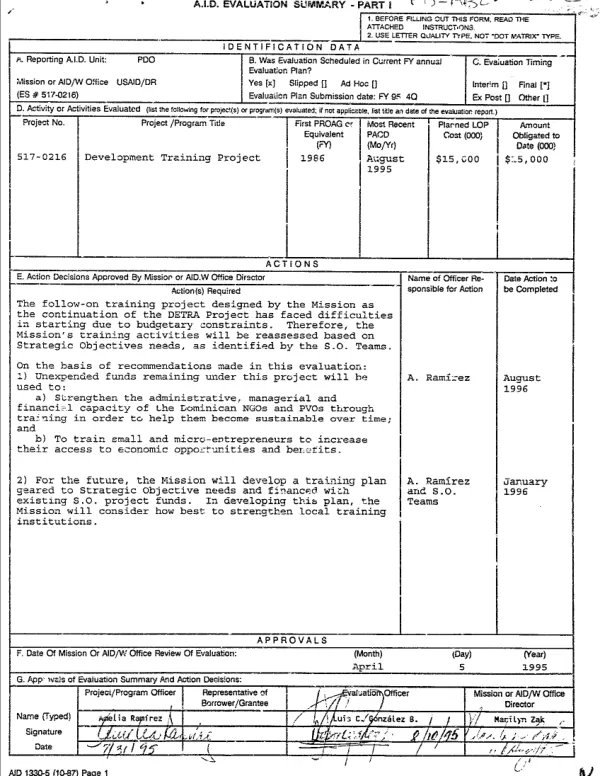
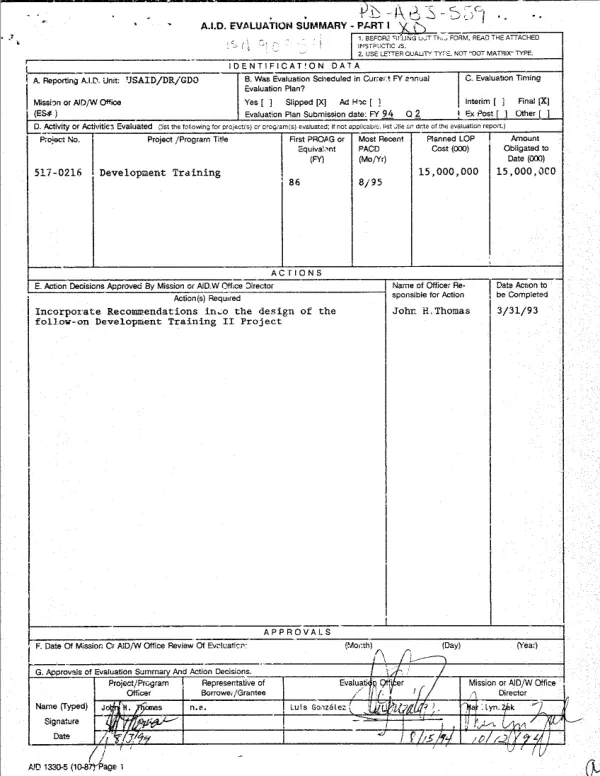
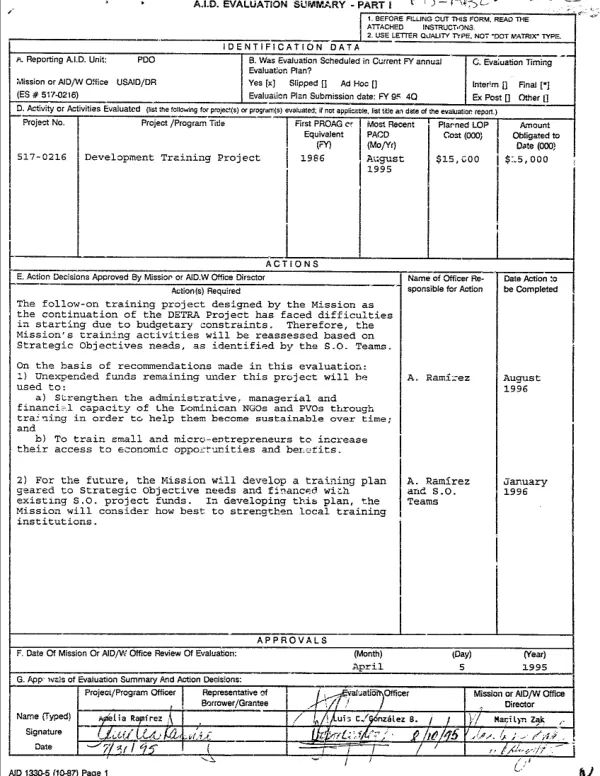
Summarizes attached final evaluation (XD-ABL-802-A) of a project (1986-8/95) to provide training to the private sector and to increase nontraditional exports in the Dominican Republic.
1995
Sign in to readA free account is required to download.
Abstract
The project, which was modified near the end to include training for the public sector and NGOs in accordance with newly identified Mission strategic objectives, successfully achieved its goals and proved that training has an impact when applied to a definite sector of the economy. End-of-Project Status (EOPS) indicators were met, although long-term graduate training fell a few individuals short, largely because of the failure of some participants to finish their programs. Short-term training, on the other hand, exceeded goals for both off-shore and in-country training; goals for the latter were in fact greatly exceeded, with a major emphasis in the areas of health, education, and civil society. About 47% of the trainees were female, with the largest percentage attending in-country programs. Over 10% of off-shore trainees were placed at Historically Black Colleges and Universities (HBCUs). A number of evaluations were commissioned during the program. They all indicated that the program had a considerable and measurable impact, with trainees benefitting in terms of career opportunities, salaries, and jobs, and firms from changes introduced by returned trainees. Cultural and economic factors mitigated against the effectiveness of the Enterprise Training Plan (ETP) concept, a key programming tool of the project. ETPs were designed to indicate major training needs in the firms and to suggest corresponding training for participants sponsored by the firms. Unfortunately, most firms lack a tradition in planning; they tend to think short-range rather than long-range, and most focus on individual rather than institutional needs. Lessons learned are as follows. (1) The greatest impact occurred from long-term, overseas training. (2) Quality in-country, short-term training is available and can be used to improve the Dominican work force. (3) Training should target economic sectors rather than individual firms because of the fragility of firms and the high intrasector mobility which exists. (4) ETPs are not appropriate for the Dominican Republic. (5) Equity/efficiency concerns permeate training for the private sector. (6) Complex management structures reduce program efficiency. (7) Long-term projects benefit from having flexibility built into them, allowing them to adapt to changing circumstances.