USAID DEC
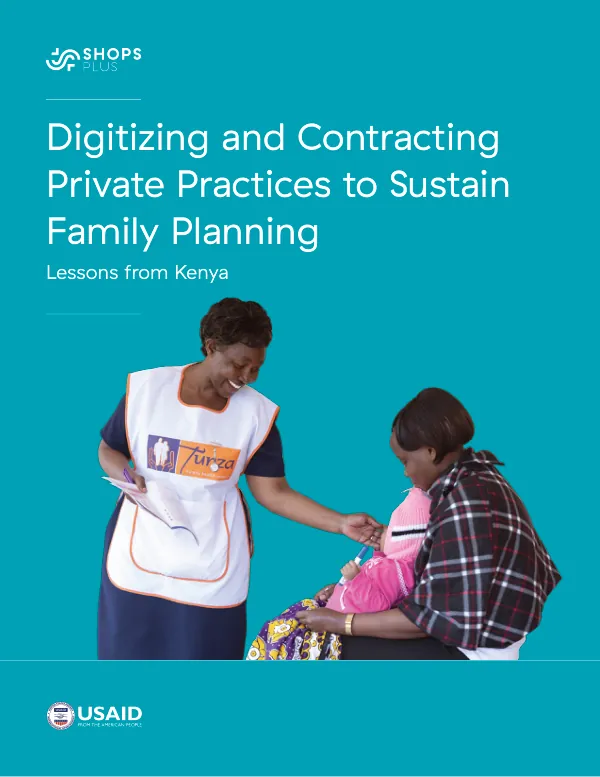
Digitizing and Contracting Private Practices to Sustain Family Planning: Lessons from Kenya
Sign inABT ASSOCIATES
Digitizing and Contracting Private Practices to Sustain Family Planning: Lessons from Kenya
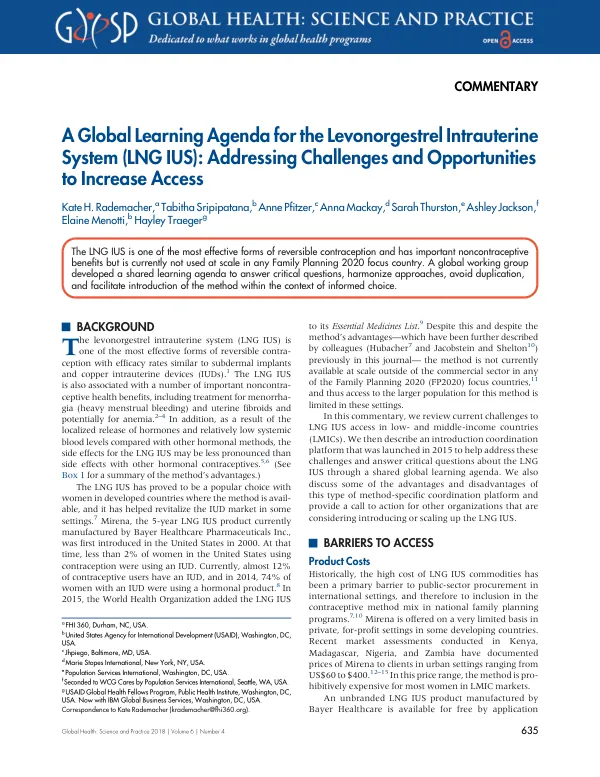
The private health sector in Kenya has the potential to attract and retain clients, increase revenues, and contribute to universal health coverage by digitizing operations and participating in health financing programs.
2021 · 27 pages
Sign in to readA free account is required to download.
Abstract
This approach aims to sustain scaled-up provision of health services, including family planning, in the private health sector while reducing financial barriers for clients. The Sustaining Health Outcomes through the Private Sector Plus project examined the effects of two reinforcing interventions in which an intermediary supported a network of 33 practices to install and build use of a digital clinic management system and contract with health financing programs such as the National Hospital Insurance Fund (NHIF). The project found that the COVID-19 pandemic affected implementation of both interventions, as did learning that the NHIF requires legal reform before it can contract with an intermediary that represents multiple private providers. However, the intermediary succeeded in contracting the network with a private health insurance scheme for low-income households, and digitized the clinical and administrative operations of 10 new network members. The project's findings suggest that donors can support governments, in collaboration with private stakeholders, to enact reforms that enable contracting between programs like the NHIF with intermediaries representing multiple practices. Donors can also assist intermediaries to develop and deliver a sustainable value proposition. The efforts can enable private practices, especially smaller ones, to sustainably increase access to family planning and other essential health services. In Kenya, privately run facilities represent the majority of health facilities, warranting deliberate strategies for inclusion in health financing interventions. Convening and organizing large numbers of private providers is essential to take donor investments to scale. Common ways of organizing the private sector include working through professional associations, setting up cooperative businesses, forming federations, and establishing provider networks. Health financing programs present benefits and challenges for small and medium private providers (SMPPs). Participating in health financing programs can help SMPPs attract and retain clients, increase revenues, and operate their practices more efficiently. However, SMPPs also find participation in health financing programs challenging due to various barriers, including exclusion from health financing programs, costs associated with participating, licensing, and legal agreements, processing time, and operational challenges. In Kenya, SMPPs find accreditation and contracting with the National Hospital Insurance Fund (NHIF) complex and challenging. Some SMPPs, particularly smaller, female-run clinics and nursing homes, report discrimination from the NHIF through tactics such as delayed accreditation and claims processing. The project's findings highlight the need for reforms to enable contracting between programs like the NHIF with intermediaries representing multiple private providers. Donors can support governments, in collaboration with private stakeholders, to enact these reforms and assist intermediaries to develop and deliver a sustainable value proposition.