USAID DEC
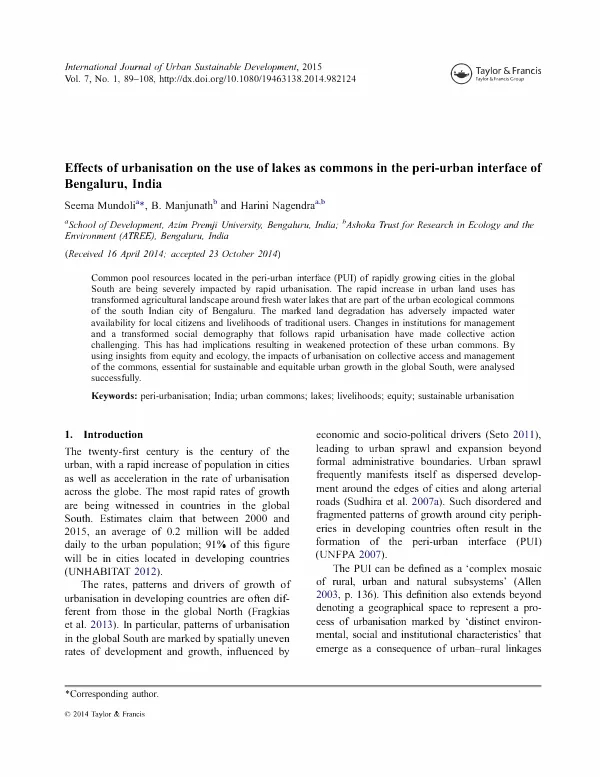
Down the drain: the tragedy of the disappearing urban commons of Bengaluru
Urban commons in Bengaluru, a city in southern India, have been disappearing at an alarming rate.
2016 · 9 pages
Sign in to readA free account is required to download.

Abstract
The city's rapid urbanization has led to the conversion of these open spaces into residential and commercial areas. The loss of urban commons has significant implications for the city's ecosystem and its inhabitants. Bengaluru's urban commons, which include parks, lakes, and other green spaces, provide essential ecosystem services such as air and water filtration, noise reduction, and habitat creation for urban wildlife. The city's urban commons have been degraded due to a combination of factors, including the expansion of urban infrastructure, encroachment by private developers, and lack of effective governance. The city's lakes, for example, have been severely impacted by pollution and encroachment, resulting in the loss of biodiversity and ecosystem services. The city's parks and green spaces have also been degraded due to inadequate maintenance and lack of community engagement. The disappearance of urban commons in Bengaluru has significant social and economic implications. The loss of green spaces has led to increased temperatures, air pollution, and noise levels, negatively impacting the health and well-being of the city's inhabitants. The city's ecosystem services, including water filtration and flood control, have also been compromised, leading to increased costs for urban infrastructure and services. Furthermore, the loss of urban commons has also had a negative impact on the city's cultural and recreational activities, including the loss of community spaces and cultural events. The city's urban commons have been managed by a combination of government agencies, private developers, and community groups. However, the lack of effective governance and coordination among these stakeholders has led to the degradation of urban commons. The city's urban planning policies have also been criticized for prioritizing economic development over environmental and social considerations. The city's residents have been advocating for the protection and restoration of urban commons, including the creation of community-led initiatives and the development of more effective governance frameworks. The disappearance of urban commons in Bengaluru highlights the need for more effective urban planning and governance practices that prioritize environmental and social considerations. The city's residents, government agencies, and private developers must work together to protect and restore urban commons, including the creation of community-led initiatives and the development of more effective governance frameworks. This will require a fundamental shift in the way the city is planned and managed, prioritizing the needs of both people and the environment.