UNIVERSITY OF ARIZONA. COLLEGE OF AGRICULTURE. OFC. OF ARID LANDS STUDIES. ARID LANDS INFORMATION CENTER
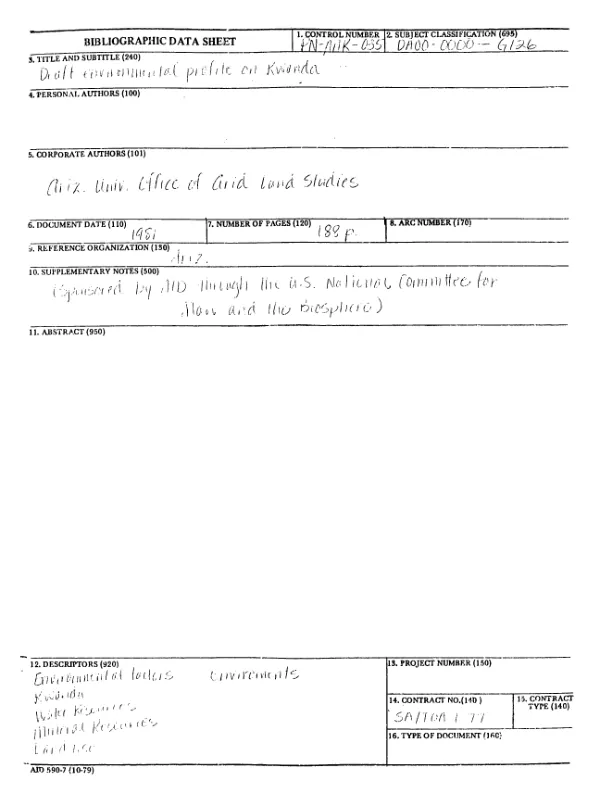
Draft environmental profile on Guyana
Guyana, with exceptionally rich natural resources, most of which remain unexploited, is in the unique position of being able to take steps to manage its resources before environmental degradation occurs.
Hilty, Steven L. · 1982
Sign in to readA free account is required to download.
Abstract
Derived from information available in the United States, this draft report profiles Guyana"s environmental resources and reviews the impact of the development process upon those resources. Covered in turn are the country"s geographic features; climate; population, including cultural and demographic considerations; land use; soil, mineral, water, and electrical power resources; and flora and fauna. Guyana"s major environmental problems are confined to the coastal areas, where 10%-15% of the country"s land supports 90% of the population. Especially noted are the needs to develop alternative irrigation water sources to protect the coastal arterial wells which supply most of the country"s water, and to maintain the fragile, sandy soils of natural forests which have been or will be harvested. Establishment of a national environmental policy and the training of skilled personnel is crucial to planning for rational, long-term utilization and protection of resources that will be exploited in the future. Appendices include supporting information on endangered animals of Guyana.
Connected topics