URBAN INSTITUTE (UI)
Dwelling conditions and the quality of maintenance in Moscow"s state rental sector
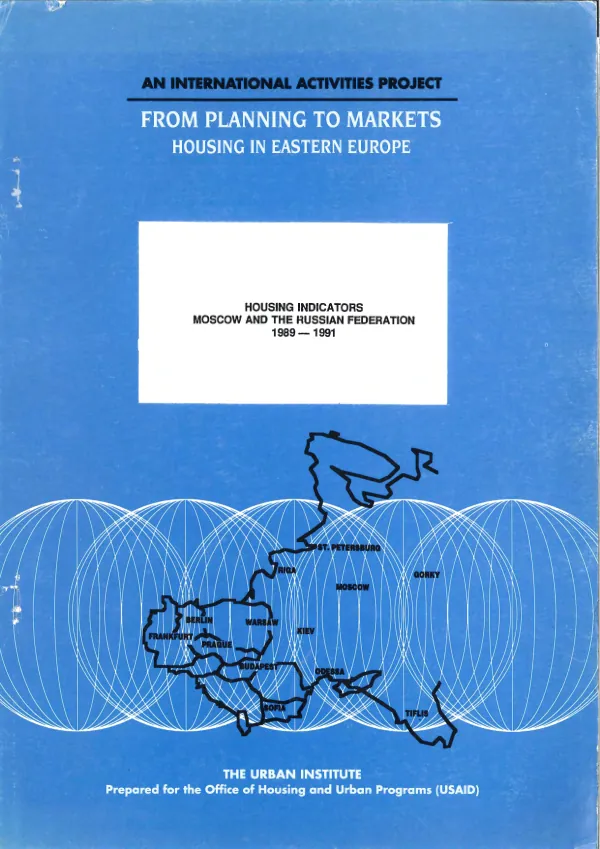
This paper presents the most detailed information on housing conditions in Moscow yet available, based on a survey of 2,000 dwelling units that were state rentals as of January 1992.
Daniell, Jennifer; Puzanov, Alexander +1 more · 1993
Sign in to readA free account is required to download.
Abstract
About a quarter of these units were privatized by the time of the survey in December 1992. In effect, these data give us a picture of the living environment of most Muscovites at the start of the transition of the rental sector to market principles, which involves the raising of rents to provide improved maintenance. The survey generated data on two types of outcomes: building conditions and interruptions in services (e.g., heat); and the experience of tenants when they requested help from the state maintenance company (RAiU). The general patterns suggest extraordinarily poor-quality services by the RAiUs. The findings, taken as a whole, paint a bleak and distressing picture of life in state rental housing buildings in Moscow. They also indicate a situation in which families with greater economic resources have little ability to command better-quality housing. Rather, at this early stage in the transition, the distribution of housing remains, as one would expect, primarily determined by the system under the prior regime in which housing allocations were based on non-market principles. Finally, the awful state of building maintenance makes clear the enormous challenge faced by those who would attempt to improve housing maintenance. The depth of the problems with the monopolistic state companies mirrored in housing conditions suggest that it may be extremely difficult, even impossible, to work within the current framework to achieve improvement. More radical options are likely to be necessary, each of which must include the introduction of competition among firms, and possibly the wholesale replacement of state maintenance companies with private firms. (Author abstract)
Related documents