USAID DEC
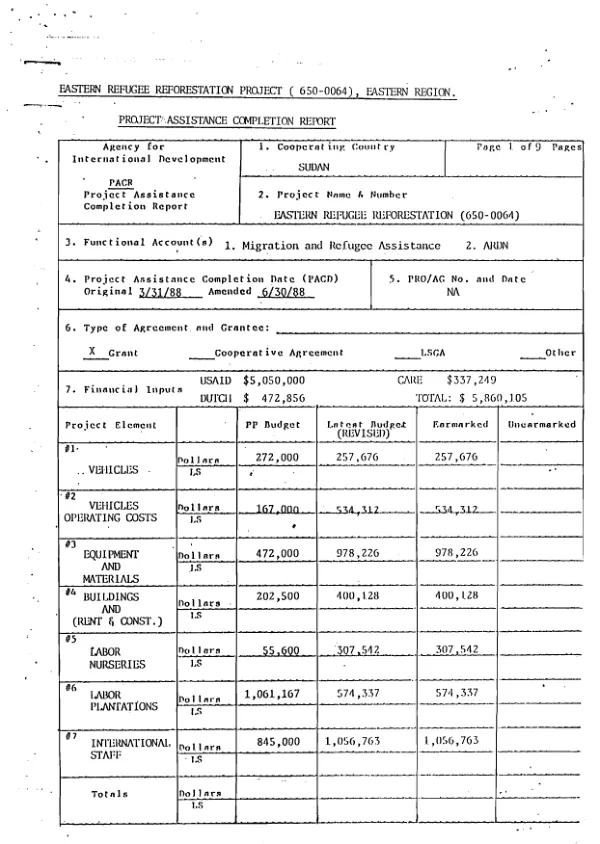
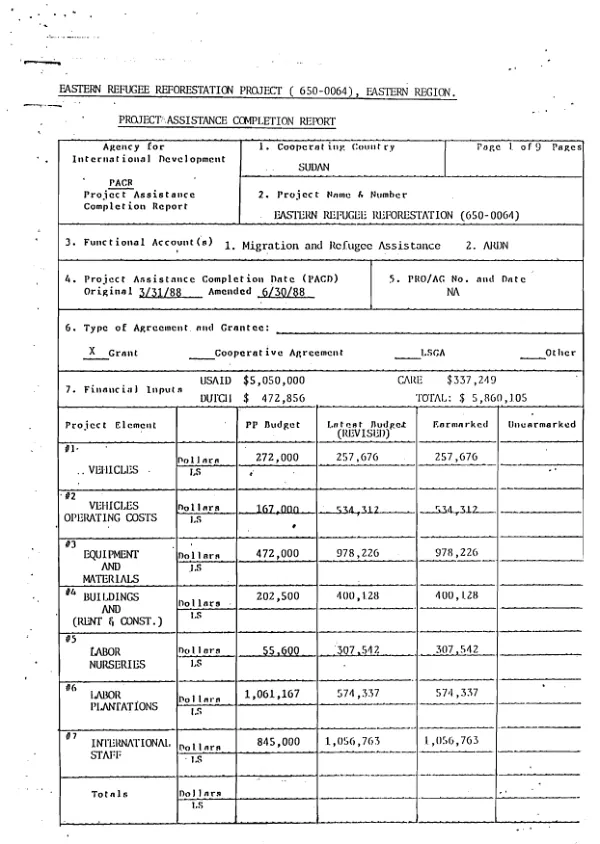
Eastern refugee reforestation project (650-0064), eastern region : project completion report
Sign inUSAID. MISSION TO SUDAN
Eastern refugee reforestation project (650-0064), eastern region : project completion report
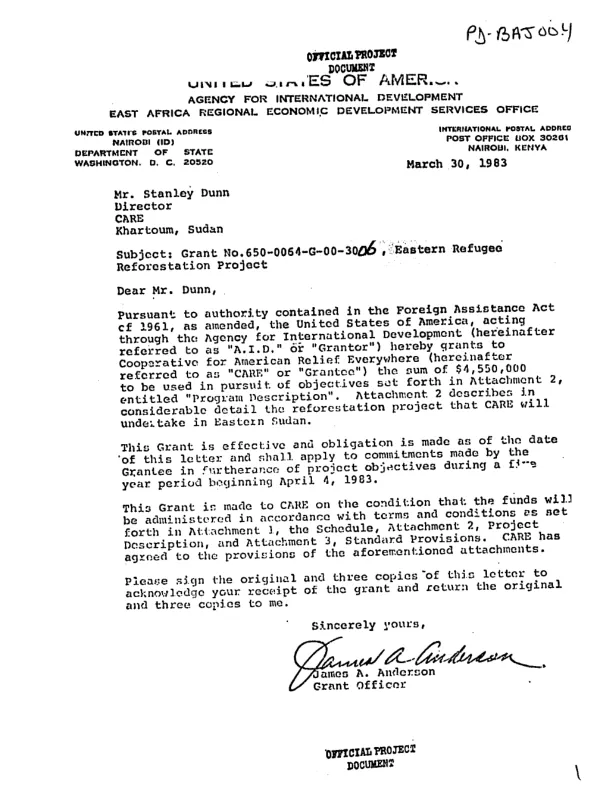
PACR of an OPG to CARE (3/83-6/88) to promote tree planting and other conservation practices to counteract deforestation and general environmental degradation in a refugee area in eastern Sudan.
1988
Sign in to readA free account is required to download.
Abstract
Despite design flaws, the project had several accomplishments. Rural Sudanese and refugees have been employed to raise seedlings in the project's two nurseries and to plant them in the more than 8,000 feddans of plantations established by the project. The nurseries have also produced thousands of utilitarian, amenity, and fruit trees annually for distribution to local individuals and organizations. Seedling mortality remains a problem at some of the plantations, however, and even if the plantations are fully stocked, yields will probably not be great enough to meet local needs for fuel, fodder, etc. Appropriate agroforestry techniques have yet to be identified; some project innovations (e.g., changes in potting mix) were not based on valid analysis and thus cannot be assessed. On the other hand, certain experimental trials were successful: rainwater management and water harvesting techniques developed by the project have significantly lowered tree mortality on the plantations and can be used wherever similar agro-climatic conditions exist. An agroforestry extension program is working throughout the project area on a wide variety of village and school nursery programs, environmental education, and agroforestry demonstration plots. The extension unit has developed effective procedures and materials to promote tree planting, but suffers from the project's lack of proven technical interventions. Several additional problems were caused by project design. Project headquarters in Gedaref were so remote from activity sites that some senior staff spent the equivalent of 100 days per year driving between the sites. The design also failed to address the intended purpose of providing relief from immediate unemployment problems in the refugee settlements and nearby villages. Finally, the project failed to undertake the required logframe exercise, causing difficulties in monitoring. Overall, the project is an excellent example of inter-agency coordination. It is highly regarded by the Forestry Department (FD), which has benefited from management and technical training and the provision of office buildings, permanent nurseries, vehicles, and equipment. The importance of infrastructure provided to host agencies as part of institution building is sometimes undervalued. In harsh locales such as rural Sudan, project budgets should provide for vehicle and equipment replacement during the project's final months to ensure the host agency of receipt of worthy assets. In this case, institutional inputs to the FD will be further refined during the follow-on project.
Related documents