USAID DEC
Effect of temperature on life history traits of the invasive calanoid copepod Arctodiaptomus dorsalis (Marsh, 1907) from Lake Taal, Philippines
Sign inUSAID DEC
Effect of temperature on life history traits of the invasive calanoid copepod Arctodiaptomus dorsalis (Marsh, 1907) from Lake Taal, Philippines
Arctodiaptomus dorsalis, a neotropical calanoid copepod, is known for its propensity for transcontinental invasion.
2016 · 7 pages
Sign in to readA free account is required to download.
Abstract
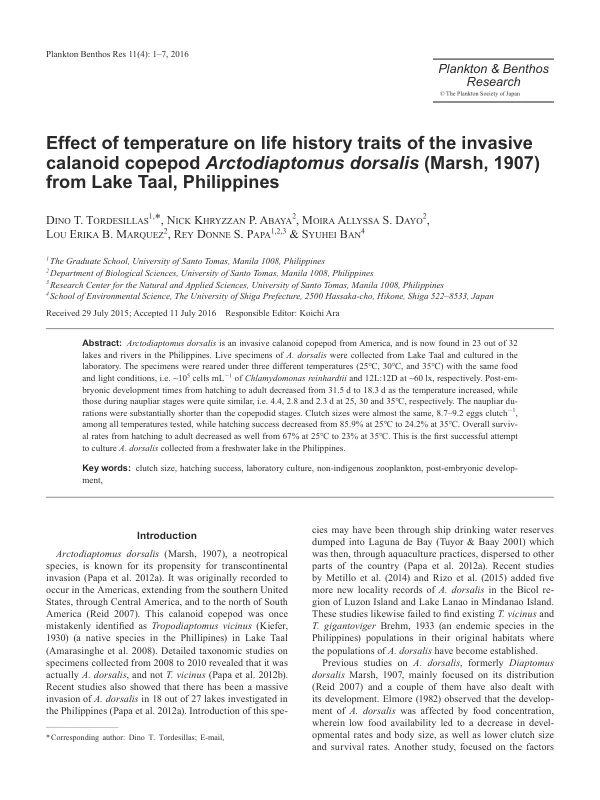
Originally recorded to occur in the Americas, this species has been found in 23 out of 32 lakes and rivers in the Philippines. Live specimens of A. dorsalis were collected from Lake Taal and cultured in the laboratory to evaluate the effects of temperature on life history parameters. Post-embryonic development times from hatching to adult decreased from 31.5 days to 18.3 days as the temperature increased from 25°C to 35°C. Naupliar durations were substantially shorter than copepodid stages, with durations of 4.4, 2.8, and 2.3 days at 25, 30, and 35°C, respectively. Clutch sizes were almost the same, ranging from 8.7 to 9.2 eggs per clutch, among all temperatures tested. However, hatching success decreased from 85.9% at 25°C to 24.2% at 35°C. Overall survival rates from hatching to adult decreased as well, from 67% at 25°C to 23% at 35°C. The experimental temperatures were selected at 25, 30, and 35°C, providing a range between the lowest and highest temperatures in Lake Taal. Thirty newly-hatched nauplii were placed individually in 3-mL wells of a tissue culture plate at the same temperature as those of the mothers. Development was recorded from naupliar to copepodid, and finally to adult stages. Each individual was observed under a stereoscopic microscope every day to monitor for molts or dead animals. The laboratory culture of A. dorsalis was maintained at 29°C, with a photoperiod of 12L:12D for at least two generations prior to the experiment. The light sources used were cool-white fluorescent tubes at a light intensity of ~60 lx, controlled by shading the tubes with cellophane. Culture media and food algae were changed three times a week. Newly hatched nauplii from the first generation of the stock culture were isolated and placed in new 50 mL beakers filled with the same food and medium. All individuals were transferred to new beakers filled with fresh food suspensions by Pasteur pipette every two days until they reached adult stage. The results of this study provide new insights into the effects of temperature on the life history parameters of A. dorsalis. The findings suggest that temperature has a significant impact on post-embryonic development time, clutch size, and hatching success in this calanoid species. The laboratory culture of A. dorsalis was successfully maintained at three different temperatures, providing a valuable tool for further research on this invasive species.
Related documents
Documents in this collection
 2017
2017USAID DEC
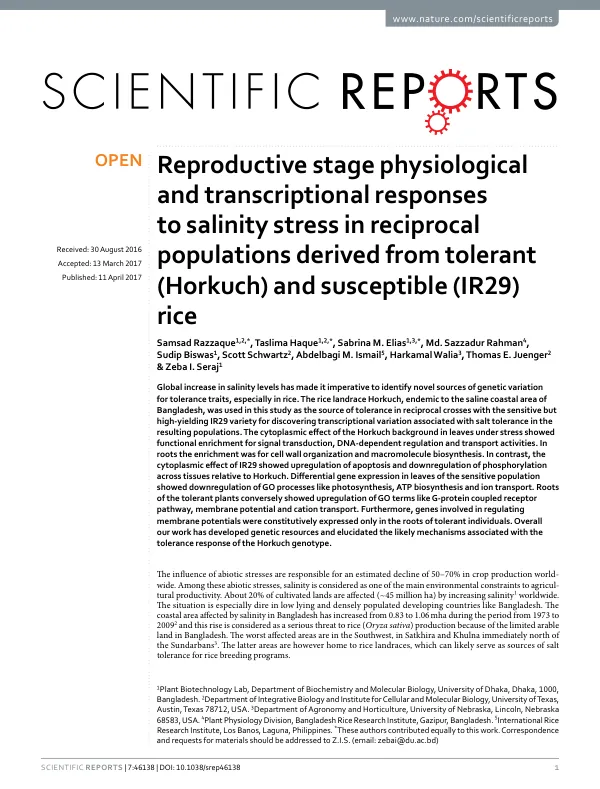
Reproductive stage physiological and transcriptional responses to salinity stress in reciprocal populations derived from tolerant (Horkuch) and susceptible (IR29) rice
Open record 2019
2019USAID DEC