USAID. BUR. FOR FOOD FOR PEACE AND VOLUNTARY ASSISTANCE. OFC. OF PROGRAM POLICY AND MANAGEMENT
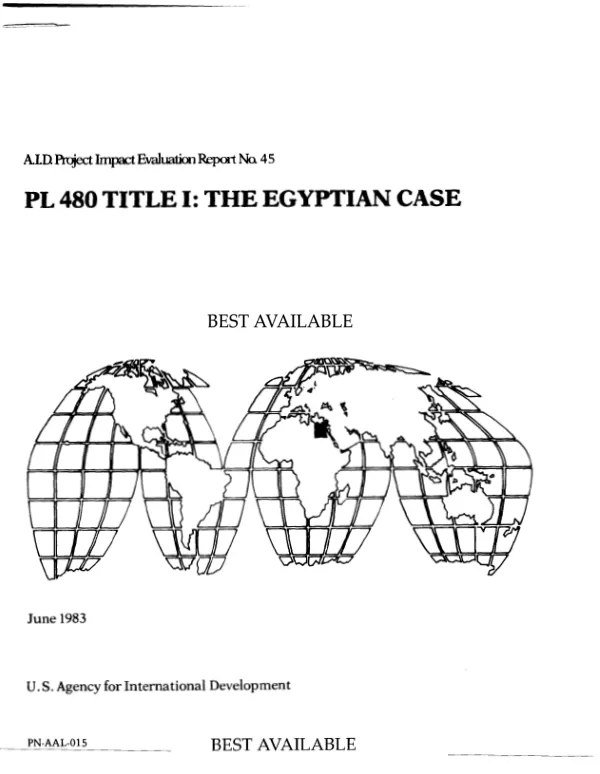
Egypt - PL-480 Title I
Internal evaluation of the Title I program in Egypt, addressing the following issues: program objectives vs.
Morris, Paul D. · 1987
Sign in to readA free account is required to download.
Abstract
Egyptian needs; incentives/disincentives; policy dialogue; budgetary allocations and local currency; and programmatic issues. To the extent that Title I commodities reduce the cost of overall wheat imports, they help the Egyptian government maintain policies that keep producer prices for wheat low and discourage production. P.L. 480 is generally viewed by the government as providing a crucial element for financing wheat and flour imports and providing general balance-of-payments support. The report points out that the government distribution supply provides the population with a caloric wheat supply significantly above the World Food Programme"s minimum food security, which can be regarded as a contribution toward attainment of equitable development. On the negative side, however, that subsidized distribution represents a production disincentive equally comprehensively distributed to all farmers who grow wheat. The report concludes that resultant disincentives have probably had greater impact on general agricultural sector development through a distortion of wheat prices vs. other crops. (Author abstract, from PN-ABD-893)
Connected topics
Related documents