USAID DEC
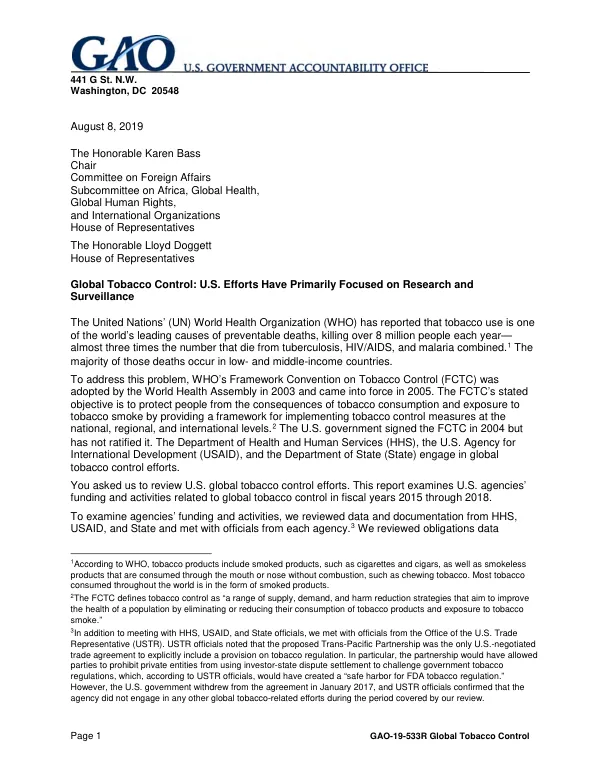
Emergency Assistance for Zika: USAID Supported Activities Overseas but Could Improve Funds Tracking and Response Planning
Sign inTHE UNITED STATE CENTERS FOR DISEASE CONTROL AND PREVENTION
Emergency Assistance for Zika: USAID Supported Activities Overseas but Could Improve Funds Tracking and Response Planning
The U.S.
2019 · 52 pages
Sign in to readA free account is required to download.
Abstract
Agency for International Development (USAID) and the Department of State obligated $385 million of the total $390 million available for international Zika response and disbursed $264 million as of September 2018. USAID obligated 95 percent of the total funding. USAID and State provided some country information to Congress but did not provide, or take steps to track, funding on a country basis. According to USAID officials, tracking funding information by country would be helpful in the future. In response to the Zika outbreak, USAID and State supported a broad range of activities overseas, including mosquito control, research efforts, and medical evacuations. In one activity, USAID implementing partners monitored mosquito populations; in another, they researched methods to reduce Zika virus transmission rates. USAID implementing partners reported various outputs from selected activities. For example, an implementing partner reported that its awareness campaign on Zika prevention reached more than 5 million people. USAID faced sustainability and timeliness challenges in implementing its Zika response. According to agency and other officials, one-time funding and a short time frame posed a challenge related to sustainability of Zika response activities. In response, USAID worked to align activities with those of host governments and other organizations so they could continue in the long term. However, USAID's emergency response planning did not fully address the challenge of timely implementation of response activities in countries without bilateral USAID health programs. Twenty-two of 26 countries with Zika response activities did not have bilateral USAID health programs when the Zika outbreak began. The World Health Organization declared the Zika virus a public health emergency of international concern in February 2016. According to WHO, as of March 2017, 79 countries and territories, including 48 in the Western Hemisphere, reported evidence of ongoing Zika transmission. In April 2016, USAID and State repurposed $215 million for Zika from funds appropriated for Ebola. Subsequently, the Zika Response and Preparedness Appropriations Act, 2016, provided over $175 million in supplemental funding to USAID and State to support Zika response efforts overseas. USAID should take steps to ensure it is able to compile funding information by country for future infectious disease emergency responses and take steps to improve its infectious disease response planning. USAID concurred with GAO's recommendations. The Centers for Disease Control and Prevention downgraded its international travel warning for Zika in March 2019. The Zika virus is primarily transmitted through mosquito bites and causes symptoms that include fever, rash, conjunctivitis, and joint and muscle pain. The infection in pregnant women has been linked to adverse pregnancy and birth outcomes, including microcephaly and other severe brain defects.