USAID. MISSION TO PHILIPPINES
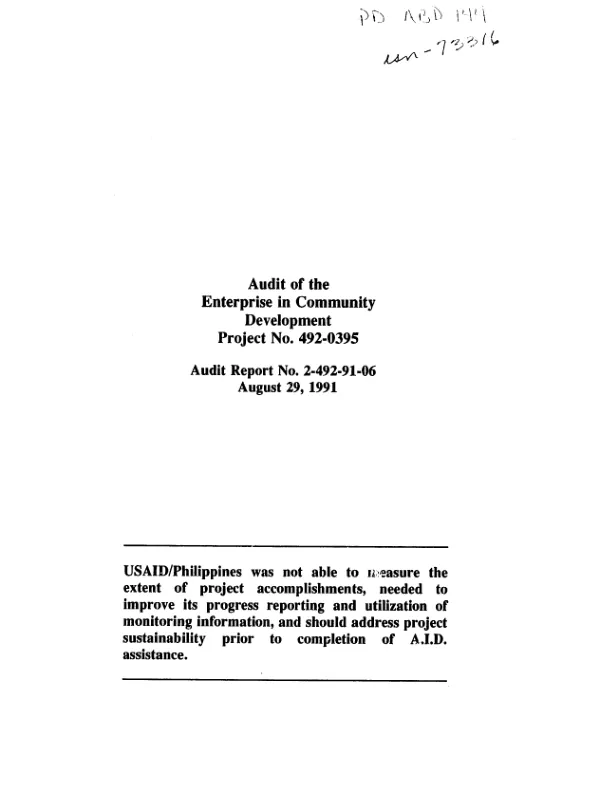
Enterprise in community development (ECD) project
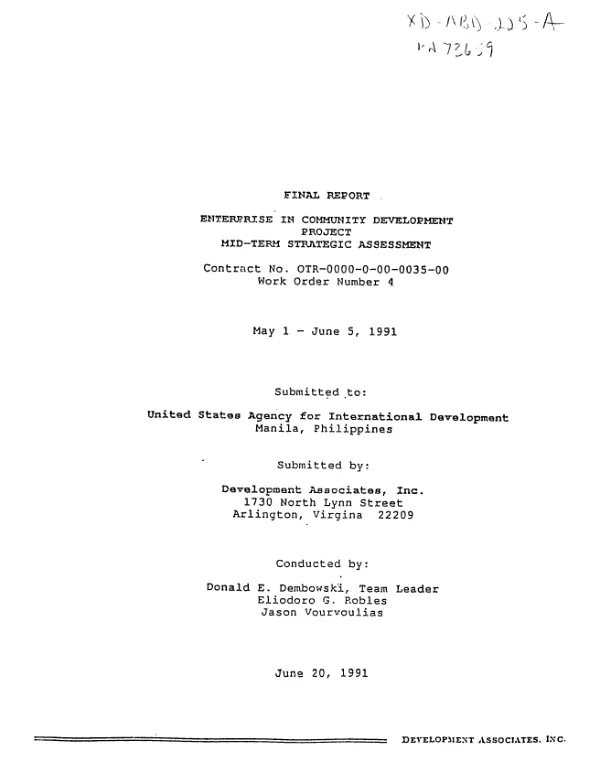
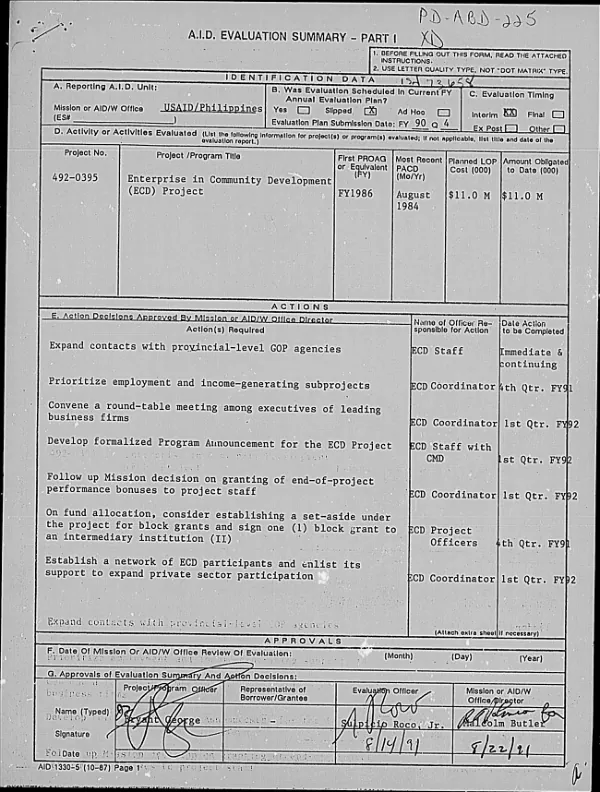
Summarizes midterm evaluation (XD-ABD-225-A) of a project to provide grants to private Philippine firms to conduct community development subprojects (SP"s).
1991
Sign in to readA free account is required to download.
Abstract
The evaluation covered the period FY86-6/91. Although the number of participating firms is far below what was expected, the project is clearly helping to broaden private sector participation in development. All of the subprojects reviewed appear to be progressing smoothly. Although most SP"s are still in an early stage of implementation, there are signs of improvement in community health resulting from improved water supply and sanitation, and some evidence of increased beneficiary incomes resulting from fisheries, poultry, and swineraising SP"s. In many cases, moreover, the organizational base being built at the community level should permit even greater impact than initially expected. Beneficiary communities have been enthusiastic, with the strongest support coming from parish councils, parent-teachers associations, community cooperatives, water management committees, barangay councils, and health workers; there is also considerable involvement of local government units. Most income-generating activities will probably become self- sustaining, provided the communities are given sufficient time to develop a firm base of support. There is some concern regarding the sustainability of other SP"s, since communities generally do not view maintenance activities as their responsibility. Major recommendations are to place greater emphasis on employment and income-generating SP"s and on SP"s in reforestation, fisheries restoration, and market expansion. Also recommended are an extension of the SP time-frame from 3 to 5 years, and additional work in organizing communities, especially at SP start-up, through community workshops and leadership training. Project experience has taught that SP"s are more likely to be successful if they: (1) are rooted in the community and developed in response to the needs of specific beneficiary groups; and (2) have specific targets, e.g., the construction of a community water supply system.