USAID. MISSION TO SWAZILAND
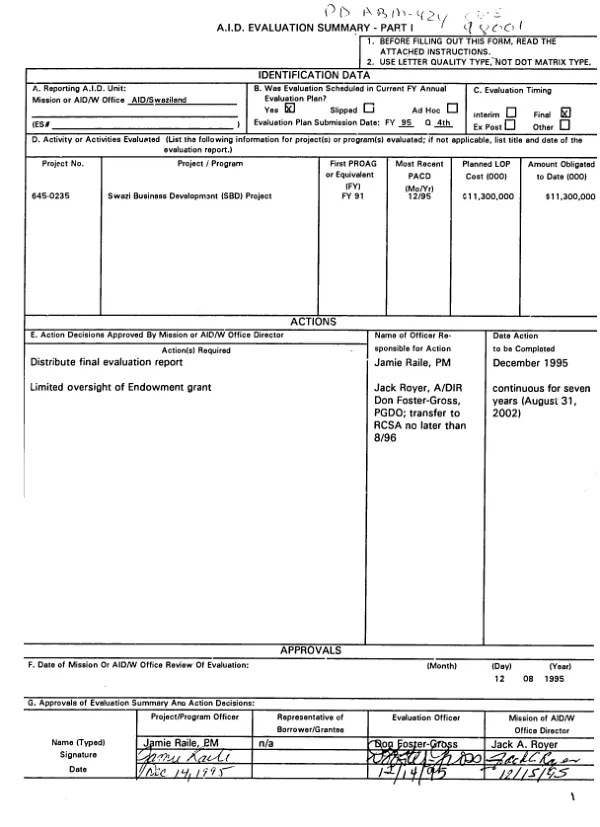
Swazi business development (SBD) project
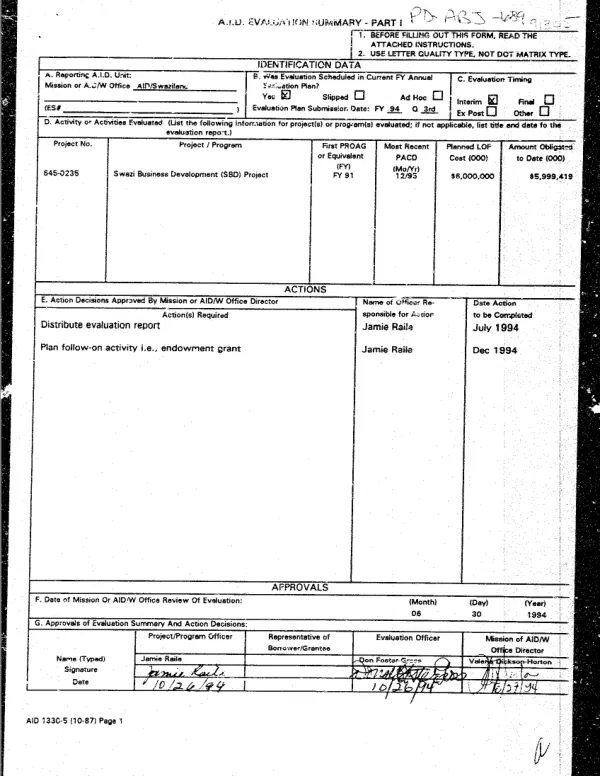
Summarizes attached mid-term evaluation (XD-ABJ-689-A) of a project to stimulate the growth of established small businesses in Swaziland.
1994
Sign in to readA free account is required to download.
Abstract
The evaluation covered the period 1992-1994. The project is well designed and is being implemented effectively by Swazi Business Growth Trust (SBGT). The purpose, goals, and outputs of the project are being accomplished and in some cases exceeded. The Trust is unique in Swaziland in its coordinated and interdependent provision of loan capital, training, and TA. In addition, SBGT has (1) established a sound working relationship with the commercial banking community; (2) created excellent liaison with the professional community, as reflected by the presence of professionals on the Board of Directors; (3) developed effective cooperation with the business community, resulting in large corporations supporting SBGT by linking up with small enterprises for procurement; (4) earned the appreciation of the Swazi government, as evidenced by the Trust"s receipt of a financial institution license from the Central Bank, its tax exempt status, and the permission to prepare its own legal documents; (6) demonstrated sound capability for accounting for and expending grant funds; and (7) developed good systems to monitor client credit needs as well as those of other program collaborators. The project has had its intended impact on beneficiaries, and SBGT"s ability to reach and assist clients has increased significantly over time. The following areas of weakness were identified. The current expatriate management needs to be replaced by Swazi management. No definite action has been taken to sustain SBGT after the end of the current project period. This is likely the major reason why SBGT has not been able to recruit Swazi management. It is also possible that the Trust could lose some of its well trained staff if the issue of sustainability is not resolved in the foreseeable future. SBGT operates in an environment characterized by small markets and very few areas of concentration for entrepreneurs. Staff must be flexible, as the project cannot afford to hire specialists for different markets. The major recommendation is that a long-term funding or an endowment be established to ensure sustainability of SBGT. The following lessons were learned. (1) Project design needs to be flexible enough to allow for changes in implementation methods. In this project, SBGT moved from providing loan guarantees to banks to directly providing loans itself. This change was endorsed by the evaluators. (2) The synergy between SBGT"s credit program and the training and TA provided contributed directly to the overall success of the project, and particularly the loan program. (NOTE. Abstract includes information from XD-ABJ-689-A)