USAID. MISSION TO PAKISTAN
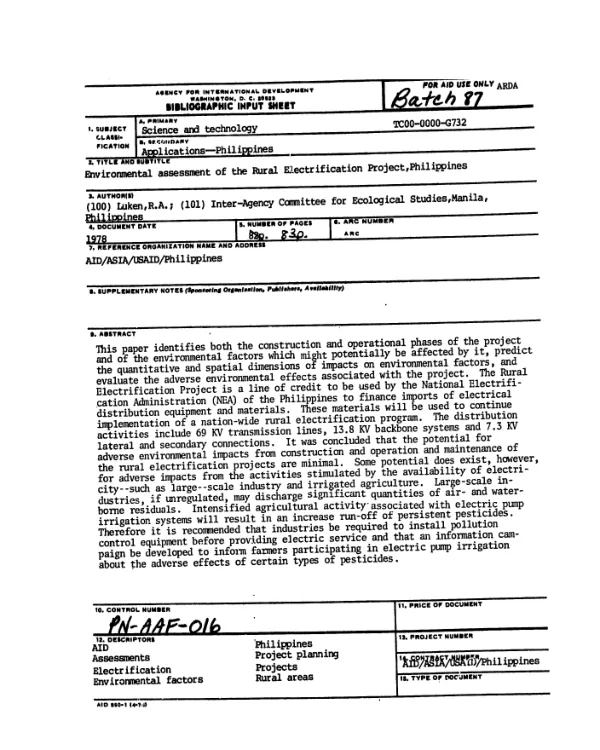
Environmental assessment (of the) rural electrification program, Pakistan
Examines both direct and secondary benefits of the proposed A.I.D.-assisted ten year rural electrification program in Pakistan.
Traxler, V. L. · 1970
Sign in to readA free account is required to download.
Abstract
The various sections of this report discuss the project purpose, design and output, characteristics of the environment, environmental impacts of the project, adverse impacts, alternatives to the proposed project, the relationship between short-term use and long-term productivity, and irreversible and irretrievable commitments of resources. Based on the discussion of environmental impacts and their respective mitigation measures, the environmental impacts of the proposed project are considered acceptable. Electrified areas are not expected to suffer negative impact as these areas are capable of sustaining increased development based on their suitability criteria. Areas selected to be electrified under the program are those with agricultural and agroindustrial potential, availability of power from grid stations, high population density and the availability of rural infrastructure such as roads. These areas are not likely to be habitats for ecosystems on which the project would have a negative impact. Seismic factors will be considered in systems design in areas of pronounced seismic activity.
Connected topics