INTER-AGENCY COMMITTEE FOR ECOLOGICAL STUDIES
Environmental assessment of the rural electrification project, Philippines
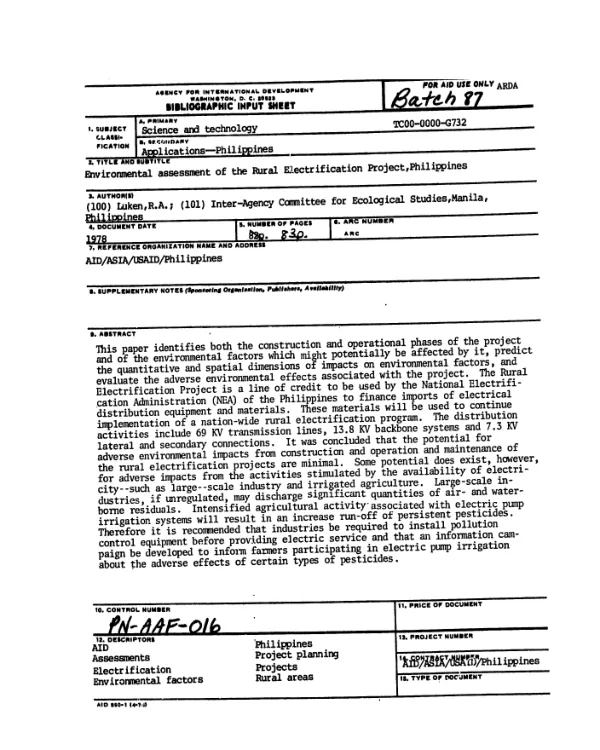
This paper identifies both the construction and operational phases of the project and of the environmental factors which might potentially be affected by it, predict the quantitative and spatial dimensions of impacts on environmental factors, and evaluate the adverse environmental effects associated with the project.
Luken, Ralph A. · 1978
Sign in to readA free account is required to download.
Abstract
The Rural Electrificaton Project is a line of credit to be used by the National Electrification Administration (NEA) of the Philippines to finance imports of electrical distribution equipment and materials. These materials will be used to continue implementation of a nation-wide rural electrification program. The distribution activities include 69 KV transmission lines, 13.8 KV backbone systems and 7.3 KV lateral and secondary connections. It was concluded that the potential for adverse environmental impacts from construction and operation and maintenance of the rural electrification projects are minimal. Some potential does exist, however, for adverse impacts from the activities stimulated by the availability of electricity -- such as large-scale industry and irrigated agriculture. Large-scale industries, if unregulated, may discharge significant quantities of air- and water-borne residuals. Intensified agricultural activity associated with electric pump irrigation systems will result in an increase run-off of persistent pesticides. Therefore, it is recommended that industries be required to install pollution control equipment before providing electric service and that an information campaign be developed to inform farmers participating in electric pump irrigation about the adverse effects of certain types of pesticides.
Connected topics
![Short term technical assistance on MIS [management information system] assessment of candidate pilot banks](https://covers.devme.ai/gen/41208.webp)
![Review and assessment of the floristic knowledge of Samar Island[, Philippines] : based on literature, PNH records and current knowledge](https://covers.devme.ai/gen/105820.webp)