TETRA TECH
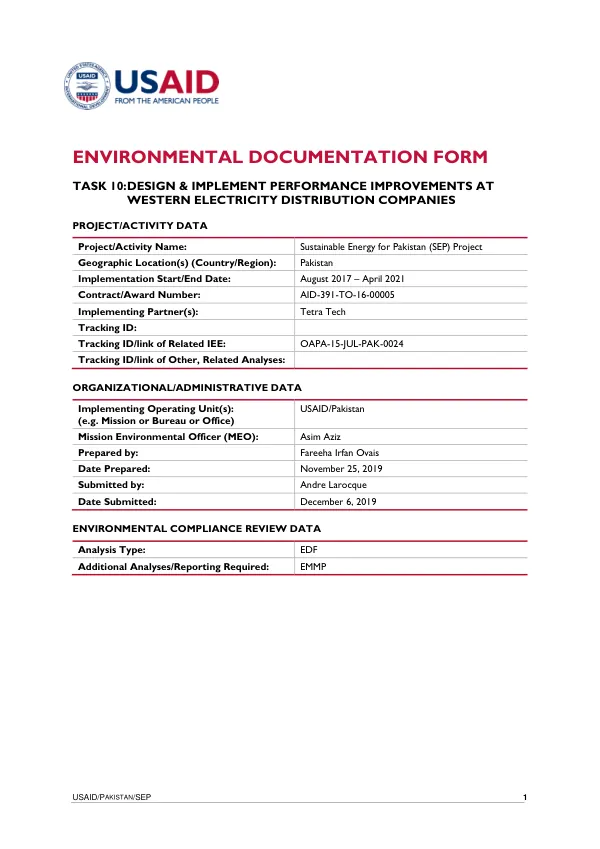
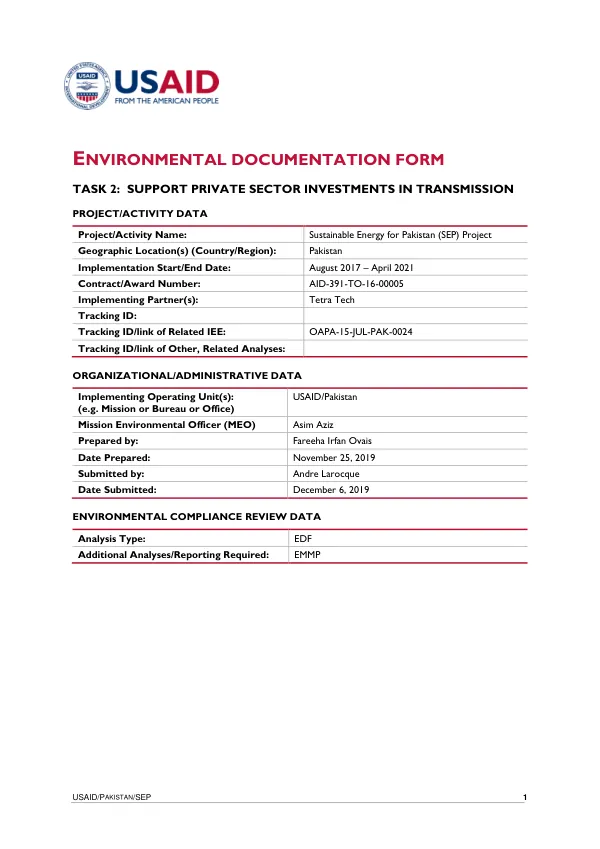
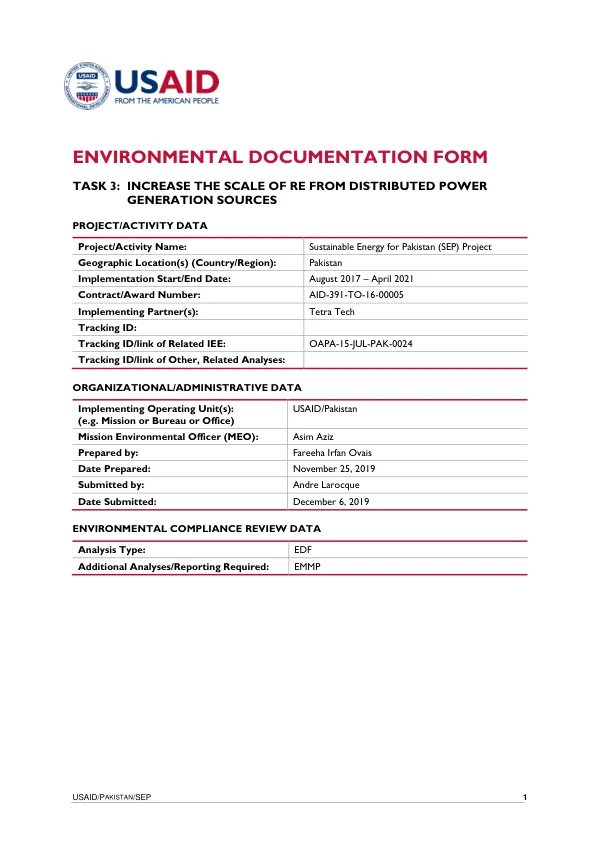
Environmental Documentation Form for Sustainable Energy for Pakistan (SEP) Project
The Sustainable Energy for Pakistan (SEP) Project, implemented by Tetra Tech, aims to increase the scale of renewable energy (RE) in Pakistan by supporting private investment in distributed power generation.
2019 · 11 pages
Sign in to readA free account is required to download.
Abstract
The project focuses on two specific segments of distributed generation supported by government policy: net metered, rooftop solar PV and bilateral trade of RE through the wheeling of electricity. The project's objective is to increase the scale of distributed RE in Pakistan by developing an integrated, automated online platform for the distributed solar PV and net metering markets, and providing transaction support for B2B wheeling projects. The expected results include a fully operational, online system for the distributed generation and net metering markets, at least one wheeling transaction reaching financial close, and support provided to US investors. The primary stakeholders involved in the project include the Alternative Energy Development Board (AEDB), distribution companies (DISCOs), the National Electric Power Regulatory Authority (NEPRA), the Pakistan Electric Power Company (PEPCO), and the Ministry of Energy (MoE). The project's completion date is Q3 FY 2019. The project's activities include developing an integrated, automated online platform for the distributed solar PV and net metering markets, and providing transaction support for B2B wheeling projects. The platform, known as PV Ecosys, is an online platform for the distributed solar PV industry, developed in collaboration between AEDB and a US-based start-up, Islamabad-based start-up called Start Robotics. The project's geographic focus is Pakistan, with a specific emphasis on the cities of Islamabad, Peshawar, Multan, and Lahore. The project's timeframe is from Q3 FY 2019 to Q2 FY 2022, with a budget of approximately $171,665. The project's environmental impact is expected to be minimal, with no significant adverse impacts anticipated. The project's implementation will focus on developing an integrated, automated online platform for the distributed solar PV and net metering markets, and providing transaction support for B2B wheeling projects. The project's expected outcomes include increased adoption of distributed RE in Pakistan, improved operational and technical capacity of DISCOs, and enhanced regulatory framework for distributed RE. The project's key findings and conclusions include the need for improved operational and technical capacity of DISCOs to manage increasing levels of distributed generation, and the importance of developing an integrated, automated online platform for the distributed solar PV and net metering markets. The project's recommendations include the development of a fully operational, online system for the distributed generation and net metering markets, and the provision of transaction support for B2B wheeling projects.