USAID DEC
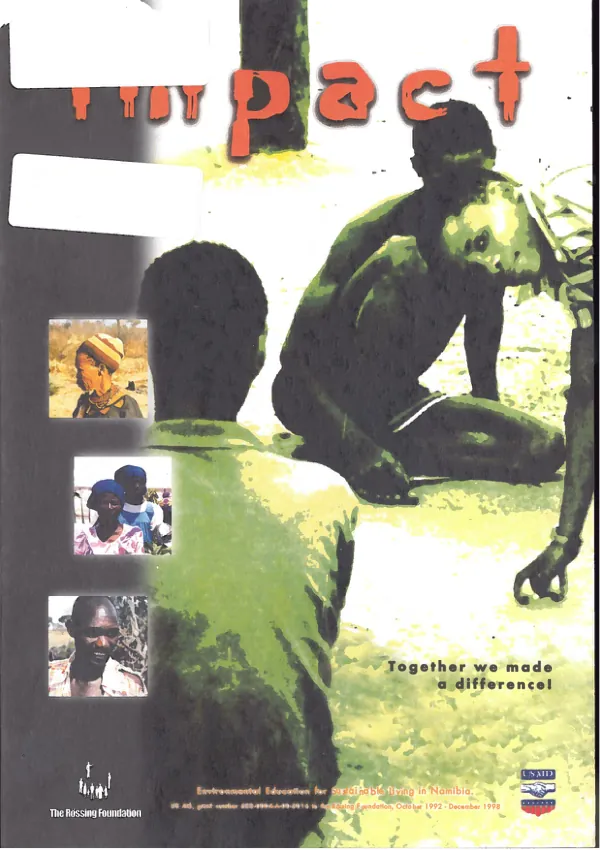
Environmental Education Activity in Namibia: Final Report
The Environmental Education (EE) activity, implemented by The Rossing Foundation and managed by June Horwitz, has received US$ 1.5 million from USAID/Namibia.
2012 · 17 pages
Sign in to readA free account is required to download.
Abstract
The goal of the EE activity is for individuals and groups in rural and urban communities to make environmentally sound choices that sustainably improve their quality of life. The purpose of the EE activity is to support both government and non-governmental organizations (NGOs) in providing effective non-formal environmental education activities and programs to a diverse cross-section of the Namibian population. The EE activity was designed to support the work of organizations that were already active in environmental education and to encourage others to engage in EE. Its aim was to increase awareness, knowledge, options, and skills, and to encourage a change in outlook, enabling Namibians to opt for what is environmentally and economically sustainable. By providing financial, logistical, and motivational support, the EE activity closed gaps in geographical coverage and reached customers who had been unaware of EE. Practitioners of EE have received tremendous encouragement and support from the EE activity's flexible, multi-faceted, holistic, and customer-driven responses to environmental needs. Environmental education means different things to different people, but among its many facets are clean-up days, recycling waste, planting trees, agro-forestry, developing nature trails, visiting game parks, conserving wildlife, learning about sustainable management of resources, managing exhibitions, and projects that generate income to provide alternatives to unsustainable exploitation of the environment. For Rossing and USAID/Namibia, EE is a process that raises awareness of issues and problems caused by human interaction with the environment, develops understanding of the forces and values that underlie these problems, provides the skills people need to act on the knowledge they have gained, and empowers individuals, communities, and nations to regain, maintain, and improve the quality of life for present and future generations. The EE activity implemented various strategies to meet the needs of all partners and customers. These strategies included increasing the number of EE materials, improving their quality, and making them accessible and relevant to the situation in Namibia. The EE activity also established an EE resource center in Windhoek and strengthened five other centers in different regions. EE scholarships were provided for community leaders, educators, Ministry, and NGO employees to develop the human resources necessary to undertake EE. The ability of government and non-governmental organizations to plan, initiate, and sustain EE activities was strengthened and enhanced. Seed money was provided for "kick-starting" new and innovative activities, and networks were developed for coordinating EE and sharing information and lessons learned. Study tours and workshops were sponsored to expose historically disadvantaged Namibians to the potential of EE. A support service for environmental clubs was created, and catalytic events such as expositions and shows were hosted. The level of EE coverage in the media was raised. The EE activity had a significant impact on the sustainable use of natural resources in Namibia. Awareness was raised through the establishment of 80 active environmental clubs, with 7,000 Namibians making use of resources housed in the Rossing Foundation EE Center in Windhoek. The EE activity also funded 349 visits to EE centers in National Parks and NGO activity areas, enabling over 12,000 people to gain in-depth exposure to EE issues. Policy was influenced through the drafting of a National EE policy by the Namibian Environmental Education Network (NEEN), which states that Namibia will actively encourage, support, and implement programs of environmental education as a means of achieving and fulfilling Article 95 of the Constitution. The Ministry of Environment and Tourism identified a role for EE to assist in its long-term goals for natural resource management, and EE centers have been established in two national parks and EE has been included as an integral part of the Ministry's extension/information program. Behavior was changed through the adoption of sustainable practices, such as the propagation of palm resources on plots belonging to 55 women and one that belongs to a croft association. Handicraft resources (palm, reeds, dye plants) were being harvested sustainably, and agro-forestry was being adopted by community groups and schools. Non-lethal predator control was adopted by commercial farmers who manage over one million hectares in prime cheetah habitat, and in nine villages in communal areas. Income was generated through the establishment of nurseries, woodlots, vegetable and handicraft production, and appropriate paper-based technology. Households were profiting from turning trash to treasure, and a few of the many successful results achieved were illustrated in the following pages. The EE activity also enhanced skills through the training of community leaders, educators, and Ministry and NGO employees. Rehabeam Erckie, sponsored by the EE activity, obtained a Diploma in Conservation and Tourism, and Charlie Paxton, another beneficiary of the EE activity, was trained in Participatory Rural Appraisal (PRA) methods. Charlie worked with community groups to develop and implement participatory action plans, and she trained 30 other Namibians in the PRA methods