USAID DEC
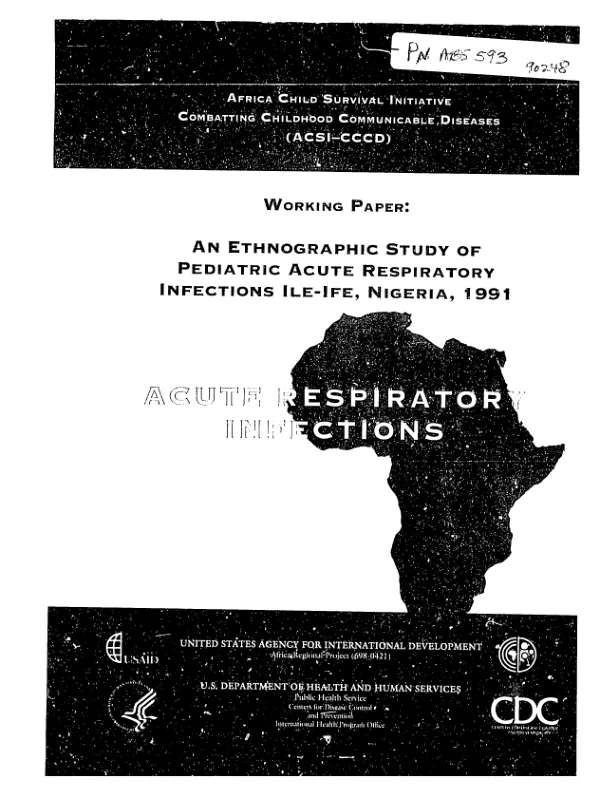
Ethnographic study of pediatric acute respiratory infections in Ile-Ife, Nigeria, 1991
Sign inU.S. PUBLIC HEALTH SERVICE. CENTERS FOR DISEASE CONTROL AND PREVENTION (CDC). INTERNATIONAL HEALTH PROGRAM OFC.
Ethnographic study of pediatric acute respiratory infections in Ile-Ife, Nigeria, 1991
In 1990, acute respiratory infections (ARIs) were responsible for 4.3 million deaths of children under five in developing countries, an estimated one-third of infant and child deaths in those countries.
Wilson, Ruth P.; Ajabeng-Asem, Selina +1 more · 1970
Sign in to readA free account is required to download.
Abstract
This paper reports results of an ethnographic study on ARIs, conducted in October and November 1991 among Yoruba-speaking people in Nigeria. Researchers collected data from mothers, drug dispensers, and health providers (physicians, herbalists, and nurses). When asked to diagnose several hypothetical ARI case scenarios, mothers reported fever as the primary diagnosis for ARI. Fast breathing, a key sign of ARI according to the World Health Organization, was rarely regarded as a danger sign by the mothers. Mothers first treat infected children with herbal teas or home mixtures for cough. They also attempt to treat the child"s fever with an antipyretic or antibiotics purchased from pharmacies or from local drug sellers who routinely provide antibiotics without a prescription. Conclusions are: (1) Yoruba-speaking mothers should be taught to recognize fast breathing as an important sign of ARI; (2) effective interventions should begin at the household level; (3) commercial drug dispensers should be educated concerning appropriate use of antibiotics; and (4) further TA may be needed in developing interventions based on the study results. Includes a list of Yoruba words for illnesses and symptoms.
![Working paper : strengthening patient education for ORT [oral rehydration therapy] services in the Central African Republic](https://covers.devme.ai/gen/67620.webp)