USAID DEC
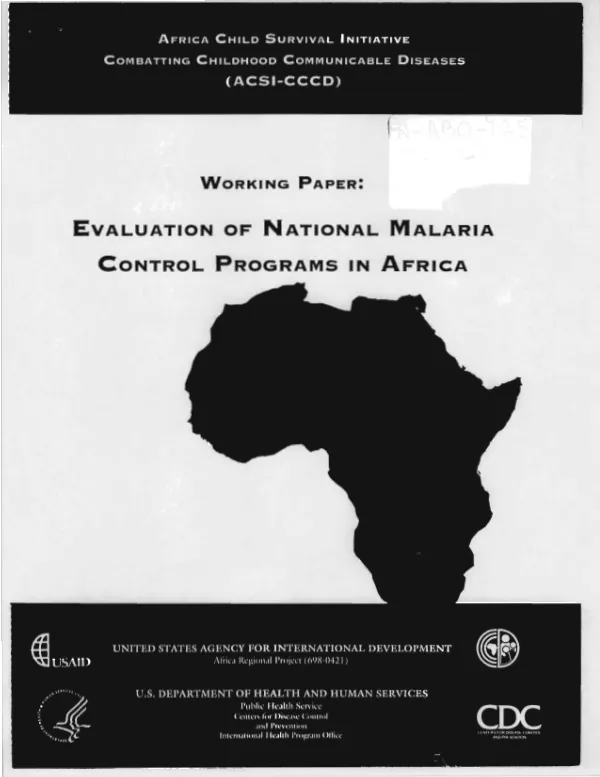
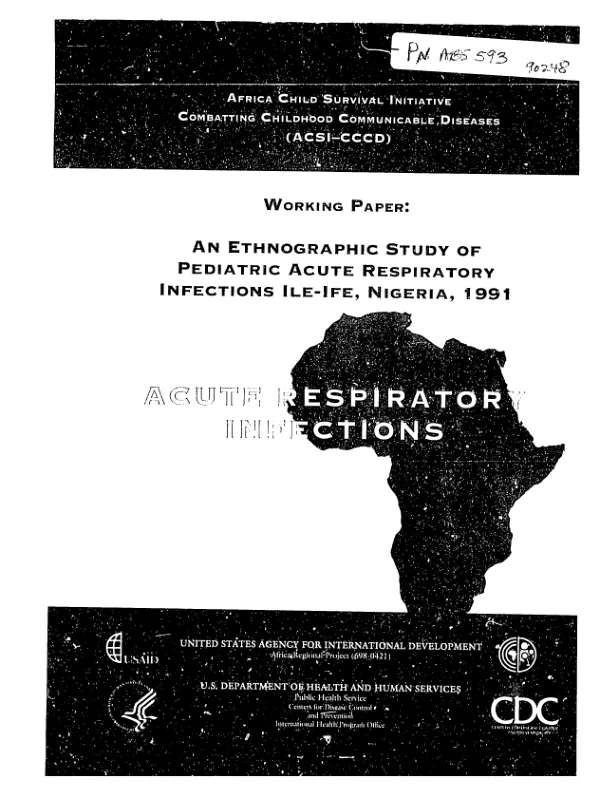
Thirteen lessons learned -- 1981-1993 : Africa child survival initiative (ACSI) -- combatting childhood communicable diseases (CCCD)
Sign inCENTERS FOR DISEASE CONTROL AND PREVENTION (CDC) (U.S.)
Thirteen lessons learned -- 1981-1993 : Africa child survival initiative (ACSI) -- combatting childhood communicable diseases (CCCD)
Thirteen lessons learned from the African Child Survival Initiative Program are presented here, each illustrated by a case study.
Foster, Stanley O. · 1970
Sign in to readA free account is required to download.
Abstract
(1) Reliable and timely health information is essential to planning and management. (2) Understanding community knowledge, attitudes, and practices is an important early step in program development. (3) Data provide the foundation for policy formulation. (4) Quality of services is critical to effective program implementation. (5) Hands-on training is an effective way to upgrade the quality of facility case management of diarrhea. (6) Vaccines can be effectively delivered in Africa. (7) Setting targets and monitoring progress provide essential data for program management and modification. (8) Applied research is important to solving problems encountered in program implementation. (9) Regional projects are an effective technical assistance strategy. (10) Technical officers in Ministries of Heath provide and facilitate effective TA. (11) Local leadership is key to program implementation. (12) Administrative support is critical to program implementation. (13) USAID"s partnership with the U.S. Centers for Disease Control was an effective mechanism for directing TA. Each lesson is discussed in terms of project actions, achievements, constraints, and future challenges.
Connected topics