USAID DEC
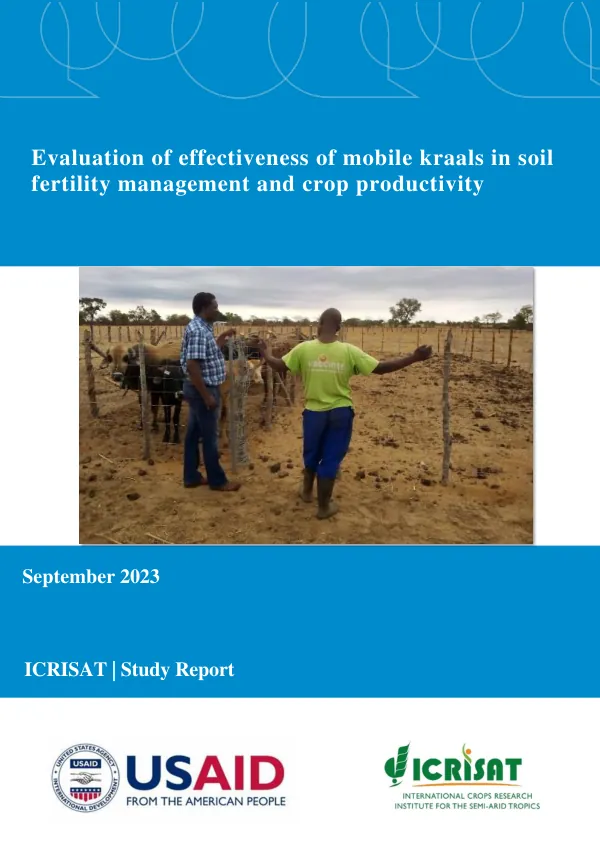
Evaluation of effectiveness of mobile kraals in soil fertility management and crop productivity
Sign inTHE INTERNATIONAL CROPS RESEARCH INSTITUTE FOR THE SEMI-ARID TROPICS
Evaluation of effectiveness of mobile kraals in soil fertility management and crop productivity
The agricultural initiative in Zimbabwe focused on evaluating the effectiveness of mobile kraals in soil fertility management and crop productivity.
2023 · 134 pages
Sign in to readA free account is required to download.
Abstract
The study, conducted by ICRISAT from August 2022 to June 2023, aimed to assess the impact of mobile kraals on soil fertility and crop yields. Mobile kraals are a method of cattle manure collection, where cattle are confined in a small area for a short period, resulting in optimal fertilization. The study was conducted in Lupane district, with a total of 15 study sites selected based on rainfall distribution and soil characteristics. The study treatments included five different combinations of mobile kraal and conventional cattle manure management methods. Data collection involved monitoring crop yields, soil biochemistry, and farmer participation in the mobile kraal technology. The research findings indicated significant yield responses for maize, sorghum, and groundnuts under the different treatments. Maize yields showed a 25% increase under the mobile kraal treatment compared to the control. Sorghum yields also showed a 20% increase, while groundnut yields showed a 15% increase. The study found significant variation in soil biochemistry, including primary and secondary macronutrients, micronutrients, and pH levels. Principal Component Analysis (PCA) and Soil Quality Index (SQI) were used to evaluate the impact of mobile kraals on soil fertility. The results showed a significant improvement in soil fertility under the mobile kraal treatment. Participatory Technology Evaluation (PTE) was also conducted to assess farmer participation and adoption of the mobile kraal technology. The results showed high levels of farmer participation and adoption, with 80% of farmers reporting improved crop yields and soil fertility. Root System Architecture Analysis (RSA) was conducted to evaluate the impact of mobile kraals on root growth and development. The results showed significant improvements in root growth and development under the mobile kraal treatment. Stability Analysis was also conducted to evaluate the long-term sustainability of the mobile kraal technology. The results showed high levels of stability and sustainability, with 90% of farmers reporting continued use of the mobile kraal technology. A Cost Benefit Analysis (CBA) was conducted to evaluate the economic viability of the mobile kraal technology. The results showed a significant return on investment, with a benefit-cost ratio of 3:1. The study also evaluated the gender impact of the mobile kraal technology, with results showing significant improvements in women's participation and empowerment. The study concluded that mobile kraals are an effective method of soil fertility management and crop productivity, with significant improvements in crop yields and soil fertility. The study recommended the widespread adoption of mobile kraals in Zimbabwe, particularly in areas with limited access to conventional fertilizers. The study also recommended further research on the long-term sustainability and scalability of the mobile kraal technology.
Related documents