USAID
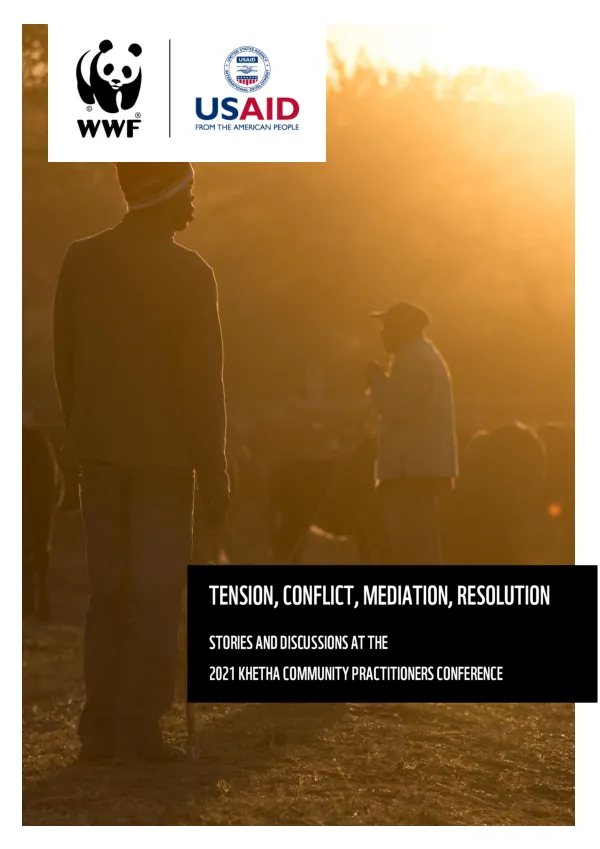
2021 KHETHA COMMUNITY CONFERENCE REPORT
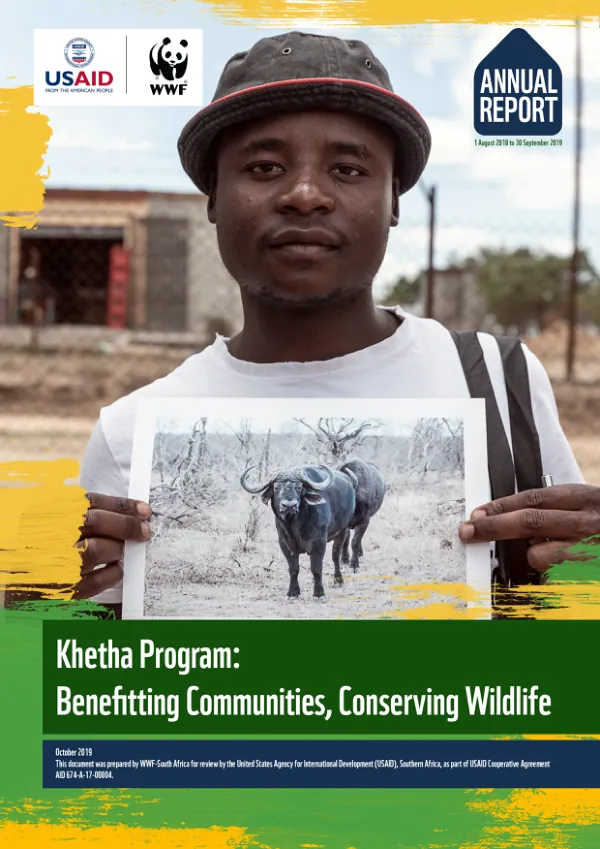
The Khetha programme is a five-year co-operative agreement between the World Wide Fund for Nature (WWF) South Africa and the United States Agency for International Development (USAID).
2021 · 20 pages
Sign in to readA free account is required to download.
Abstract
The overall goal of the programme is to halt wildlife trafficking impacts on flagship species in key populations of the Great Limpopo Transfrontier Conservation Area (GLTFCA) landscape in South Africa and Mozambique. More specifically, by 2022, the programme aims to contribute to an increase in growth rates of black and white rhino and maintain positive growth rates for elephants in the focal area. The Khetha programme recognises that addressing wildlife trafficking involves understanding and engaging in complex social and ecological systems. Understanding these and providing the right advice to institutional partners is a major output of the programme. The Khetha programme therefore seeks to support innovative partnerships and novel approaches within civil society, communities, private sector and government in at least four innovation nodes in GLTFCA to improve relationships between people and wildlife, by July 2022. Additionally, the programme aims to support the implementation of critical wildlife trafficking policy frameworks for South Africa and Mozambique to increase crime prevention, detection, prosecution and collaboration, by July 2022. The programme also seeks to learn, collaborate and coordinate with influential institutions in the GLTFCA landscape to strengthen the collective response to wildlife trafficking, by July 2022. This is in line with WWF's Khetha Objective 1, which aims to support innovative partnerships and novel approaches within civil society, and Objective 3, which aims to learn, collaborate and coordinate with influential institutions in the GLTFCA landscape. The conference, hosted by WWF South Africa, brought together community practitioners to share experiences in implementing community-based conservation initiatives along the western boundary of the Kruger National Park in South Africa. The conference focused on the theme of tension, conflict, mediation and resolution, and provided a platform for experts to share their knowledge and experiences in addressing human-wildlife conflict and other challenges in conservation. One of the key presentations at the conference was given by Helen Mmethi, who shared a story about the importance of understanding community dynamics and staying humble, honest and transparent in engagement with communities. Helen has over 20 years of experience working with communities along the boundary of the Kruger National Park and has seen firsthand the impact of conservation activities on community relationships. Another presentation was given by Hebert Pikela, who shared a case study on lion-human conflict in the Maparadze village on the border of the Gonarezhou National Park, Zimbabwe. The case study highlighted the importance of building healthy relationships between communities and conservation authorities, and the need for collaborative approaches to addressing human-wildlife conflict. The conference also featured a presentation by Papie Hlalele, who discussed the importance of cattle, wildlife and disease management in addressing human-wildlife conflict. Papie highlighted the need for integrated approaches to managing these issues, and the importance of working with communities to develop effective solutions. Overall, the conference provided a valuable platform for community practitioners to share their experiences and learn from each other's successes and challenges. The presentations highlighted the importance of building healthy relationships between communities and conservation authorities, and the need for collaborative approaches to addressing human-wildlife conflict and other challenges in conservation.