USAID DEC
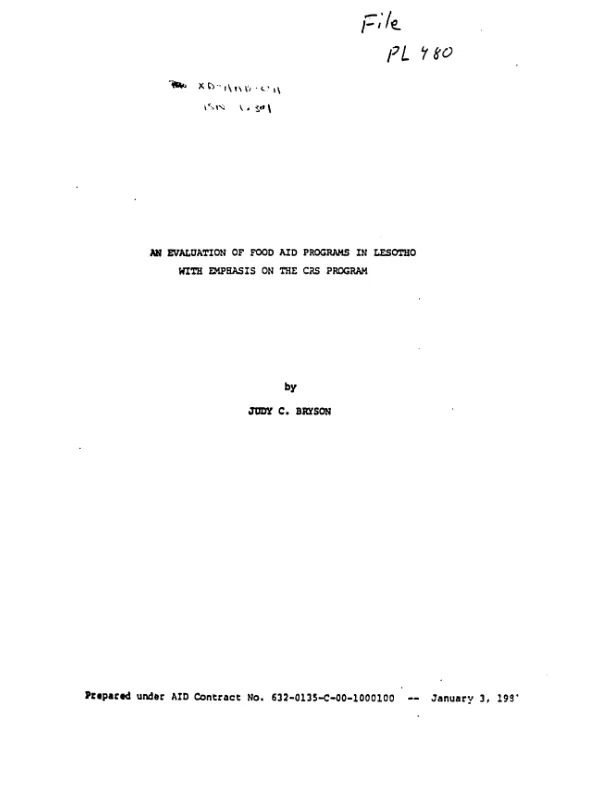
Evaluation of food aid programs in lesotho with emphasis on the CRS program
Evaluates P.L.
Bryson, Judy C. · 1981
Sign in to readA free account is required to download.
Abstract
480 Title II food distribution program in Lesotho, implemented by Catholic Relief Services (CRS) and other PVO"s. Special evaluation covers the period 1/78-11/80; no methodology is noted. Results have been mixed. CRS"s pre-school health program has developed into a network of 69 clinics, reaching 75,000 pre-school children and 60,000 mothers, but the method of nutrition assessment employed, the Growth Surveillance System, has come under criticism from the World Health Organization. Under its Food for Work Program (FFW), CRS annually provides food for 8,775 workers and for four dependents per worker. Some program regulations (e.g., retention of work tickets by workers, the ineligibility of those receiving other supplemental food, limitations in worker attendance) have not been adequately enforced, and more attention has been paid to managing food sources than to whether FFW projects are productive and completed om time. The number of workers in the FFW Program run by the World Food Program (WFP) has steadily increased to 7,786 in l980, 2,000 above target. The resultant shortage of commodities, worsened by the late arrival of shipments, necessitated the transfer of commodities from CRS. WFP has paid close attention to the substance of FFW projects, programming a large portion of its commodities to support development projects by other donors. WFP"s second major program, primary school feeding, is generally on target, although fewer children than planned (144,500 versus 175,000-l80,000) were served in l979; a survey is being conducted to evaluate the program"s nutritional effects. Food assistance to post primary educational/training institutions and hospitals has served a larger number of beneficiaries than planned, leading to lower daily rations. Programs to establish a grain reserve in mountain areas and a national strategic wheat reserve, as well as the European Economic Community"s Food Program, are described but not evaluated. Recommendations are made to reduce the number of WFP employees to planned levels; develop a framework to monitor and evaluate FFW projects; and establish an in-house capacity in CRS"s FFW program to increase the staff time available for project monitoring.