USAID. MISSION TO BOTSWANA
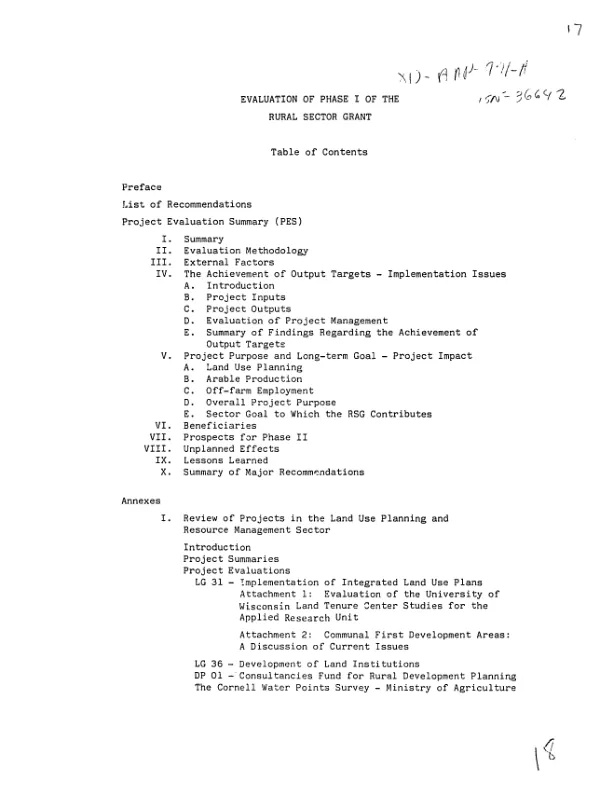
Evaluation of phase I of the rural sector grant
Evaluates Phase I of project to help the Government of Botswana (GOB) improve land use planning and resource management and increase agricultural production and rural nonfarm employment.
1984
Sign in to readA free account is required to download.
Abstract
Special evaluation covers the period 6/80-10/83 and is based on field visits, interviews with GOB officials, and document review. The project did not achieve all its objectives, but it has initiated several important steps toward sustained rural development, especially off-farm employment generation. There were serious shortfalls in meeting land use planning targets, due to personnel shortages and lack of interest by the Ministry of Local Government and Lands; although considerable baseline data were generated concerning communal area development and resource management, only one land use plan was implemented (in Ngamiland). Most arable production outputs were achieved in spite of a 3-year drought, but lack of qualified staff led to poor choices in nurseries, woodlots, and horticultural estates. The Arable Lands Development Pilot Program and the Agricultural Small Projects Fund were successful, but the former could have had more impact on planning large-scale programs, while the latter, which is ongoing, could benefit from more extensionists. In the off-farm employment component, the wildlife utilization project achieved none of its targets, due mainly to institutional problems and differences in orientation among personnel, and is being discontinued. The rural industry program, on the other hand, has developed an active industrial extension program; its major shortfalls have been in finding local staff for the program and in completing surveys of industrial potential. The project's variety of activities, focus on local initiative, and flexible design have created special management problems for USAID/B and the implementing ministries. Project shortfalls have been due to: lack of trained personnel at both national and local levels; weak management systems within GOB ministries and competing priorities among them; and cumbersome administrative procedures. Lessons learned: documentation and approval procedures should be simplified in projects of this sort; progress in land use planning and resource management depends on political will to address difficult issues; and, participatory rural development is a gradual process, requiring special management approaches and evaluation criteria.
Related documents