USAID DEC
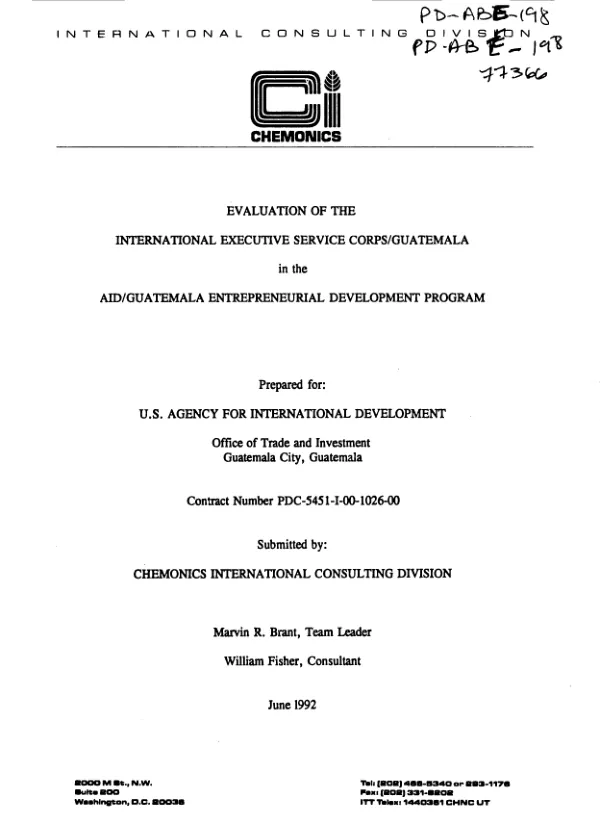
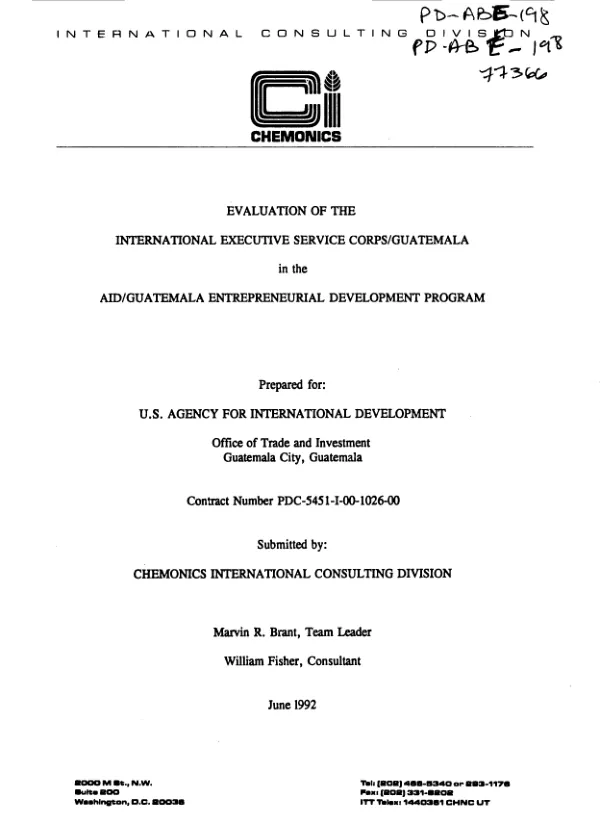
Evaluation of the International Executive Service Corps/Guatemala in the AID/Guatemala entrepreneurial development program
Sign inCHEMONICS INTERNATIONAL, INC.
Evaluation of the International Executive Service Corps/Guatemala in the AID/Guatemala entrepreneurial development program
Evaluates a project implemented by the International Executive Service Corps (IESC) to provide TA and support services to small and medium-size Guatemalan enterprises (SME's).
Brant, Marvin R.|Fisher, William · 1992
Sign in to readA free account is required to download.
Abstract
Mid-term evaluation covers the period 12/90-5/92. Despite weaknesses in marketing its services in Guatemala and in providing follow-up, IESC appears to be meeting key project objectives. It has completed 59 of 100 TA assignments for smaller firms, and 46 of 50 for medium-size firms, and has also provided TA to some 40 larger firms without USAID subsidy. It has delivered one more than its required 26 research and information reports -- American Business Linkage Enterprise (ABLE) and Quick Business Information (QBI) reports -- and others are in the pipeline. It claims to have created 3,000 of the targeted 4,500 jobs, and to have generated investments far in excess of the $450,000 life-of-project objective. It has carried out 4 of 6 volunteer executive (VE) sector surveys, generated $68,000 in verified exports, and conducted workshops and seminars. IESC does not keep records of the amount of U.S. equipment purchased by its clients. IESC's recent survey found that of the 71 companies responding, 41 had increased their profits, by an average of 10%; 35 had increased production, by an average of 24%; 37 had improved sales, by an average of 15%; 44 (80% of target) had improved product quality, by an average of 13%; and 25 had increased wages, by an average of 17%. Of the 149 TA agreements, 36% were in rural areas, and 18% were with enterprises owned or managed by women -- probably an underestimate, since projects that are both rural and women owned or managed are reported in the computer only as rural. On the negative side, the market access program -- finding U.S. joint or co-venture partners for Guatemalan businesses -- is seriously deficient. Although IESC cited nine successes in its recent presentation to USAID/G, in only one case can the success of a venture definitely be attributed at least in part to the program; the degree to which the others have been successful is attributable to a variety of factors, such as extensive VE efforts, work conducted in association with other organizations, or the fact that the projects are still in the long-term experimental stage. Also, membership in CIGUA, the venture capital club organized by IESC, has fallen from over 100 to about 15, and IESC is re-examining the viability of the concept. A reduction of $864,000 in project funding by IESC's home office in Connecticut has created financial strains within IESC/Guatemala, leading it to increase the fees it charges to clients. The situation may further result in IESC focusing its services on the larger companies that need them the least. It may also constrain team-building and adoption of a more aggressive marketing approach.
Related documents