CHEMONICS INTERNATIONAL, INC.
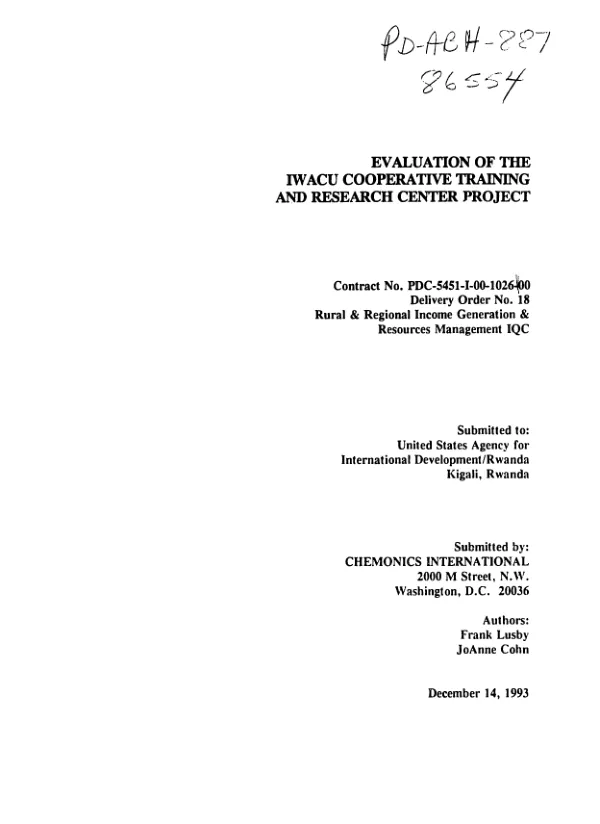
Evaluation of the IWACU Cooperative Training and Research Center project
Evaluates a subgrant from the National Cooperative Business Association (NCBA) to the Rwandan Cooperative Training and Research Center (IWACU).
Lusby, Frank|Cohn, JoAnne · 1993
Sign in to readA free account is required to download.
Abstract
Evaluation covers the period 1989-11/93. IWACU has had a positive impact on co-ops, although variables such as weather and agricultural prices make it difficult to quantify. By helping them prepare business plans, brokering access to credit, and providing management training, IWACU has helped co-ops to increase revenues and has contributed to their sustainability. Moreover, co-op members have gained experience in the democratic process and enhanced their credibility in the community; women, who account for 30% of IWACU's participants, have benefitted through greater earnings, more interaction with other women, greater confidence to speak out in the community, and access to credit otherwise unavailable. Also, in helping co-ops, IWACU has promoted private sector development and stimulated new business. IWACU is not financially self-sufficient, and it would be unfair to expect it to become so any time soon, given that its very mandate is to work with groups which cannot afford to pay for professional services and which need outside funding. NCBA has provided a variety of short-term TA, including computer training, pedagogical training, and general advice on grant and monitoring issues, which IWACU staff found to be useful. NCBA should have done more, however, to shore up IWACU's training and follow-up programs, as these constitute IWACU's principal services to co-ops, and to help IWACU develop an effective training methodology. Lessons learned included the following. (1) Progressively withdrawing TA from an indigenous organization such as IWACU is a good strategy as long as the organization has the fundamental skills it needs to run its programs; until then, TA should be provided. (2) USAID's hands-off policy regarding grants is understandable. It is important, however, that the local implementing agency have someone available for discussing program issues. (3) Excessive compartmentalization of units detracts from the continuity of operations and integration of activities. (4) Training should emphasize applicable, real-world topics, rather than theory. (5) Program outputs should be designed to encourage implementation in the field, not just tabulate numbers of people trained.