USAID DEC
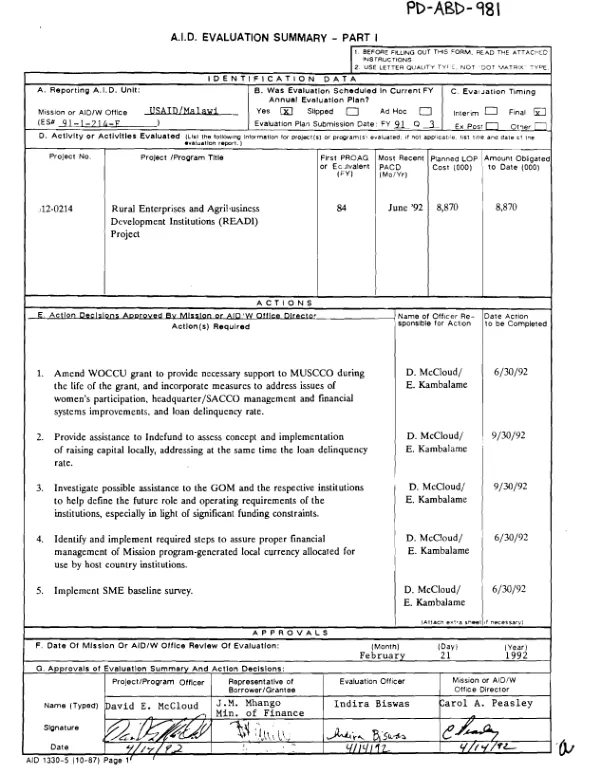
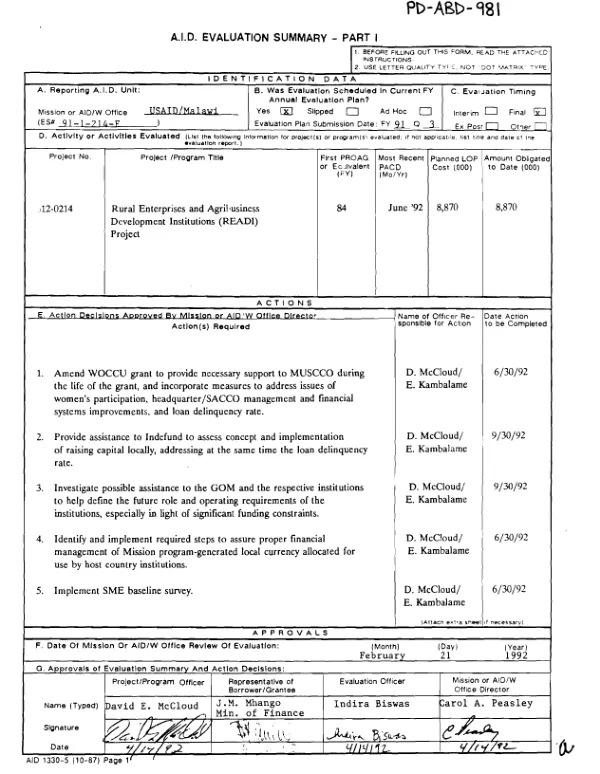
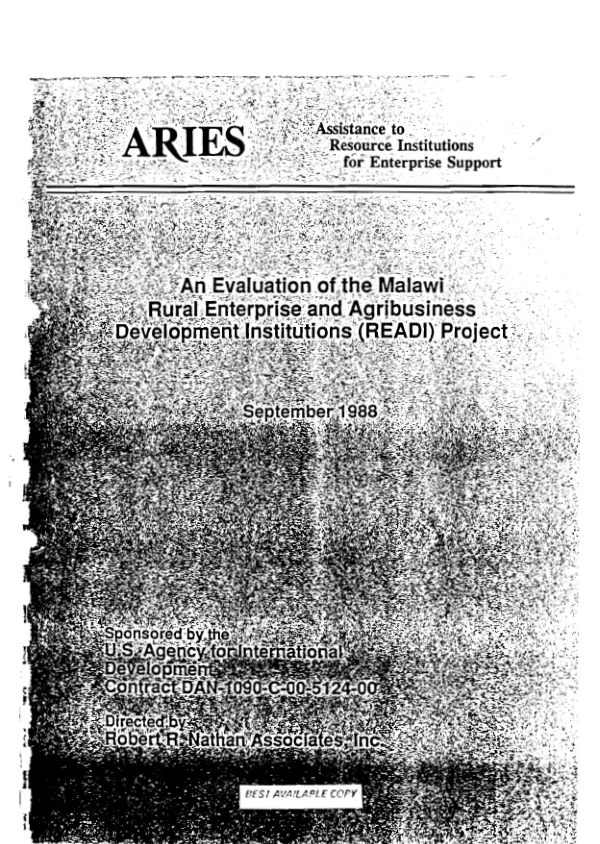
Evaluation of the Malawi rural enterprise and agribusiness development institutions (READI) project
Sign inROBERT R. NATHAN ASSOCIATES, INC.
Evaluation of the Malawi rural enterprise and agribusiness development institutions (READI) project
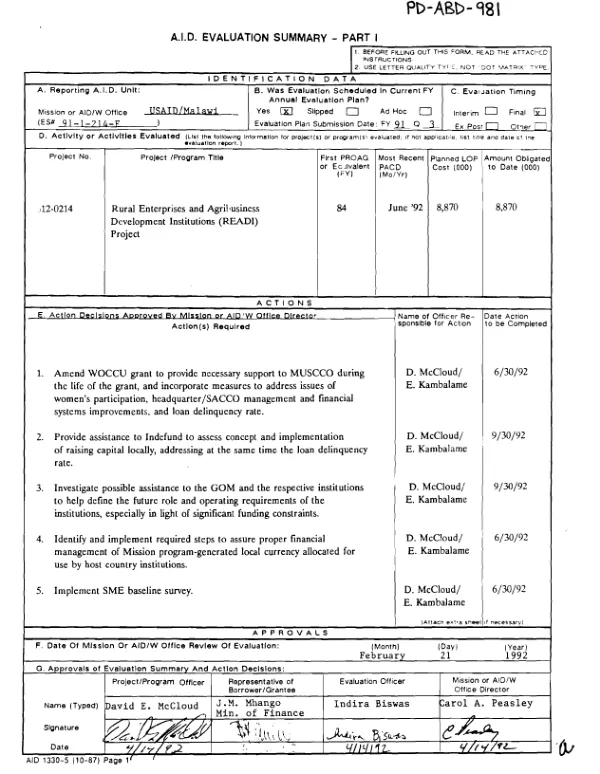
Evaluates project to strengthen Malawian intermediary institutions (II's) that provide credit, training, and business/technical advisory services to small and medium enterprises (SME's) in rural areas.
Bess, Michael|Chilingulo, Richard · 1988
Sign in to readA free account is required to download.
Abstract
External evaluation covers the period 1984-9/88. The project has made a positive contribution toward institutional development of three II's: INDEFUND, a development finance institute lending to the SME sector; the Malawi Union of Saving and Credit Cooperatives (MUSCCO); and the Development of Malawian Traders Trust (DEMATT). With project operational support, TA, and credit financing, MUSCCO has made particularly impressive progress. Its program of mobilizing savings and organizing indigenously managed credit unions is creating numerous opportunities for expanding rural incomes. INDEFUND, which received grant funds for on-lending, has achieved a lower level of lending than expected, largely because management has had to focus on improving its existing portfolio and strengthening internal operations. Once these improvements are made, however, INDEFUND should take a more aggressive approach to development financing. Project TA has strengthened DEMATT's management and has clarified its mandate to provide SME's with business and technical advice. Its services are unique among II's, and with further strengthening, DEMATT could become a major force in creating small businesses. The project has had a less direct, yet notable, impact on other SME development agencies by collecting and disseminating SME information. In 1988, the project began a pilot effort to promote SME credit financing opportunities by preparing feasibility studies and project portfolios for INDEFUND, the Small Enterprise Development Organization of Malawi, and commercial banking institutions. The project has also engaged constructively in SME policy dialogue, working closely with the Ministry of Trade, Industry, and Tourism to broaden its involvement with II's. Project impact on SME's is more difficult to assess. Specific project targets for employment and income appear to be unrealistic, in light of the effort required for II institutional development. In addition, project managerial problems hindered impact at the SME level. For example, the project coordinator position was not filled until 8/85, a year after project implementation began. There was also considerable disagreement regarding the role of Africare and the operational support requirements of MUSCCO, INDEFUND, and the project coordinating unit. It is recommended that USAID/M continue to support the II's in addition to planned SME development projects.