MANAGEMENT SCIENCES FOR HEALTH (MSH)
Evaluation of the national CDD program in Zambia
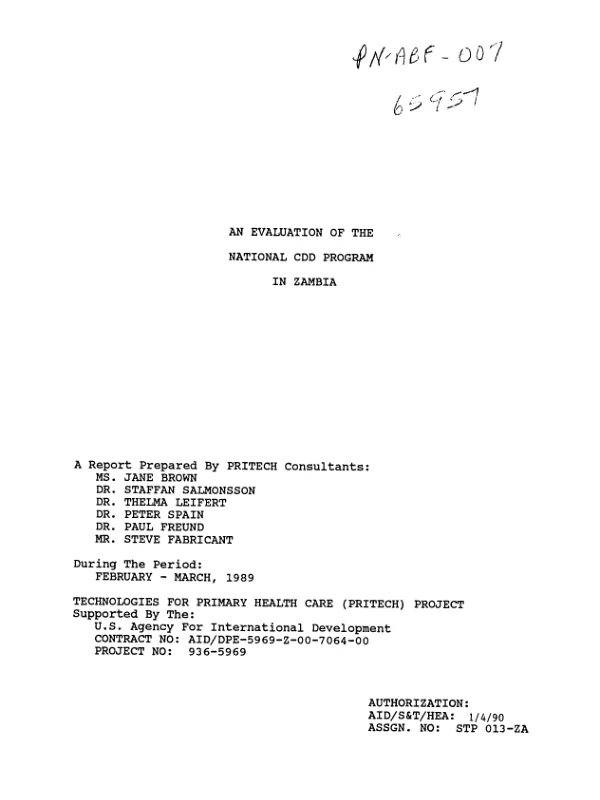
From 2/27/89-3/11/89, a five-person PRITECH team was in Zambia to assess the PRITECH-I intervention within the context of the national Control of Diarrheal Diseases (CDD) Program.
Brown, Jane|Salmonsson, Staffan · 1990
Sign in to readA free account is required to download.
Abstract
Since its launch in 1986, the program has made remarkable progress under the direction of the CDD Secretariat. Among the program's achievements are the extensive training in oral rehydration therapy (ORT) of health workers throughout Zambia, the local production of ORS, the development and distribution of health education materials, and an ambitious and comprehensive baseline survey. The CDD program appears this year for the first time in the National Development Plan, which lists program objectives and targets as well as budget line items for program components. The Ministry of Health succeeded in removing antidiarrheals from its formulary and is expected to have legislation passed to ban importation of antidiarrheals into Zambia. These achievements are all the more striking when viewed within the context of the many problems facing Zambia today. The CDD Program functions in spite of its limited resources -- in personnel, finances, and equipment, in particular, transport. In addition to these chronic resource deficiencies, the program has had to cope with the acute and worsening problems of the country's economic decline, the AIDS epidemic, and the lack of Zambian doctors (which has resulted in an influx of foreign, non- English speaking doctors who lack CDD training). To make the most of its limited resources, the Zambia CDD Program has accepted financial and technical assistance from a number of donors and organizations, in particular UNICEF, WHO, DANIDA, and the AID-funded PRITECH Project. This report focuses on the following components of the CDD program (with particular reference to PRITECH's technical contributions): case management of diarrhea; training; supervision; ORS production, supply, and distribution; program management; health information systems; community participation; networking; evaluation; and problemsolving studies. The remainder of the report: provides a country profile of Zambia; discusses the findings of three recent research studies; and details recommendations based on observations at six hospitals and four health centers in Lusaka and in the Southern and Copperbelt provinces. (Author abstract, modified)
Related documents
![Final evaluation : ADRA [Adventist Development and Relief Agency]/Rwanda -- child survival project : 1985-1989](https://covers.devme.ai/gen/6085.webp)