USAID. MISSION TO MALI
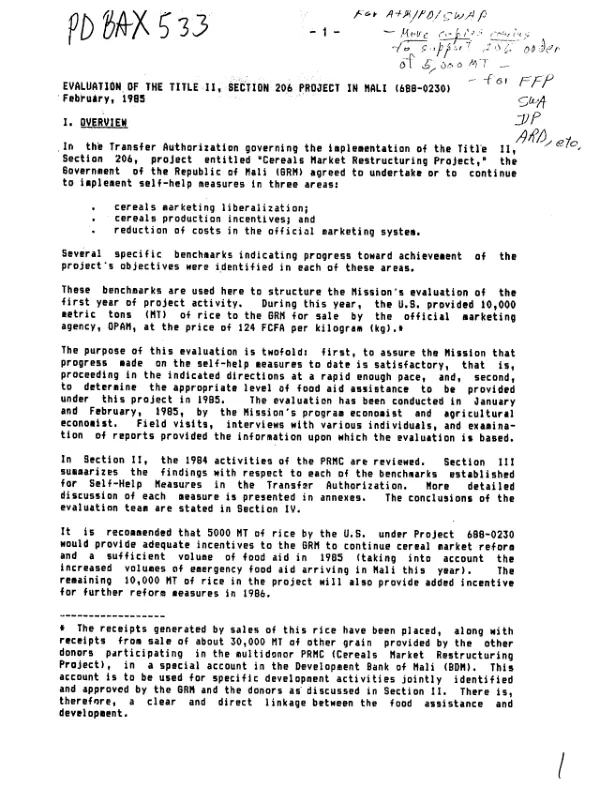
Evaluation of the title II, section 206 project in Mali (688-0230)
Evaluates first year of multidonor cereals market restructuring project in Mali.
1985
Sign in to readA free account is required to download.
Abstract
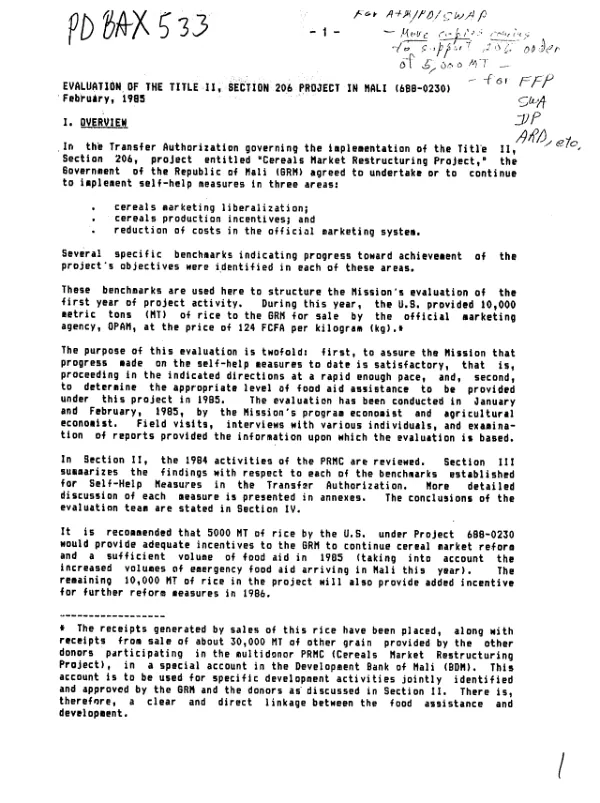
Mid-term Mission evaluation covers the period 6/84-2/85 and is based on field visits, interviews, and document review. The project has provided 10,000 MT of rice to the Government of Mali (GRM) for sale by the official marketing agency, OPAM. In return, the GRM has moved toward cereals market liberalization, although it has not satisfied all the objectives established for year one. Targets for coarse grain marketing liberalization and cereal import liberalization were met. Due to the dismal 1984 crop year, there was little or no progress with regard to increased private cereal marketing, but the GRM's Office du Niger (ON) has implemented measures which will lead to market reform programs. Regarding production incentives, the GRM agreed to donors' demands that it increase producer prices; the increase (first-year costs were covered by project donors), meant that, on average, prices covered production costs for coarse grains. The GRM did not agree to increase official consumer prices in 1984 - a position donors reluctantly accepted - but it has recently taken a key step in this direction by ending the freeze on civil servants' salaries. Progress has also been made in improving non-price producer incentives (e.g., through irrigation rehabilitation, establishing village associations, consolidating and reducing rice holdings, and reducing both ON operating costs and "super" subsidies on rice for ON employees). Also, to reduce costs in the official marketing system, OPAM has implemented transport costs and staff reductions, cracked down on fraud, restructured debt, and completed a study for organizational reform. Some progress has been made with regard to price data collection and production statistics. In conclusion, the project has invested much of its credibility in realizing a breakthrough in paddy marketing liberalization in the upcoming year, particularly by showing its willingness to cover immediate GRM deficits. The GRM, despite the progress noted above, has yet to declare its liberalization plans and/or schedule. It is recommended that the project deliver 5,000 MT of rice in FY85. Reserving the remaining 10,000-MT project allocation for FY86 should maintain maximum project leverage in policy dialogue.