USAID DEC
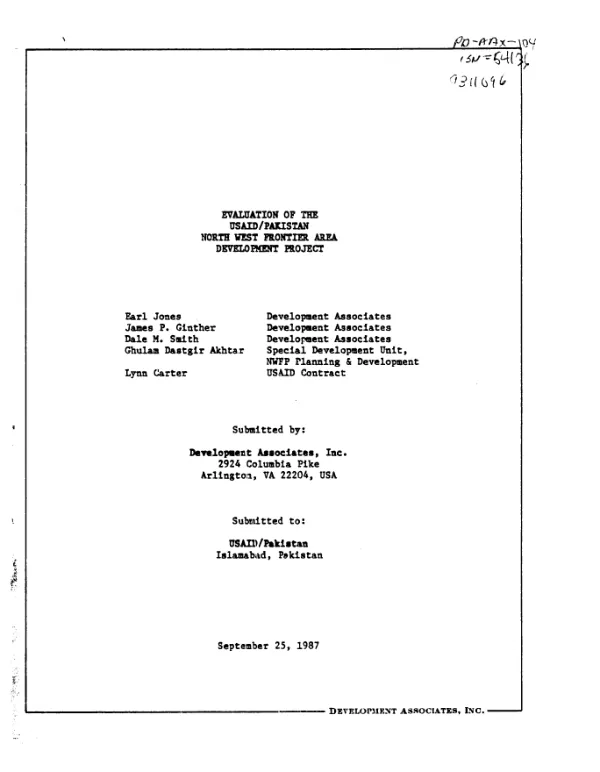
Evaluation of USAID/Pakistan northwest frontier area development project (25 September 1987)
Sign inUSAID. MISSION TO PAKISTAN
Evaluation of USAID/Pakistan northwest frontier area development project (25 September 1987)
Summarizes external interim evaluation (PD-AAX-104) of Phase I of a project to develop the Northwest Frontier of Pakistan and lessen its dependence on poppy cultivation.
1987
Sign in to readA free account is required to download.
Abstract
Evaluation covered the period 8/83-9/87, and was based on document review, site visits, and interviews with beneficiaries, and USAID/P and host government officials. The project, which represents A.I.D."s first narcotics-related development intervention in Pakistan, includes activities in infrastructure, agriculture, education, non-formal education, vocational training, and health facilities in support of government bans on poppy production. Implementing agencies include the Project Coordination Unit (PCU) in Topi, and various line agencies such as the Water and Power Development Authority (WAPDA), as well as provincial departments of Agriculture, and Communications and Works (C&W). After a long and difficult start-up period, the project was able to demonstrate commendable energy and accomplishments during the most recent eighteen months; the project now seems positioned to meet most of its objectives. The quality of construction of infrastructure subprojects is good, particularly given the ruggedness and remoteness of the project area. Among the agricultural activities, demonstration plots have had high visibility, and there is considerable popular demand for more. The evaluation team noted several concerns about project management and monitoring and made recommendations regarding improved data collection. One concern was the fact that the cost of future activities planned by the PCU was more than was provided for within the project. With regard to line agencies, the team observed that the agricultural sector agencies had been most supportive and interested, while a number of problems had been encountered in infrastructure activities undertaken by WAPDA and C&W. In sum, the evaluation indicated that the project, despite all the difficulties, was succeeding and having a beneficial impact. Several observations on related activities in Dir implemented by the UN Fund for Drug Abuse Control, but funded in part by USAID/P, were made in the evaluation. A number of recommendations -- including the expansion of the project to the adjacent region of Khala Daka -- were also made to be implemented during a planned follow-on project. Action decisions are to: (1) design a 5-year follow-on, to include activities in Khala Daka, utilizing lessons learned to date, especially those involving training needs, animal husbandry, and land leveling schemes; and (2) improve monitoring, training, and supervision and ensure that the projects" activities do not exceed its resources.
Related documents