USAID. BUR. FOR AFRICA. OFC. OF REGIONAL AFFAIRS
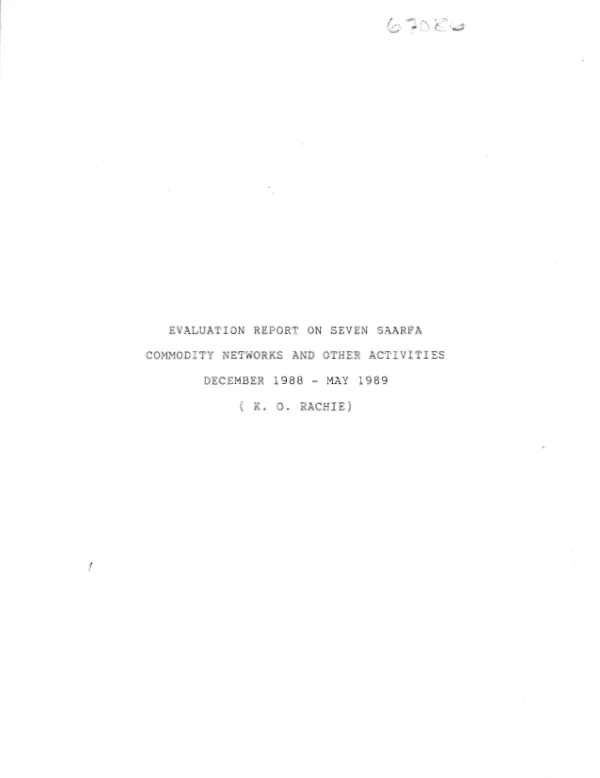
Evaluation report on seven SAARFA commodity networks and other activities
Mid-term evaluation of subprojects, implemented by several international agricultural research centers, to establish commodity networks among agricultural research institutions in east and southern Africa.
Rachie, K. O. · 1989
Sign in to readA free account is required to download.
Abstract
The evaluation covers the period FY83- 4/89 and focuses primarily on networks operated by CIMMyT, CIP, ICRAF, and ICIPE in Kenya, by CIAT in Ethiopia, and IITA in Malawi. The networks have developed and strengthened linkages among national agricultural research systems (NARS) and between NARS and international research centers. Particularly successful are exchanges of germplasm, sharing knowledge of methodologies, and training. Direct contributions to national agriculture are not yet measurable, but improved bean, potato, cassava, and sweet potato cultivars are moving into advanced testing and farmer's field trials. Improvements in cultural practices and pest control are also being widely evaluated. Hundreds of NARS staff members have been trained and provided with information, consultation services, genetic stocks, and material support. In addition, CIMMYT's farming systems research (FSR) network, which focuses more on training and on-farm research than on classical FSR, is having a major impact on the attitudes and strategies of agricultural technology generation. On the negative side, there appears to be little interest on the part of the research establishment in assessing the impact of developed technologies. This is attributed to the unreliability of the data base, lack of procedural methodologies for evaluating and quantifying such impact, and because this information is seldom included or stressed adequately among the outputs of funding grants. The networks are long-term activities which are potentially the most important investment made in Africa. However, they must be sustained by external support for at least another 20 years to ensure a continuation of vigorous research.