JSI
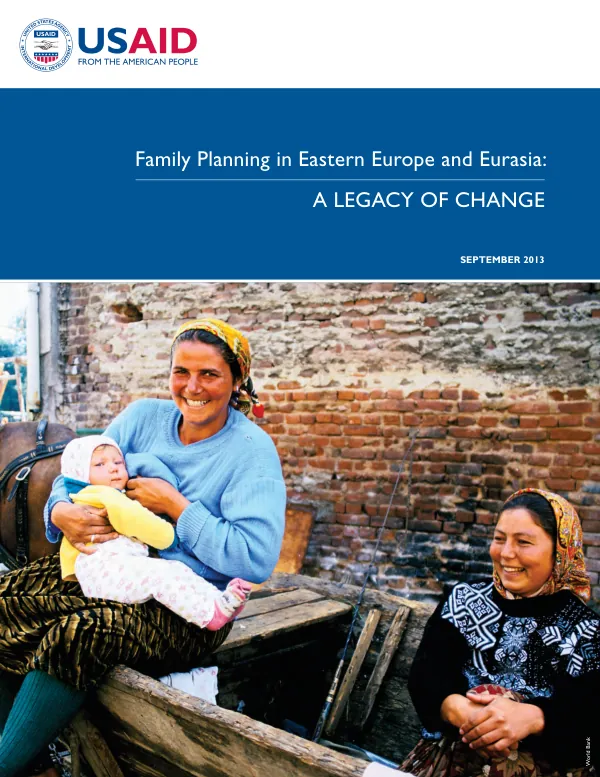
Family Planning in Eastern Europe and Eurasia: A Legacy of Change
The U.S.
2013 · 20 pages
Sign in to readA free account is required to download.
Abstract
Agency for International Development's (USAID) family planning and women's reproductive health initiatives in Eastern Europe and Eurasia began shortly after the fall of the Soviet Union. At that time, abortion rates in the region were among the highest in the world, with rates ranging from one abortion per live birth to as many as three abortions per live birth. The rate of contraceptive use in the region was also well below the average for high- and middle-income nations. USAID's family planning investments in Eastern Europe and Eurasia aimed to increase access to and use of comprehensive family planning services and reduce reliance on abortion. These investments followed on the heels of The Tbilisi Declaration and Call to Action, which recognized the regional need for improved family planning services, and the International Conference on Population and Development in Cairo (1994). USAID initially supported family planning programs in Albania, Moldova, Romania, Russia, and Ukraine, as well as several discrete activities in other countries. Over time, USAID's family planning programs in the region faced many obstacles, including public and medical community distrust of hormonal methods of contraception, low-quality healthcare services, and political opposition to family planning. However, implementation of effective and adaptive approaches enabled USAID and its partners to confront these challenges and achieve positive results. After nearly two decades of USAID investment in the region, attitudes toward modern contraception are more favorable, and evidence-based policies and protocols are in place. Family planning counseling and services are widely available, and the quality of services is significantly improved. Abortion rates have fallen by more than half in many countries with USAID health programs, while modern contraceptive prevalence has increased. USAID's contributions to family planning and reproductive health in Eastern Europe and Eurasia have had a significant and sustainable impact. Key contributions include dispelling old prejudices and creating more favorable attitudes toward modern contraception, facilitating the adoption of pro-family planning national-level policies and clinical protocols, increasing the availability and integration of modern contraceptive services, improving the quality of family planning services, and strengthening government capacity to plan and manage family planning programs. USAID fostered favorable attitudes toward modern contraception and encouraged its use through information dissemination, education, and communication activities. These activities conveyed accurate information about the safety and benefits of modern contraceptive methods, and key to their success was appropriate messaging that positioned family planning favorably as modern, safe, reliable, and healthy. USAID projects often used multiple communication channels concurrently to create large-scale family planning campaigns that were unified by a single logo and/or slogan. In Albania, USAID combined a mass media campaign, "For a Happy Life," with a peer education program to reach university students in four urban areas in 2009 and 2010. In Azerbaijan, television spots, posters, and educational brochures were used as part of the "Pregnancy Planning – Choose the Right Time!" national campaign. Project staff also conducted a seminar for journalists that resulted in more than 70 published articles on family planning and reproductive health over a 2 ½-year period. In Romania, high-quality, client-centered services were branded, and all communications that promoted the clinics where these services and free contraceptives were available used a common logo. Communications also factored prominently in USAID's social marketing activities, which were designed to increase the availability of and demand for modern contraceptives. USAID and its partners worked with pharmaceutical distributors and retailers to set affordable prices for contraceptives and to promote products among both retailers and consumers. Promotion efforts included educating pharmacists to improve their attitudes toward and knowledge about modern contraceptives and providing materials, such as posters and brochures, to promote the use of modern contraceptives. The legacy of USAID's family planning and reproductive health initiatives in Eastern Europe and Eurasia is a testament to the impact that targeted investments can have on improving the health and well-being of women and families in the region.