CREATIVE ASSOCIATES INTERNATIONAL, INC. (CAII)
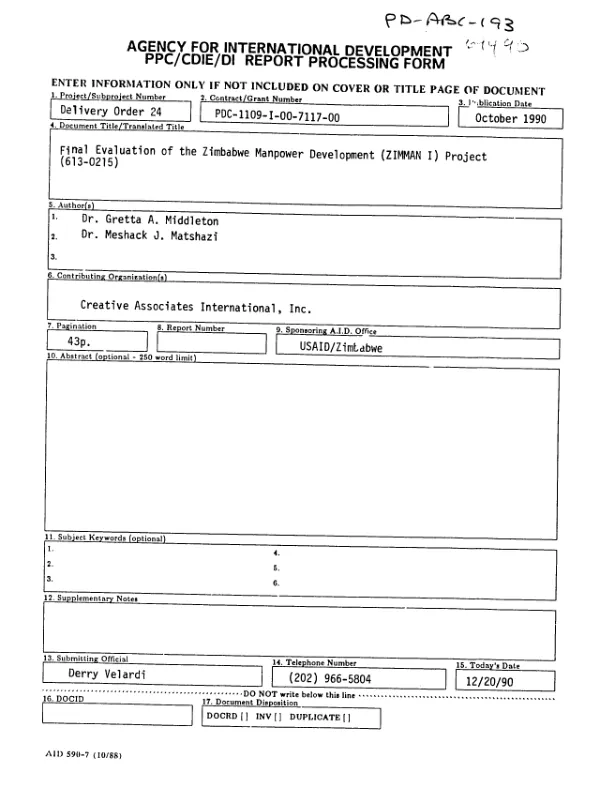
Final evaluation of the Zimbabwe manpower development (ZIMMAN I) project (613-0215)
Final evaluation of a project to increase Zimbabwe's pool of skilled professionals by training personnel (public sector, parastatal, and private sector) in key development areas and by strengthening technical colleges and the University of Zimbabwe.
Middleton, Gretta A.|Matshazi, Meshack J. · 1990
Sign in to readA free account is required to download.
Abstract
External evaluation covered the period 7/82-9/90. The project succeeded in increasing Zimbabwe's supply of skilled personnel, helping the country cope with severe skills' shortages, and strengthening key training institutions. Targeted outputs were exceeded by 30%, as 158 persons obtained academic degrees (53 Bachelors, 82 Masters, 19 Doctoral, and 4 Diploma) and 209 participated in U.S. or third country short-term professional or technical programs; about 14% of trainees were faculty and staff of the University of Zimbabwe. Moreover, some 300 person-months of TA were provided, mainly in the form of lecturers at local training institutions. The relevance of the training provided is evident in that many former participants now hold positions of authority with increased salaries, improved job performance, and greater mobility. Project beneficiaries, across the board, say that the project was highly effective, and officials of major participating institutions view it as one of the most successful in Zimbabwe's history, with benefits described as immense and far-reaching. Project management was characterized by effective interaction and cooperation among implementing agencies; management shortcomings were confined primarily to three areas: limited advance planning time on the part of the GOZ, inadequate data in the field on U.S. training programs, and a lack of short-term, practical skills' upgrading courses. Another weakness was that Historically Black Colleges and Universities made up only 5% of participating institutions, which was far short of expectations. Representation of women participants was relatively high, however, with women making up 23% of the total. Two major lessons were learned. (1) Performance expectations must be backed by performance criteria and actively managed systems of accountability. (2) Participant training programs should provide highly personalized services so that each individual's programmatic and personal needs are taken into account. This project did. Included are brief case studies of some of the project's most successful activities: training of six pilots for Air Zimbabwe; training in public health, firefighting, and water management for seven employees of the City of Harare; and implementation of an in-country management training seminar for senior executives.