MSI
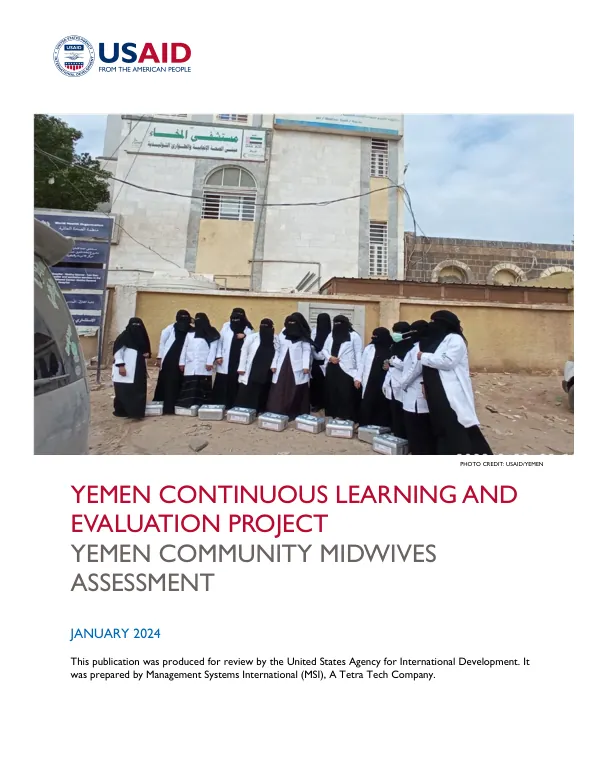
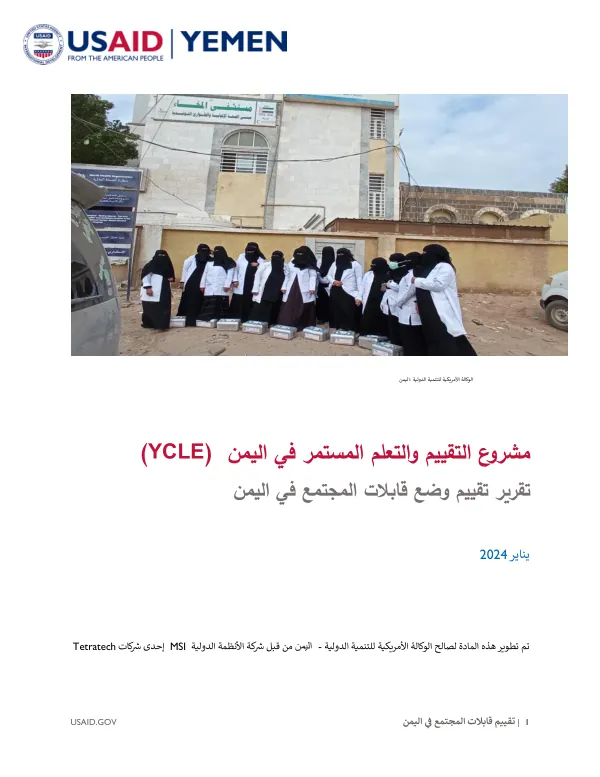
Final Report: Evaluation of Community Health Workers in Yemen
The Yemeni Ministry of Public Health and Population, in collaboration with the United States Agency for International Development (USAID), requested a study to explore the role of community health workers in Yemen.
2024 · 49 pages
Sign in to readA free account is required to download.
Abstract
The study aimed to identify the mechanisms that ensure the effectiveness and functionality of community health workers. The study was conducted in nine governorates in Yemen, including Abien, Aden, Al-Dhale', Al-Mahra, Hadhramaut, Lahj, Ma'rib, Shabwah, and Taiz. The study used a mixed-methods approach, combining desk review, key informant interviews, focus group discussions, and surveys of healthcare workers and health facility staff. The study aimed to answer five key questions: 1. What are the current policies and organizational and programmatic frameworks governing community health workers in Yemen? 2. What are the current dynamics of the community health worker workforce in Yemen? 3. How do the actual services provided by community health workers compare to the official services outlined in policies and systems of the Ministry of Public Health and Population? 4. What interventions and strategies are being implemented to support community health workers? 5. What opportunities and challenges are there for community health workers to take on new tasks? The study found that community health workers play a crucial role in providing health services in Yemen, particularly in rural areas where healthcare facilities are scarce. However, the study also identified several challenges, including inadequate training, limited resources, and lack of recognition and support from the government and other stakeholders. The study recommended several short-term and medium- to long-term recommendations to improve the effectiveness and functionality of community health workers in Yemen. These recommendations include: 1. Developing a comprehensive policy and strategy for community health workers that outlines their roles, responsibilities, and training needs. 2. Providing community health workers with adequate training and resources to enable them to perform their duties effectively. 3. Recognizing and supporting community health workers through incentives and benefits. 4. Strengthening the capacity of community health workers to provide comprehensive health services, including maternal and child health, family planning, and disease prevention and control. 5. Developing a system for monitoring and evaluating the performance of community health workers. The study concluded that community health workers are essential to the health system in Yemen, and that their effectiveness and functionality can be improved through adequate training, resources, and recognition.