MANAGEMENT SYSTEMS INTERNATIONAL
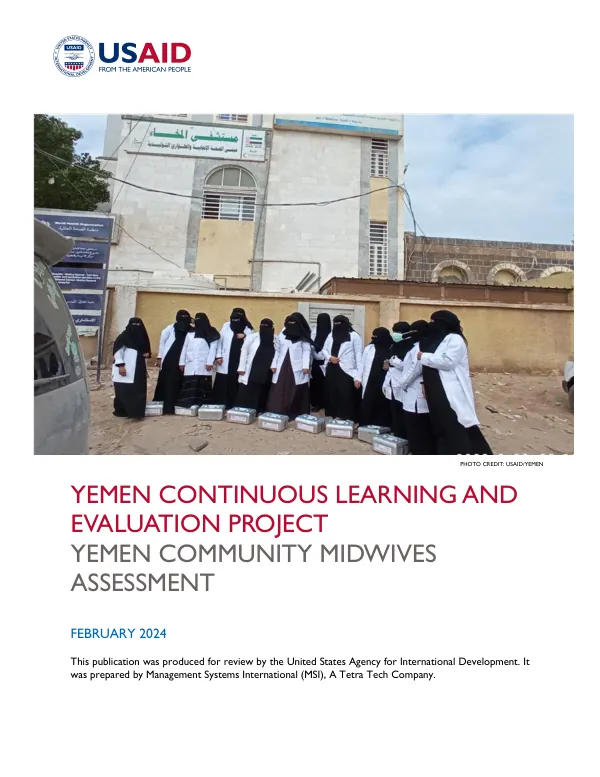
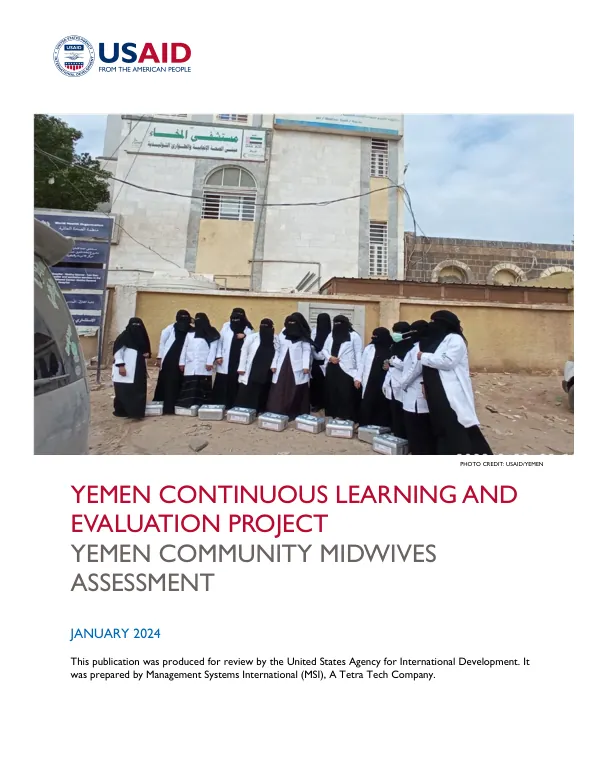
Yemen Community Midwives Assessment
The Ministry of Public Health and Population (MoPHP) in Yemen has been working to enhance the skills and knowledge of midwives in the country.
2024 · 52 pages
Sign in to readA free account is required to download.
Abstract
The ministry has been providing high-quality pre-service training and maintaining continuous professional development for midwives. This effort aims to improve the quality of midwifery services and reduce maternal mortality and illness. The MoPHP has been working with various stakeholders, including the National Yemeni Midwives Association (NYMA), to enhance the role of midwives in the country. The association has been advocating for the needs of midwives and providing support to midwives in their work. The MoPHP has also been working to establish a regulatory framework for midwifery education and training. The assessment of the community midwife workforce in Yemen has identified several challenges, including a shortage of qualified midwives, inadequate training facilities, and limited access to resources and equipment. The assessment has also highlighted the importance of task-shifting, which involves shifting tasks from more qualified healthcare workers to less qualified healthcare workers, such as midwives. The assessment has recommended several interventions to address the challenges facing the midwife workforce in Yemen. These interventions include increasing the number of midwives in the country, improving the quality of midwifery education and training, and providing midwives with the necessary resources and equipment they need to perform their duties effectively. The assessment has also highlighted the importance of community-based midwifery services, which involve midwives providing care to women and newborns in their communities. This approach has been shown to be effective in reducing maternal mortality and illness in other countries. The MoPHP has been working to establish a system for monitoring and evaluating the performance of midwives in the country. This system will help to identify areas where midwives need additional training or support and will enable the ministry to make informed decisions about how to improve the quality of midwifery services. The assessment has recommended several short-term and long-term recommendations to address the challenges facing the midwife workforce in Yemen. These recommendations include: * Increasing the number of midwives in the country * Improving the quality of midwifery education and training * Providing midwives with the necessary resources and equipment they need to perform their duties effectively * Establishing a system for monitoring and evaluating the performance of midwives in the country * Implementing community-based midwifery services The assessment has also highlighted the importance of collaboration between the MoPHP, NYMA, and other stakeholders to address the challenges facing the midwife workforce in Yemen. This collaboration will help to ensure that midwives receive the support and resources they need to provide high-quality care to women and newborns in the country. The assessment has recommended several interventions to address the challenges facing the midwife workforce in Yemen. These interventions include: The assessment has also highlighted the importance of addressing the shortage of qualified midwives in Yemen. This shortage has been identified as one of the main challenges facing the midwife workforce in the country. The assessment has recommended several interventions to address the shortage of qualified midwives in Yemen. These interventions include: The assessment has also highlighted the importance of addressing the challenges facing the midwife workforce in Yemen. These challenges include a shortage of qualified midwives, inadequate training facilities, and limited access to resources and equipment.
Related documents