FHI 360
Final Report: Survey Mechanism for Small and Micro Enterprises in Jordan
In Jordan, a study was conducted to gather information about small and micro enterprises.
2016 · 1 pages
Sign in to readA free account is required to download.
Abstract
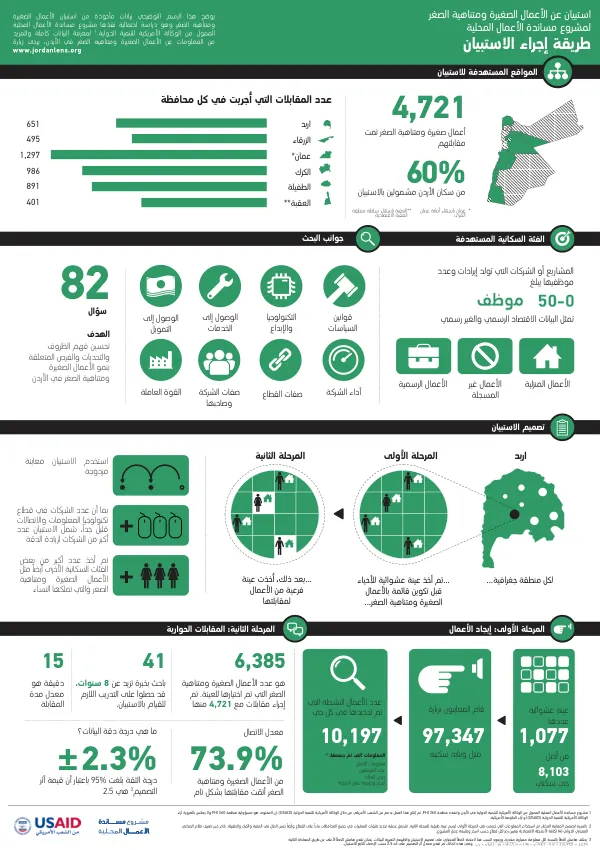
The study aimed to identify the challenges and opportunities related to the growth of small and micro enterprises in Jordan. The study was conducted in all governorates of Jordan, excluding Aman, Amman, and the economic zone of Aqaba. A total of 82 questions were asked in each governorate, and a total of 1,297 interviews were conducted. The study used a stratified random sampling method to select the sample. The sample was divided into sub-samples based on the sector and gender of the owner in Aqaba, Karak, and Tafileh. The study used a standardized questionnaire to collect data from small and micro enterprises. The questionnaire was designed to collect information about the characteristics of the enterprise, the owner, and the workforce. The study found that 60% of the population of Jordan was covered by the study. The study also found that the majority of small and micro enterprises were in the service sector, followed by the manufacturing sector. The study also found that the majority of small and micro enterprises were owned by men, but there was a significant number of women-owned enterprises. The study found that the most common challenges faced by small and micro enterprises were access to finance, lack of market access, and lack of technical skills. The study also found that the majority of small and micro enterprises were informal, and only a small percentage were registered with the government. The study found that the majority of small and micro enterprises were in the age group of 25-44 years, and the majority of owners had a secondary education or higher. The study also found that the majority of small and micro enterprises were in the urban areas, and the majority of owners were married. The study found that the most common sources of finance for small and micro enterprises were personal savings, loans from family and friends, and bank loans. The study also found that the majority of small and micro enterprises used traditional marketing methods, such as word of mouth and print media.