SOCIAL IMPACT, INC.
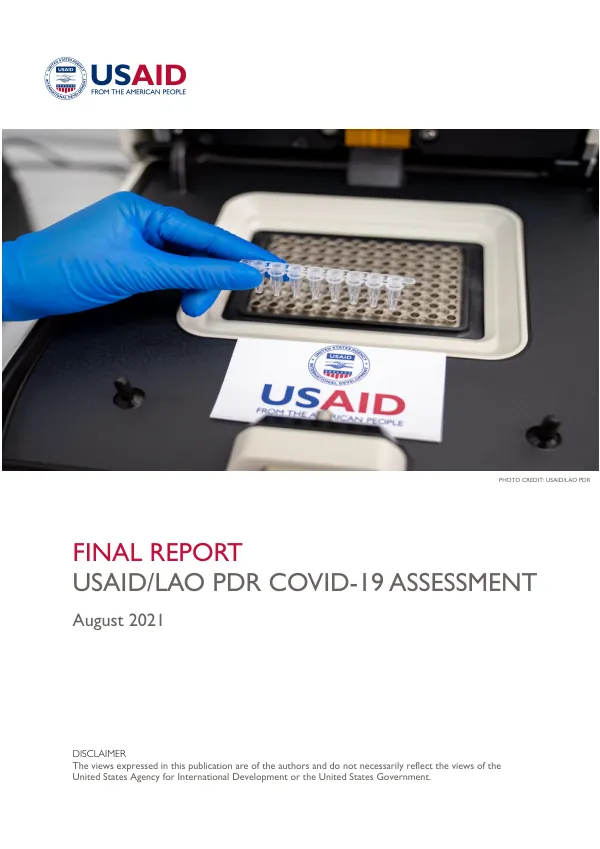
Final Report: USAID/Lao PDR COVID-19 Assessment
The Lao People's Democratic Republic (PDR) is facing significant socio-economic and health impacts as a result of the coronavirus (COVID-19) pandemic.
2021 · 61 pages
Sign in to readA free account is required to download.
Abstract
The Government of Lao PDR implemented a nationwide lockdown on April 1, 2020, in response to the first reported case of COVID-19 on March 9, 2020. A second lockdown was implemented in April 2021 due to a resurgence of cases, commonly referred to as the "second wave." Despite a low number of reported cases, the pandemic and related mitigating actions have brought significant changes to the Lao economy and social services. The USAID/Lao PDR COVID-19 Assessment was conducted to better understand the current effects and potential short-term and medium-term consequences of COVID-19 on six priority sectors: health, governance, economic growth, education, energy, and environment. The assessment highlights the unique experiences and needs of vulnerable groups, including women and girls, ethnic groups, people with disabilities, migrant workers, and others. The health sector has been severely strained by COVID-19, reducing access to health services, particularly for women, children, and other vulnerable groups. In the medium-term, COVID-19 is expected to negatively affect health outcomes for maternal and child health, nutrition, and strain the capacity of the health system. Families have reduced spending on food in response to loss of household income, resulting in a reduction in the quantity and quality of food consumption, which has concerning implications for the nutrition of children, pregnant, and lactating women. The governance sector has been impacted by COVID-19, straining the country's capacity to effectively manage resources for development while decreasing national revenue due to economic downturn. COVID-19 has also undermined the effectiveness of the national social protection system, particularly for vulnerable populations, including migrant workers returning from Thailand during the pandemic. Emotional pressure on households could increase women's vulnerability to gender-based violence (GBV), and understanding the full extent of the issue in Lao PDR will demand continued monitoring and in-depth analysis. The economic growth sector has experienced significant declines, with services, tourism, handicrafts, and certain manufacturing sectors experiencing the most significant declines. Micro and small enterprises have experienced significant revenue loss and are expected to continue to struggle in the short-to medium-term. More than 200,000 migrant workers returned to Lao PDR during the pandemic, resulting in a total of between $125-136 million in reduced remittances and putting significant financial pressures on their households. The education sector has been impacted by school closures, with only 16.5 percent of children having access to online learning. Those least able to access distance learning were children in rural areas and non-Lao-Tai speaking households. The COVID-19 pandemic has exposed limited capacities to develop online materials and distance learning platforms in Lao PDR. Student dropout rates are expected to increase, particularly at the secondary education level, due to school closures and household income pressures. Girls, students from remote rural and ethnic minority communities, and students with disabilities are most at risk. The energy and environment sectors have experienced increased demand for and use of electricity since the beginning of the pandemic. Interest in renewable energy has continued to increase during the pandemic. However, the economic pressures from COVID-19 may incentivize unsustainable practices in pursuit of quick economic growth, which could compromise progress in the country's agenda for sustainable development. Key recommendations include increasing the provision of public health information to increase awareness and encourage good health practices, supporting the National Taskforce Committee for COVID-19 Prevention and Control, and increasing citizen access to legal assistance and social protection services. Additionally, supporting the deployment of community healthcare workers, particularly in rural and remote areas, and providing targeted cash transfers to address acute nutrition needs are recommended.