USAID DEC
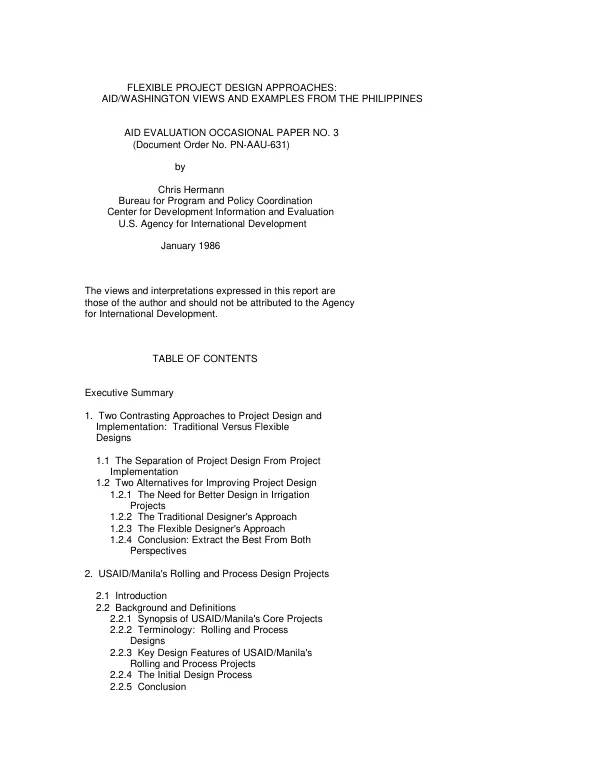
Flexible project design approaches : AID/Washington views and examples from the Philippines
Sign inUSAID. BUR. FOR PROGRAM AND POLICY COORDINATION. CENTER FOR DEVELOPMENT INFORMATION AND EVALUATION (CDIE)
Flexible project design approaches : AID/Washington views and examples from the Philippines
The performance of project design approaches which maximize flexibility during implementation and thus allow for mid-course changes is compared with that of traditional, more specific designs.
Hermann, Chris · 1986
Sign in to readA free account is required to download.
Abstract
An initial section summarizes the two perspectives, citing experience with irrigation projects to clarify how flexible designs differ from standard project designs. The use of flexible design concepts by USAID/Phillipines in four core projects provides the basis for discussion in section two of common design characteristics and the Mission"s experience with initial implementation. Particular attention is given to the project management demands of these projects. Also, a distinction is made between two types of flexible design - rolling design, which specifies a project"s ends but not its means, and process design, which remains general in regard to both. Advantages and disadvantages of flexible design are discussed and recommendations regarding its use provided.
Connected topics