AMERICAN INSTITUTE OF CHEMICAL ENGINEERS
FOOD AND FEED FROM FOOD WASTES AND AGRICULTURAL RESIDUES, A SURVEY
This report is divided into three parts.
1970
Sign in to readA free account is required to download.
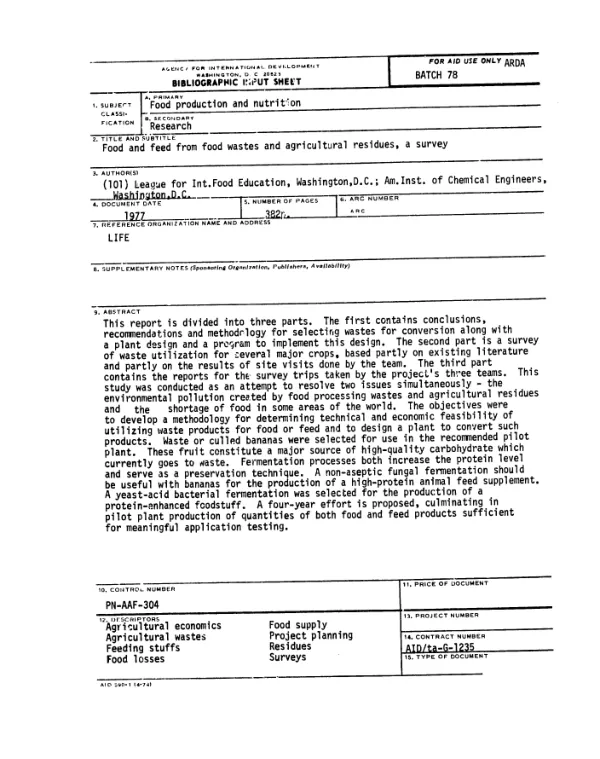
Abstract
The first contains conclusions, recommendations and methodology for selecting wastes for conversion along with a plant design and a program to implement this design. The second part is a survey of waste utilization for several major crops, based partly on existing literature and partly on the results of site visits done by the team. The third part contains the reports for the survey trips taken by the project"s three teams. This study was conducted as an attempt to resolve two issues simultaneously -- the environmental pollution created by food processing wastes and agricultural residues and the shortage of food in some areas of the world. The objectives were to develop a methodology for determining technical and economic feasibility of utilizing waste products for food or feed and to design a plant to convert such products. Waste or culled bananas were selected for use in the recommended pilot plant. These fruits constitute a major source of high-quality carbohydrate which currently goes to waste. Fermentation processes both increase the protein level and serve as a preservation technique. A non-aseptic fungal fermentation should be useful with bananas for the production of a high-protein animal feed supplement. A yeast-acid bacterial fermentation was selected for the production of a protein-enhanced foodstuff. A four-year effort is proposed, culminating in pilot plant production of quantities of both food and feed products sufficient for meaningful application testing.
![Implications for coral reef management and policy : relevant findings from the 9th international coral reef symposium [ICRS]](https://covers.devme.ai/gen/44298.webp)