USAID DEC
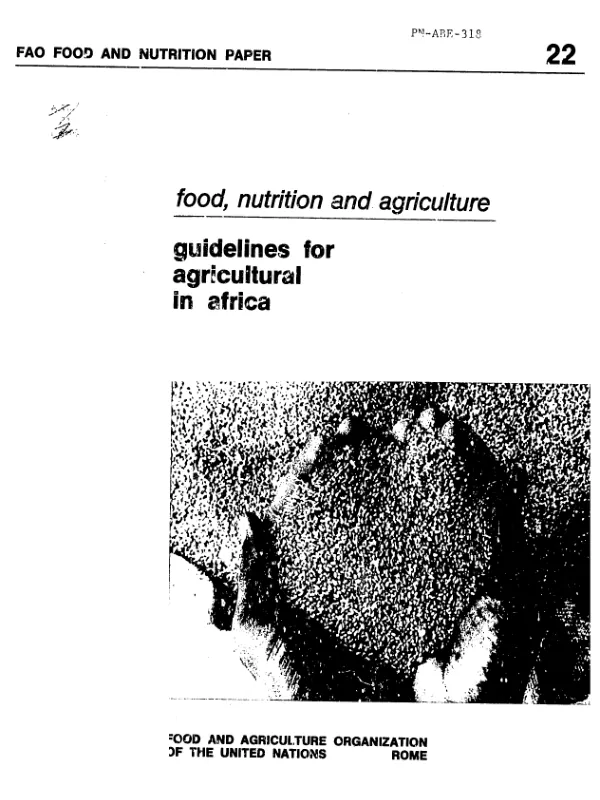
Food, nutrition and agriculture : guidelines for curriculum content for agricultural training in Southeast Asia
Sign inU.S. DEPT. OF AGRICULTURE. OFC. OF INTERNATIONAL COOPERATION AND DEVELOPMENT
Food, nutrition and agriculture : guidelines for curriculum content for agricultural training in Southeast Asia
Educating farmers in the relationship between agricultural production and human nutrition has been suggested as one way of resolving the paradox currently occurring in Southeast Asia of simultaneous increases in food production and malnutrition.
Harper, Laura J. · 1970
Sign in to readA free account is required to download.
Abstract
This report presents guidelines for a one semester undergraduate course in human nutrition for students and teachers of agriculture and for in-service training of agricultural extension workers in Indonesia, Malaysia, the Philippines, and Thailand. The objective of the course is to help future extensionists, as members of the rural development team, to better assist farmers in growing food sufficient in quantity and quality to meet family nutritional needs and to increase farmer income. The course covers 11 topics grouped into five broad areas: (1) the relationship between agricultural production, food availability, nutritional status, and health; (2) the nutritional value of different foods and their relationship to human nutritional requirements and methods of evaluating human nutritional status (including indicators of undernutrition and malnutrition); (3) the impact of various food and agricultural systems (i.e., food processing, storage, and distribution) on nutritional status and ways to improve such systems; (4) the organization and operation of community- and national-level food and nutrition programs and the methodology of nutrition education; and (5) planning, implementing, and evaluating agricultural programs designed to improve the nutritional and economic status of farm families, including ways to coordinate the efforts of national and community agencies. Provided for each topic are a list of performance objectives for students, an outline of topics to be covered, and practical notes on how teachers can approach these topics. The author cautions, however, that these guidelines must be carefully tailored to meet both specific needs in the subject area addressed and the participants" educational level. Appended are a guide to sources of nutrients; notes on vitamins; a list of the nutrient content of selected foods; recommended nutrient intake; a 13-item reference list (1966-80); and a summary of a workshop, Integrating Nutrition into Agriculture, held 1/12-16/80 in Laguna, the Philippines.