INTERNATIONAL FOOD POLICY RESEARCH INSTITUTE (IFPRI)
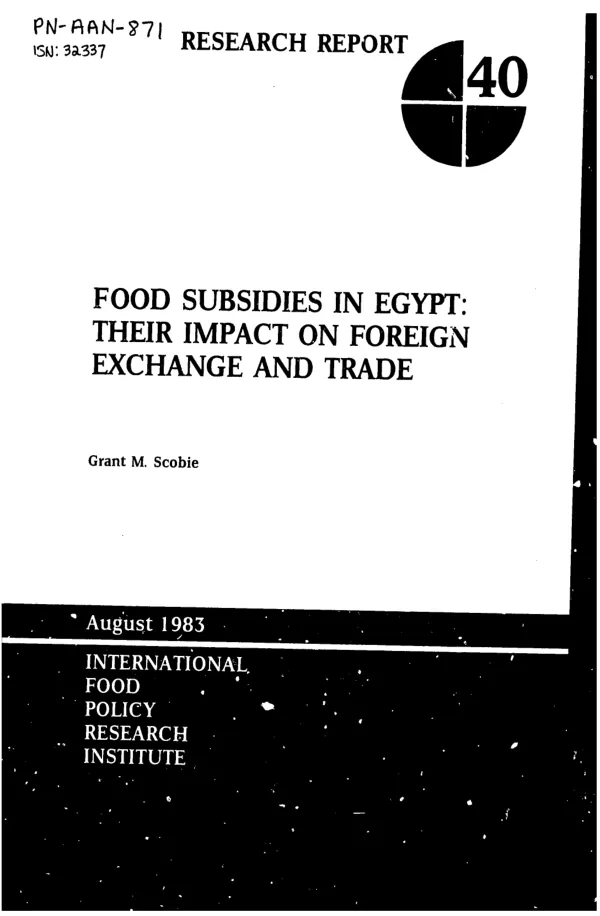
Food subsidies in Egypt : their impact on foreign exchange and trade
Egypt"s extensive system of food subsidies has adversely affected virtually every aspect of its economy, according to this study of the monetary and real effects of food subsidies on Egypt"s foreign exchange and trade sector.
Scobie, Grant M. · 1983
Sign in to readA free account is required to download.
Abstract
The author first reviews historical trends in government food subsidy expenditures and in food imports. An economic model employing monetary variables is then developed and used to determine the impact of food subsidy expenditures on domestic inflation, the balance of payments, and the exchange rate; results show that increased subsidy spending would increase inflation, reduce net foreign assets, and cause a devaluation in the black market exchange rate, effects likely to affect real resource allocation. Further analysis shows that food imports used in the food subsidy program are maintained at the expense of imports of essential raw materials needed by the industrial sector and of capital goods, making it likely that the food subsidy program has imposed real costs on nearly all of Egypt"s nonfarm sectors. A final section notes some policy implications of these findings. Included are 24 tables, a discussion of post-World War II Egyptian exchange rate schemes, and general and special bibliographies (1952-82) totaling 121 items.
Connected topics