USAID. MISSION TO NEPAL
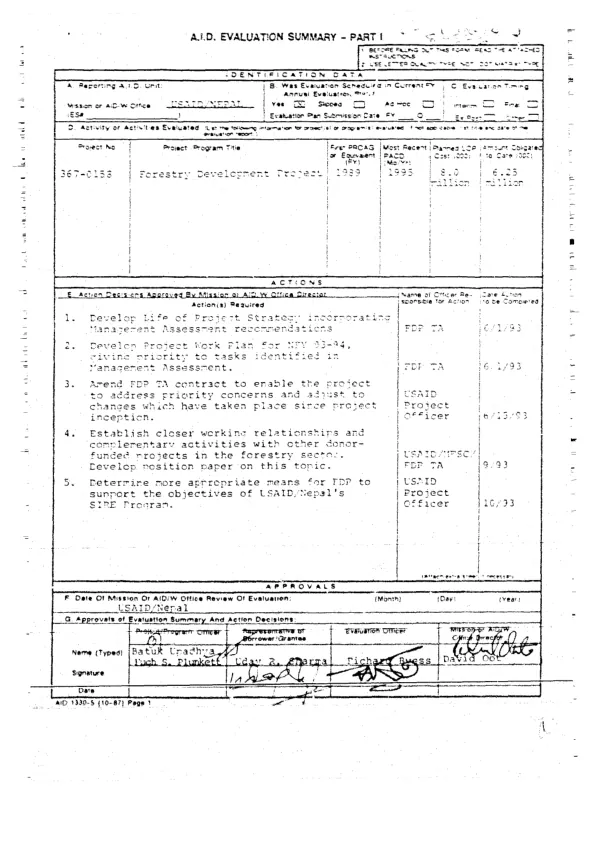
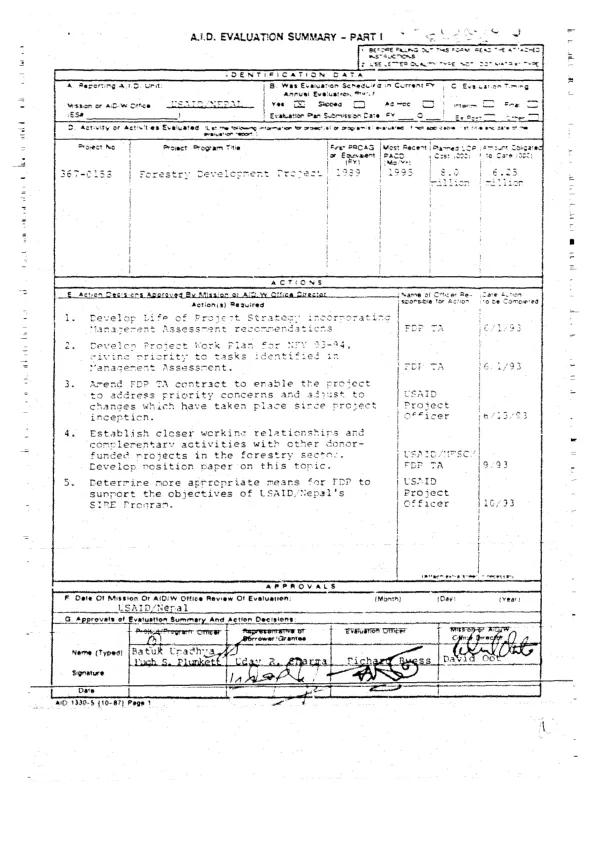
Forestry development project
Evaluates project to strengthen the institutional capacity of Nepal"s Ministry of Forests and Soil Conservation (MFSC) to implement Nepal"s Master Plan for the forestry sector and to increase nationwide use of improved stove models.
1970
Sign in to readA free account is required to download.
Abstract
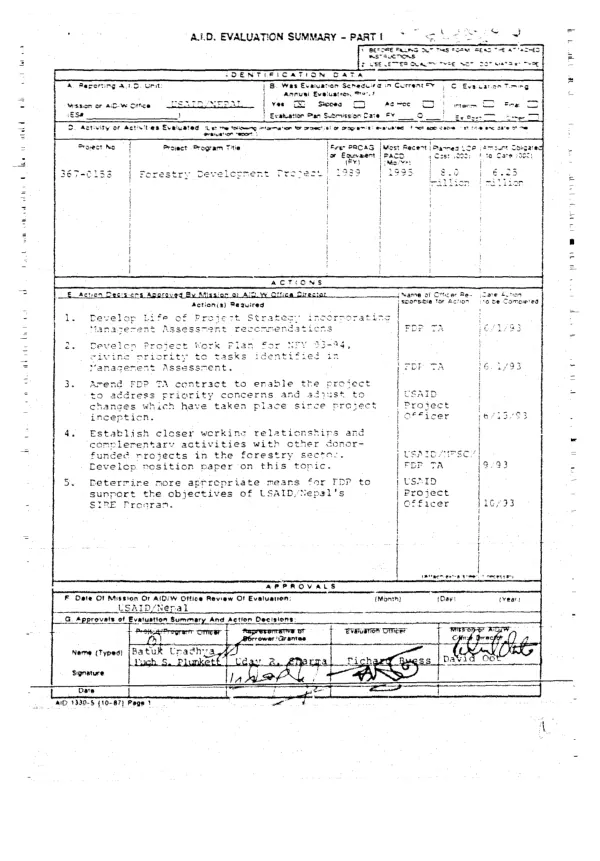
Evaluation covers the period 9/89-3/93. Major findings are as follows. (1) The project document has not clearly spelled out the tasks required and has not developed a long-term strategic approach to the sector. It has provided support only at the central level and concentrated on short-term bureaucratic requirements. (2) Project performance to date has been satisfactory, in spite of changes that have taken place within Nepal and the MFSC since its inception. (3) Major problems and constraints include frequent transfers of concerned professional Nepal government staff and of expatriate TA consultants, including the Chief of Party, and, most importantly, lack of clear identification of core activities, and consequent lack of project focus. (4) Problems and constraints in planning and implementation of forestry programs in general include an overall top-down planning approach; lack of clearly defined roles, responsibilities, and authorities for professionals at both planning and implementation levels; lack of incentives to encourage field staff performance; slow rate of community forest handover to user groups; lack of criteria for allocating government-managed forests to different categories, which stifles planning at field levels; overly centralized TA; and generally slow decisionmaking processes within the MFSC and the Nepalese government. (Author abstract, modified)