MCHIP
Fortalecimiento al Sistema de Salud de Bolivia
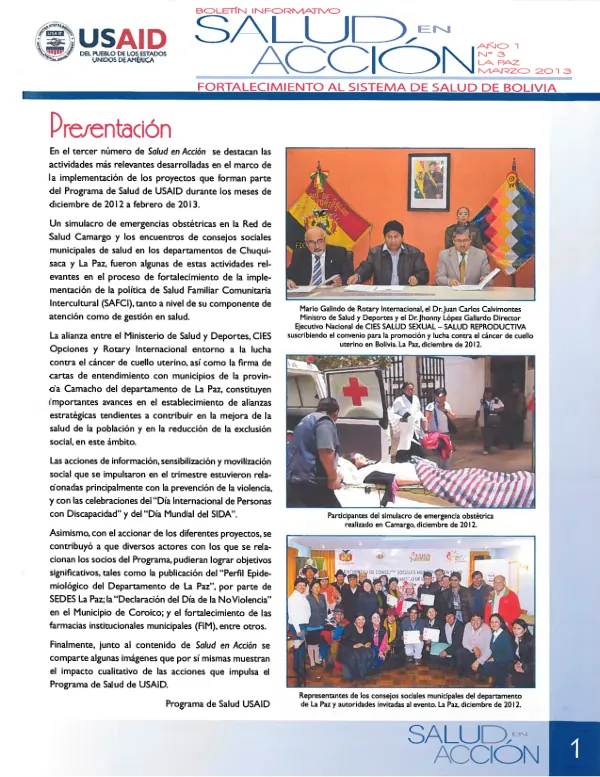
The Programa de Salud de USAID in Bolivia implemented various activities in the third quarter of 2012 to support the country's health sector.
2013 · 20 pages
Sign in to readA free account is required to download.
Abstract
The program focused on strengthening the implementation of the Política de Salud Familiar Comunitaria Intercultural (SAFCI) at both the service delivery and management levels. This included the organization of the first encounters of municipal health councils in Chuquisaca and La Paz, which brought together representatives from local health authorities and other stakeholders. The program also supported the fight against cervical cancer through a partnership between the Ministerio de Salud y Deportes, CIES Opciones, and Rotary Internacional. This alliance aimed to improve health outcomes and reduce social exclusion in Bolivia. Additionally, the program contributed to the development of the Sistema Informático Perinatal (SIP) for maternal mortality surveillance, which was implemented by OPS. In the province of Camacho, the program supported the signing of letters of understanding between municipalities and the Proyecto Comunidades Saludables. This initiative aimed to promote healthy communities and improve access to healthcare services. The program also organized an exhibition on the importance of vaccination and the prevention of diseases such as HIV/AIDS. The program's activities were focused on improving health outcomes, particularly in the areas of maternal and child health. The program supported the implementation of the SAFCI policy, which aimed to provide comprehensive and integrated healthcare services to families and communities. The program also contributed to the development of the Perfil Epidemiológico del Departamento de La Paz, which provided valuable information on the health status of the population. In terms of capacity building, the program supported the training of healthcare professionals in participatory methodologies and the implementation of the Sistema de Información de Medicamentos (SALMI) in 17 healthcare facilities. The program also contributed to the development of the Guía Clínica de Coinfección TB-NIH, which provided guidelines for the diagnosis and treatment of tuberculosis and HIV co-infection. The program's activities were implemented in partnership with various stakeholders, including the Ministerio de Salud y Deportes, CIES Opciones, Rotary Internacional, and other organizations. The program's focus on improving health outcomes and reducing social exclusion was aligned with the government's health sector strategy. In the province of La Paz, the program supported the organization of a simulation exercise on emergency obstetric care in the Red de Salud VI Camargo. The exercise aimed to evaluate the response of healthcare providers and the community in the event of an obstetric emergency. The program also supported the development of a training program for healthcare professionals on participatory methodologies and the implementation of the Sistema de Información de Medicamentos (SALMI) in 17 healthcare facilities. The program's activities were implemented in partnership with various stakeholders, including the Ministerio de Salud y Deportes, CIES Opciones, Rotary Internacional, and other