USAID DEC
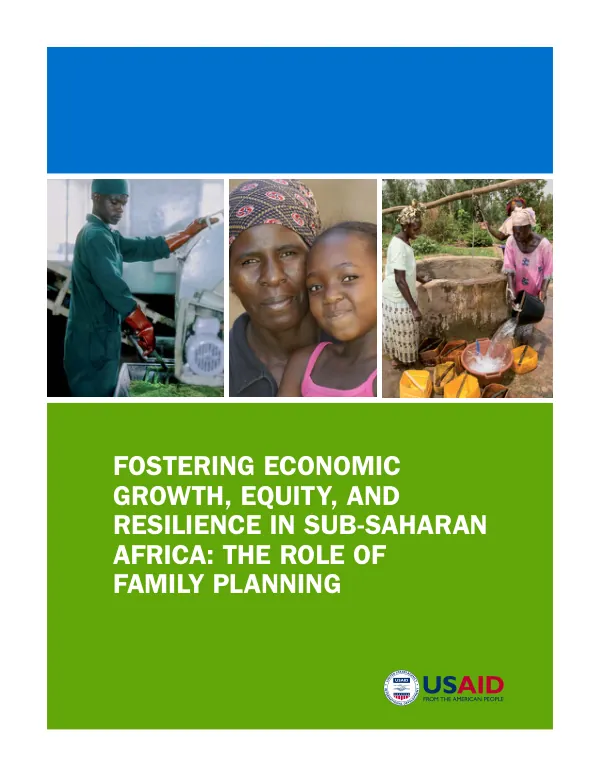
Fostering Economic Growth, Equity, and Resilience in sub-Saharan Africa: The role of Family Planning
Sign inMANAGEMENT SCIENCES FOR HEALTH
Fostering Economic Growth, Equity, and Resilience in sub-Saharan Africa: The role of Family Planning
In sub-Saharan Africa, family planning plays a crucial role in fostering economic growth, equity, and resilience.
2016 · 70 pages
Sign in to readA free account is required to download.
Abstract
The region's population is projected to reach 2.1 billion by 2050, with 42% of the population living in poverty. Family planning can help reduce poverty by enabling individuals to make informed decisions about their reproductive health, thereby improving their economic prospects. Implementation of family planning programs in sub-Saharan Africa has shown promising results. Modern contraceptive prevalence rates (mCPRs) have increased in several countries, including Rwanda, Kenya, and Uganda. However, there is still a significant gap in access to family planning services, particularly in rural areas. Innovative tools and models, such as mobile health applications and community-based distribution programs, have been effective in increasing access to family planning services. The benefits of family planning extend beyond reproductive health to economic development. By enabling individuals to plan their families, family planning can improve labor productivity, health, and nutrition. Education is also a critical factor in family planning, as educated individuals are more likely to make informed decisions about their reproductive health. In sub-Saharan Africa, education is often limited, particularly for girls, which can perpetuate cycles of poverty. In Rwanda, for example, the government has implemented policies to promote family planning, including increasing access to education and healthcare. As a result, the country has seen significant improvements in modern contraceptive prevalence rates and fertility rates. In contrast, countries such as Kenya and Uganda have faced challenges in implementing effective family planning policies, leading to stagnation in fertility rates. Climate change, food security, and land use changes are also critical factors in building resilience in sub-Saharan Africa. Family planning can help mitigate the impacts of climate change by reducing population growth and promoting sustainable land use practices. Food security is also closely linked to family planning, as access to family planning services can improve agricultural productivity and reduce poverty. In conclusion, family planning plays a critical role in fostering economic growth, equity, and resilience in sub-Saharan Africa. By increasing access to family planning services, promoting education, and addressing climate change and food security, countries in the region can improve their economic prospects and reduce poverty.