SABRE FOUNDATION
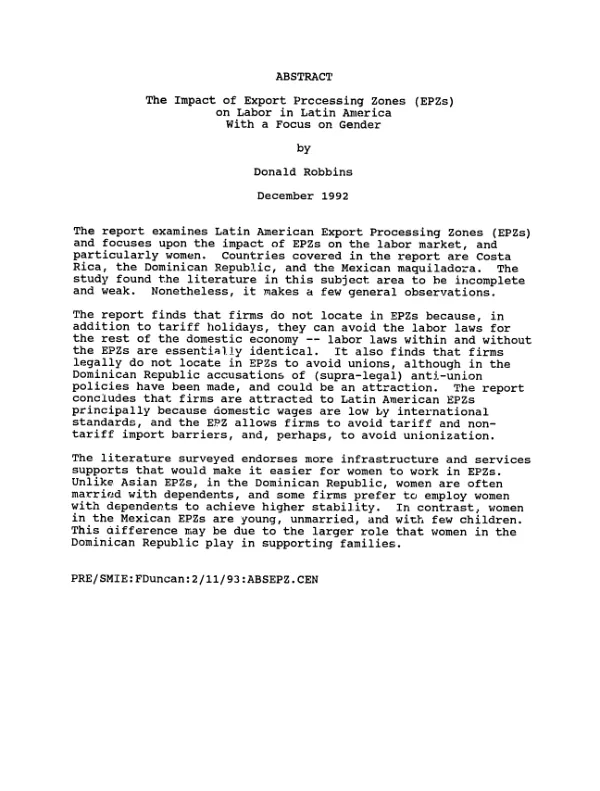
Free zones in developing countries : expanding opportunities for the private sector
Developing countries are increasingly using free zones - geographic areas offering tariff, tax, and/or regulatory relief to businesses in their area - to stimulate the private sector.
1983
Sign in to readA free account is required to download.
Abstract
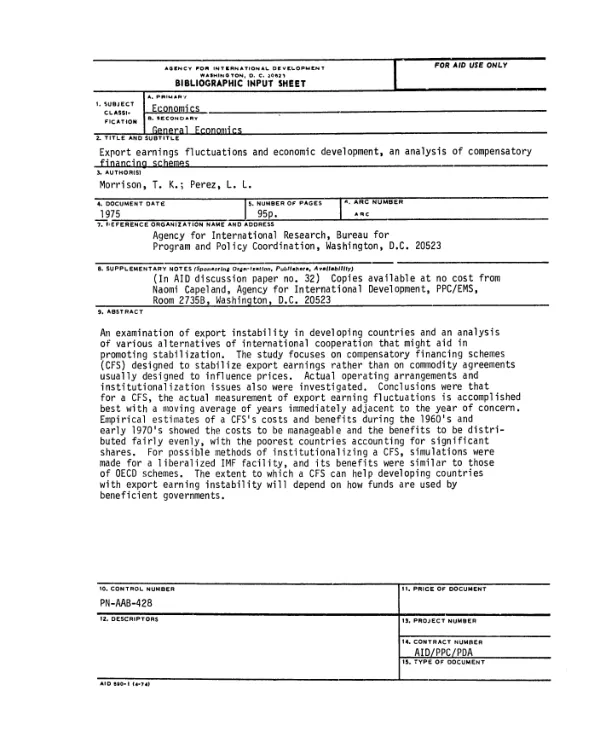
This report examines existing data on a limited number of free zones, including free trade, export processing, enterprise, and free banking zones, as well as free ports and the Mexican maquiladoras, and the factors conducive to their success or lack of it. Positively, free zones can make a major contribution to the rise of modern, export-oriented, industries by increasing employment, foreign exchange earnings, rates of return, and technology transfer, and have served in some countries (e.g., China) as proving grounds for economic reform. On the other hand, many zones have failed to stimulate economic activity due to lack of a stable investment climate, unreliable general infrastructure and service delivery, and user-insensitive zone management. Even in successful zones, linkages to the surrounding economy are often lacking. Further, since zones seem most successful at the beginning of a country"s move away from import substitution, they may in time become less effective as magnets for foreign investment. Finally, changing global economic conditions may soon make traditional zone development strategies obsolete. Several recommendations are included. Appended are case studies, lists of free zones, tables on wages for export processing workers in selected countries, and a list of incentives available in export processing zones.
Connected topics