USAID DEC
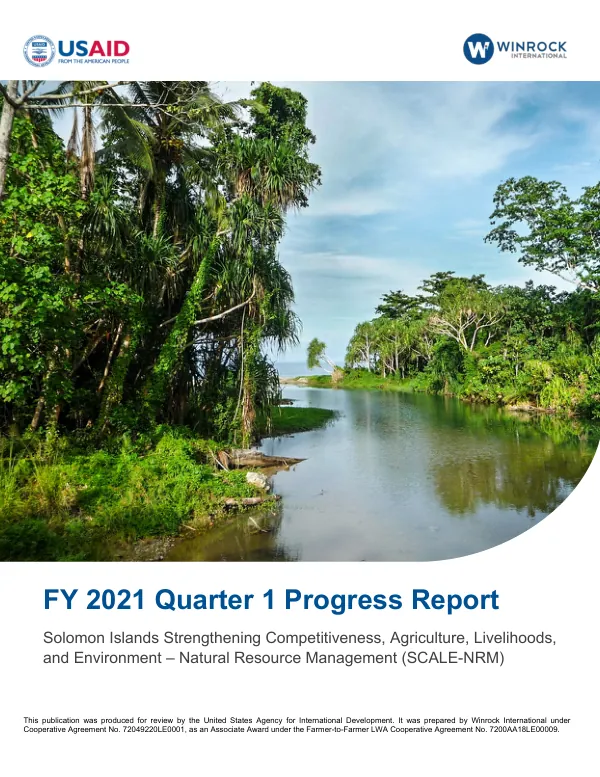
FY 2021 Quarter 1 Progress Report: Solomon Islands Strengthening Competitiveness, Agriculture, Livelihoods, and Environment – Natural Resource Management (SCALE-NRM)
Sign inUSAID
FY 2021 Quarter 1 Progress Report: Solomon Islands Strengthening Competitiveness, Agriculture, Livelihoods, and Environment – Natural Resource Management (SCALE-NRM)
The Solomon Islands Strengthening Competitiveness, Agriculture, Livelihoods, and Environment – Natural Resource Management (SCALE-NRM) program is designed to address the underlying causes of forest degradation in the Solomon Islands, with a focus on Malaita Province.
2021 · 16 pages
Sign in to readA free account is required to download.
Abstract
The program aims to improve forest governance and ensure sustainable forest management through a range of activities. Implemented by Winrock International, the program has a total budget of $16.5 million and will run until September 2025. The program forms part of the broader USAID-funded SCALE initiative to improve forest governance, strengthen agri-business and trade, and enhance infrastructure. The overall SCALE program is implemented by five organizations, including Winrock, DAI, Green Powered Technology, Nathan Associates, and Pacific American Fund. The forests of Malaita Province are being degraded due to a lack of effective regulation of the timber industry, despite the expressed wishes of the communities who are the customary owners of the forests. Key issues include a lack of resources and skills to regulate logging, lack of trust between key stakeholders, and lack of coordination between ministries and between the national and provincial governments. Protection of the forest requires enhanced community awareness of their right to conserve and manage forests, increased trust between citizens, communities, and governments, and development and implementation of more environmentally sound logging regimes. SCALE-NRM will work with the Solomon Islands to fulfill objectives laid out in the National Development Strategy and its commitments to Sustainable Development Goals related to environment and conservation. With a focus on Malaita, the program will provide government with the tools, support, and capacity building to make informed decisions over long-term natural resource planning that balances forest conservation and governance with economic growth. The program has three broad objectives: empowering communities to effectively participate in decisions about the exploitation of community-owned forests, ensuring increased community economic benefit from the forests they own, and strengthening the capacity of the Malaita Provincial Government to effectively plan, manage, and protect forests. A detailed workplan for the balance of the first year of the program will be developed and submitted to USAID by March 2021. Likely activities in the first year of the program include strengthening community capacity to plan and implement Community-Based Natural Resource Management (CBNRM), building capacity of women and youth to engage in the advocacy/policy process, and developing tailored capacity building plans for each Community-Based Organization (CBO). The program also aims to establish a 'Seed Fund' to support CBOs, Civil Society Organizations (CSOs), Non-Government Organizations (NGOs), business, and academic researchers working on forest conservation initiatives.
Related documents
Documents in this collection
 2021
2021USAID DEC
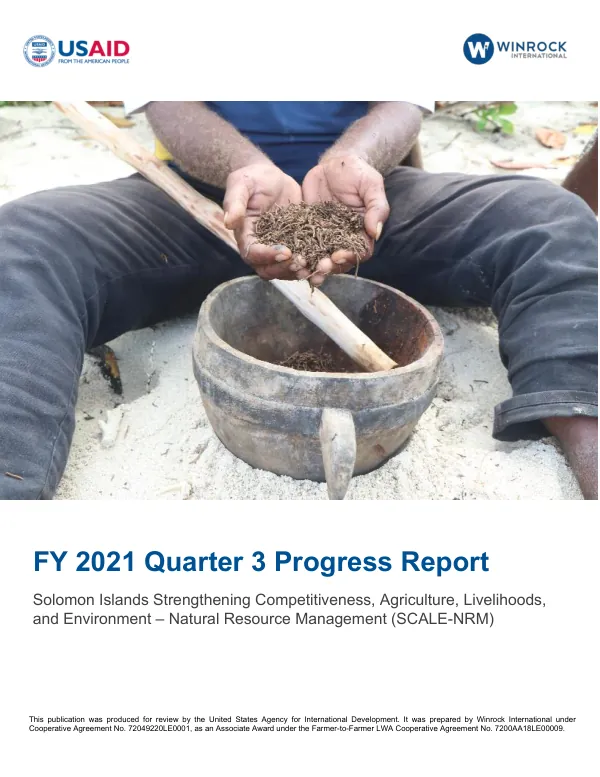
FY 2021 Quarter 3 Progress Report: Solomon Islands Strengthening Competitiveness, Agriculture, Livelihoods, and Environment – Natural Resource Management (SCALE-NRM)
Open record 2021
2021USAID DEC