FHI 360
Gender Digital Divide Risk Mitigation Technical Note
The initiative to strengthen and support ICT outreach and digital literacy initiatives for women and girls involves four key areas: strengthening and supporting existing mobile and digital skills initiatives, partnering with others to avoid duplication of efforts, incorporating information on risks in ICT outreach and digital literacy initiatives, and adapting existing materials and toolkits.
2021 · 10 pages
Sign in to readA free account is required to download.
Abstract
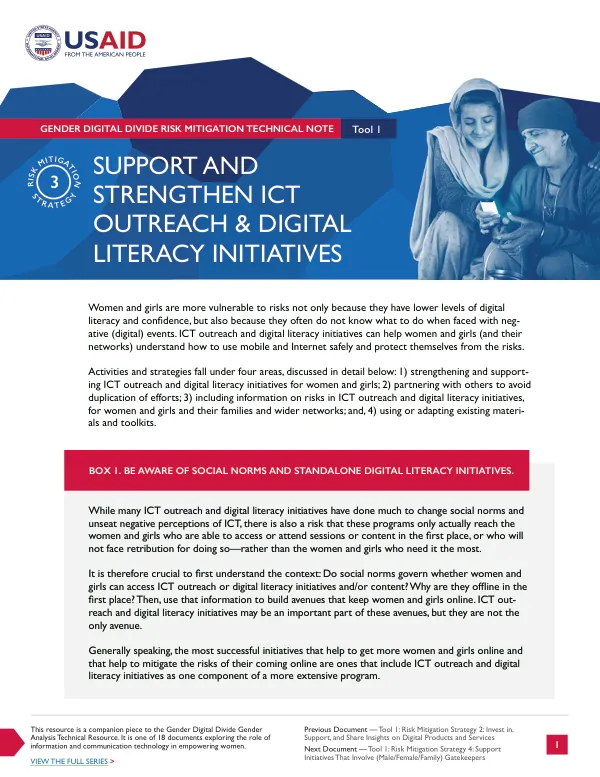
Strengthening and supporting existing mobile and digital skills initiatives for women and girls requires a thoughtful approach to reach the women and girls who need them most. This involves understanding the context and understanding the context: Do social norms govern whether women and girls can access ICT outreach and digital literacy initiatives? Why are they offline in the first place? The most successful initiatives that help to get more women and girls online and mitigate the risks of their coming online are those that include ICT outreach and digital literacy initiatives as part of a more extensive program. Existing mobile and digital skills initiatives for women and girls need to be strengthened and supported to help them become more comfortable with ICT. This involves ensuring that any ICT outreach and digital literacy initiatives are relevant to the devices and platforms that women and girls use. For example, if women and girls in a community only use mobile devices, it does not make sense to focus on computer use. Initiatives apart from coding and bootcamps can be used to develop digital literacy, such as self-exploration and use of devices and the Internet. Supporting initiatives that utilize audio or visual content can be more inclusive and reach illiterate users. This can be achieved through partnerships with organizations that offer digital literacy training and mobile Internet information to women. Partnerships with national governments, private sector organizations, and local organizations can help to avoid duplication of efforts and ensure that ICT outreach and digital literacy initiatives are delivered to women and girls. This involves collaborating with national governments to include mobile and digital literacy in school curricula, particularly addressing the risks of ICT and how users can protect themselves. Incorporating information on risks in ICT outreach and digital literacy initiatives is crucial to ensure that women and girls are aware of potential threats and know how to use mobile devices and the Internet safely. This involves ensuring that any ICT outreach and digital literacy initiatives include modules or sections on how to use mobile devices and the Internet safely, including advice on how to report any issues. Adapting existing materials and toolkits can be used to develop digital literacy and mitigate the risks of ICT. This involves using in-country information, such as helplines or advice and legal guidance, to ensure that women and girls are aware of potential threats and know how to protect themselves.
Related documents