USAID DEC
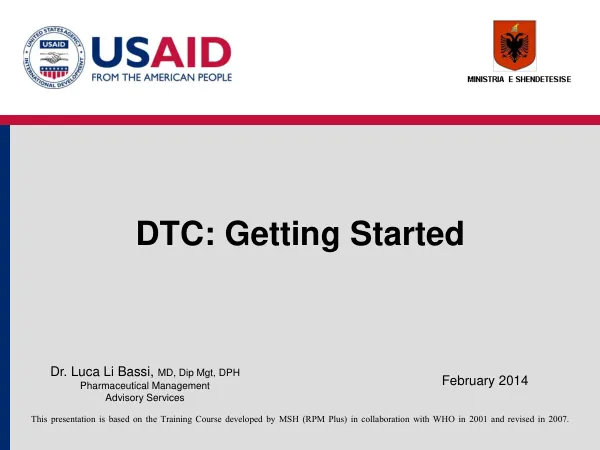
Getting Started with DTC: A Strategy for Pharmaceutical Management Advisory Services
Sign inMSH
Getting Started with DTC: A Strategy for Pharmaceutical Management Advisory Services
The DTC Getting Started initiative emphasizes the importance of a strategic approach to establishing and operationalizing a Drug and Therapeutics Committee (DTC).
2014 · 6 pages
Sign in to readA free account is required to download.
Abstract
This approach is grounded in local circumstances and conditions, with a focus on building evidence for advocacy and consensus among senior health staff. The initial step involves recognizing the existence of a problem and the potential for the DTC to provide a framework for solutions. This requires convincing others of the need to address the issue and working collaboratively to develop solutions. The groundwork for advocacy involves determining whether data on medicine use is available, collecting it if necessary, and documenting the perspectives of senior health staff on medicine use problems. Senior health staff are presented with the findings of the initial groundwork, along with any useful data that highlights the potential negative impact on patient outcomes or hospital budgets. A course of action is planned with senior medical staff, and a meeting is convened to discuss medicine use problems and present the groundwork findings and medicine use data. During the presentation, the benefits of improved healthcare and reduced costs are emphasized, as well as the need for time and resources to achieve an improved result. The importance of a sustainable mechanism to conduct such work is also highlighted, with the DTC serving as a potential solution. A successful DTC requires a strategy based on local conditions, local data, and a phased approach that starts small and scales up. Choosing a problem that can be easily addressed and engaging in transparent decision-making are also critical components of a functional DTC. Ultimately, the initiative underscores the importance of political and administrative support in establishing and maintaining a DTC. The DTC Getting Started initiative is built on the Training Course developed by MSH (RPM Plus) in collaboration with WHO in 2001 and revised in 2007. This framework provides a foundation for establishing and operationalizing a DTC, with a focus on building evidence for advocacy and consensus among senior health staff. By following this approach, DTCs can effectively address medicine use problems and improve healthcare outcomes.
Related documents