USAID DEC
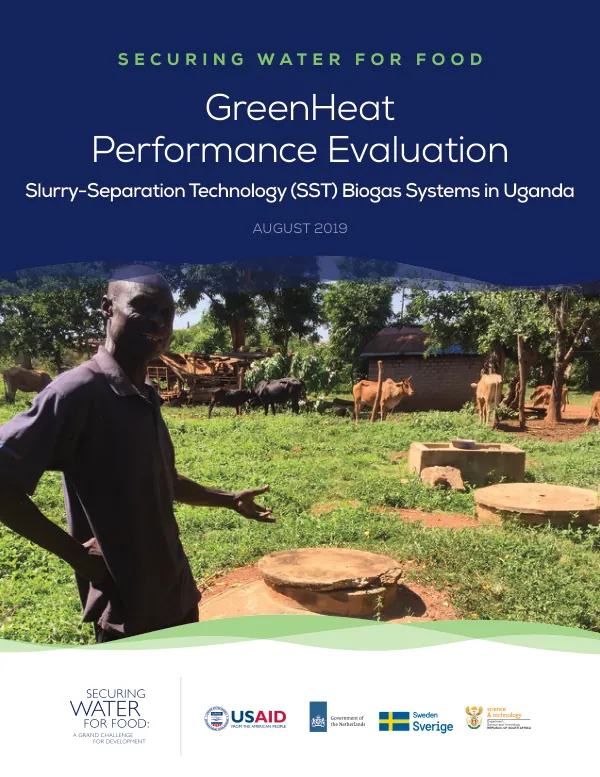
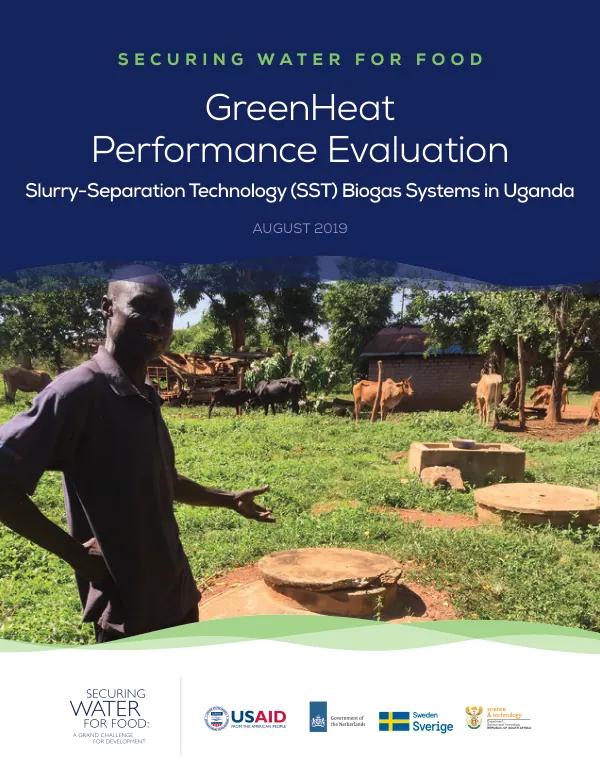
GreenHeat performance evaluation : slurry-separation technology (SST) biogas systems in Uganda
Sign inKAIZEN CO., LLC
GreenHeat performance evaluation : slurry-separation technology (SST) biogas systems in Uganda
Green Heat was sponsored by SWFF to reach more farmers with their innovative Slurry-Separation Technology (SST) biogas systems in Uganda and beyond.
Gebreyesus, Tsegay Gebremichael · 2019
Sign in to readA free account is required to download.
Abstract
The technology was intended to separate water from the waste to be reused for mixing. In addition to recycling water, the SST was expected to create an easily managed high-quality fertilizer product while increasing gas production for energy consumption. This field evaluation was conducted to evaluate the performance of biogas technology in general and the slurry-separation innovation in particular. The survey was conducted July through August, 2019, in Uganda, four years after the introduction of the slurry-separation innovation. The sample respondents interviewed included 51 percent men and 49 percent women. Thirteen districts from across all four regions of Uganda were covered. Farmers’ experience with biogas technology ranged from two months to 11 years. Through face-to-face interviews, respondents reported benefits of the innovation were energy for cooking and lighting, soil fertility and productivity, household income improvement, and environmental sustainability. Fifty-four percent of farmers reported very significant improvement in their household income, while 96 percent confirmed improvements in the survival rate of their crops. However, the innovation’s impact on water consumption was not as promising. Of the interviewees, 61 percent reported their water consumption was increased due to the innovation. This was mainly attributed to the amount of water required to mix cow dung. Biodigesters equipped with SST contribute toward achieving most of the UN Sustainable Development Goals (SDGs). However, this survey confirmed that slurry-separation systems were not properly used in the biogas plants visited. No communal or individual negative impact resulted from biogas or the SST.