USAID DEC
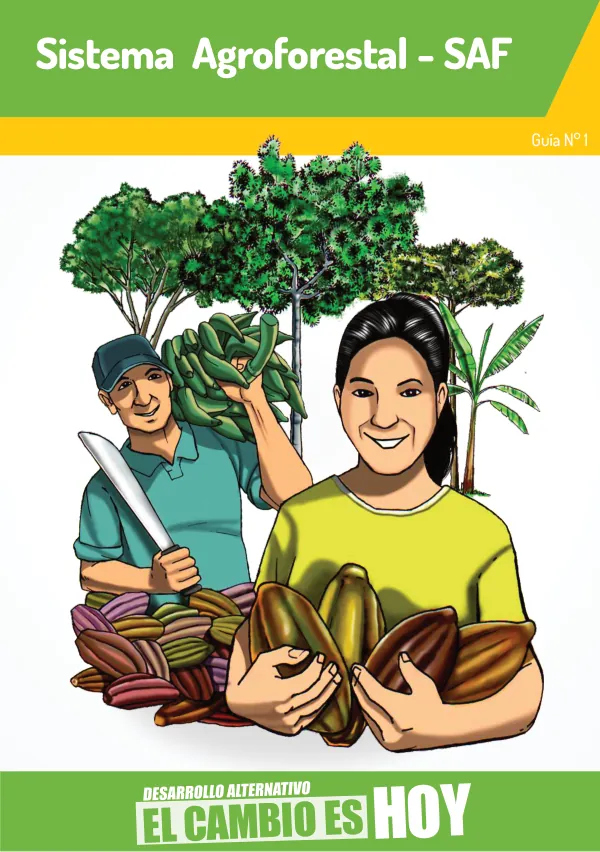
Guía para la sostenibilidad ambiental: Sistema Agroforestal - SAF
The Sistema Agroforestal (SAF) is a system designed to enhance agricultural productivity and sustainability by integrating forest species into cacao and coffee plantations.
2014 · 8 pages
Sign in to readA free account is required to download.
Abstract
This approach contributes to improved soil fertility, increased biodiversity, and enhanced environmental conservation. The SAF system offers several benefits, including improved soil quality, diversified crop production, and increased income for farmers. One of the key advantages of the SAF system is its ability to improve soil health by protecting it from erosion and promoting the growth of microclimates. This is achieved through the careful management of soil margins and the use of diverse plant species. The system also allows for the production of multiple crops, including staple crops such as maize, beans, and yuca, as well as fruit trees like citrus, coconut, and banana. This diversified approach enables farmers to generate income throughout the year. The SAF system involves several key steps, including the identification of a suitable design for the plantation, preparation and staking of the land, and the transplantation of plant species. The system recommends the use of specific plant species, including cacao, capirona, and bolaina, which are well-suited to the tropical climate of many regions. The recommended spacing for these species varies, with cacao requiring 1283 plants per hectare, while capirona and bolaina require 133 plants per hectare. The SAF system also provides guidance on the design of plantations, including the use of windbreaks and shade trees. For example, the "cacao/estilo de cortina rompevientos" model recommends the use of plátano and frijol de palo trees to create a windbreak, while the "café/estilo cortina rompevientos" model recommends the use of pino chuncho and café trees. The system also provides guidance on the spacing and layout of plant species, including the use of 3.0 meters and 6.0 meters spacing for certain species. Overall, the SAF system offers a comprehensive approach to agricultural development, combining the production of multiple crops with environmental conservation and improved soil health. By following the recommended design and management practices, farmers can increase their productivity, income, and sustainability, while also contributing to the conservation of natural resources.
Related documents