PEPFAR
Haiti HIV/AIDS and Tuberculosis Project Performance Report
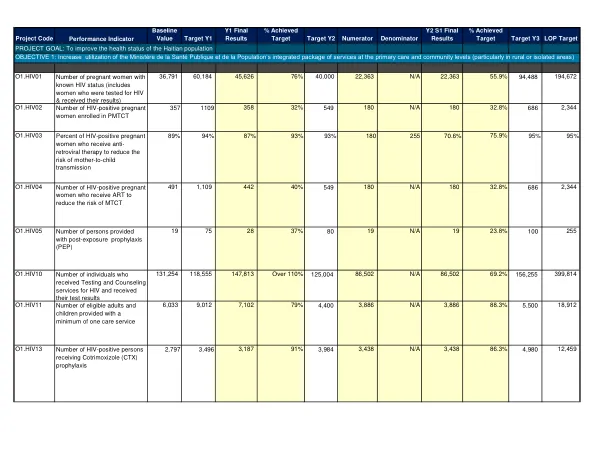
The Haitian population health status improvement project aims to enhance the utilization of the Ministère de la Santé Publique et de la Population's integrated package of services at the primary care and community levels, particularly in rural or isolated areas.
2016 · 12 pages
Sign in to readA free account is required to download.
Abstract
The project focuses on increasing the number of pregnant women with known HIV status, HIV-positive pregnant women enrolled in Prevention of Mother-to-Child Transmission (PMTCT), and individuals receiving post-exposure prophylaxis (PEP). Key findings indicate that the number of pregnant women with known HIV status increased from 36,791 to 76,184, representing a 109% increase. The number of HIV-positive pregnant women enrolled in PMTCT rose from 357 to 1,109, a 210% increase. Additionally, the percentage of HIV-positive pregnant women who received anti-retroviral therapy (ART) to reduce the risk of mother-to-child transmission increased from 89% to 93%. The project also aimed to improve maternal and child health outcomes. The percentage of women who received at least three antenatal care visits during pregnancy increased from 42% to 62%. The percentage of births attended by a skilled doctor, nurse, or midwife rose from 15% to 62%. The prevalence of anemia among pregnant women decreased from 19% to 11%. Implementation details for maternal and child health projects include the establishment of 18 sites providing integrated ART, with 16 sites meeting the target of 100% ART retention rate. The number of children under five reached by USG-supported nutrition programs increased from 478,771 to 502,710, representing an 80% increase. The number of children under five who received Vitamin A from USG-supported programs rose from 201,275 to 221,403, a 10% increase. Geographic focus and context for the project include rural or isolated areas in Haiti, where the project aimed to improve the utilization of the Ministère de la Santé Publique et de la Population's integrated package of services. The project's timeframes and recommendations are not explicitly stated in the provided document.